Ch. 4 Skin and Body Membranes
Marieb - Essentials of Human Anatomy & Physiology 13th Edition
Marieb13th EditionEssentials of Human Anatomy & PhysiologyISBN: 9780135624340Non è quello che usi tu?Cambia libro di testo
Capitolo 4, Problema 18

Both newborn infants and aged individuals have very little subcutaneous tissue. How does this affect their sensitivity to cold environmental temperature?

Guida verificata passo dopo passo
1
Understand the role of subcutaneous tissue: Subcutaneous tissue, also known as the hypodermis, is a layer of fat and connective tissue beneath the skin. It acts as insulation, helping to retain body heat and protect against cold temperatures.
Recognize the physiological impact of reduced subcutaneous tissue: Without sufficient subcutaneous fat, the body loses heat more rapidly to the environment, making it harder to maintain a stable internal temperature (homeostasis).
Relate this to newborns and aged individuals: Both groups have reduced subcutaneous tissue. Newborns are still developing their fat stores, while aged individuals often lose subcutaneous fat due to aging-related changes in metabolism and tissue structure.
Explain the increased sensitivity to cold: Because of the lack of insulation, both newborns and aged individuals are more prone to heat loss, making them feel colder in low environmental temperatures and increasing their risk of hypothermia.
Discuss compensatory mechanisms: To counteract this sensitivity, newborns rely on non-shivering thermogenesis (burning brown fat for heat), while aged individuals may have a reduced ability to generate heat due to decreased metabolic activity and impaired thermoregulatory responses.

Risposta video verificata per un problema simile:

Questa soluzione video è stata consigliata dai nostri tutor come utile per risolvere questo problema.
Durata del video:
2m

Concetti chiave

Ecco i concetti essenziali che devi comprendere per rispondere correttamente alla domanda.

Subcutaneous Tissue

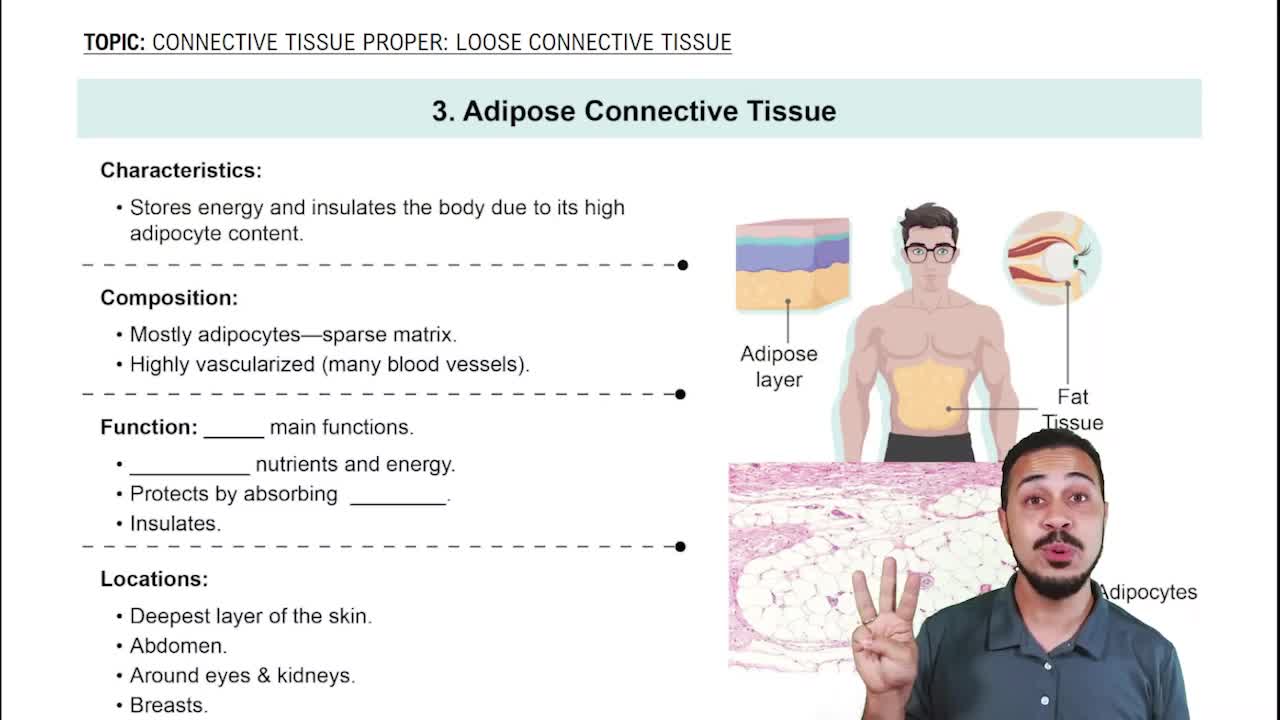
Subcutaneous tissue, or hypodermis, is the layer of fat and connective tissue located beneath the skin. It plays a crucial role in insulation, energy storage, and cushioning. In both newborns and the elderly, reduced subcutaneous tissue can lead to decreased insulation, making them more susceptible to heat loss in cold environments.
Video consigliato:
07:17
Adipose Connective Tissue

Thermoregulation

Thermoregulation is the process by which the body maintains its core internal temperature. It involves physiological and behavioral responses to environmental changes. Infants and older adults often have impaired thermoregulation, which can hinder their ability to generate heat or respond effectively to cold, increasing their risk of hypothermia.
Video consigliato:
Percorso guidato
01:07
Introduction to Thermoregulation

Physiological Responses to Cold

Physiological responses to cold include shivering, vasoconstriction, and increased metabolic rate to generate heat. Newborns and elderly individuals may have diminished shivering response and slower metabolic rates, which can compromise their ability to maintain body temperature in cold conditions, leading to heightened sensitivity to cold.
Video consigliato:
Percorso guidato
9:59
Steps of the Interferon Response
Pratica correlata
Domanda del libro di testo

Name three changes that occur in the skin as one ages.

36
views
Domanda del libro di testo

Roger, a 40-year-old man who loves spending time on the beach, is complaining to you that his suntan made him popular when he was young—but now his face is all wrinkled, and he has several darkly pigmented moles that are growing rapidly and are as big as large coins. He shows you the moles, and immediately you think “ABCDE.” What does that mean, and why should he be concerned?

35
views
Domanda del libro di testo

Match the appropriate structure with the proper description and/or function.

1. Made of dense, irregular connective tissue

 2. Produce sebum

3. Helps regulate body temperature by producing sweat

4. Cause fingerprints

5. Houses the hair root

6. Superficial keratinized stratified squamous epithelium

7. Deep pressure receptors

8. Vascular layer that houses skin appendages

a. Dermal papillae

b. Lamellar corpuscles

c. Dermis

d. Hair follicle

e. Epidermis

f. Eccrine sweat gland

g. Reticular layer

h. Sebaceous glands

35
views
Domanda del libro di testo

Rebecca, the mother of a 13-month-old infant, brings her child to the clinic because his skin has turned orange. Why does the pediatrician inquire about the child’s diet?

30
views
Domanda del libro di testo

From what types of damage does the skin protect the body?

970
views
Domanda del libro di testo

More than one choice may apply.

Which layer of the heart wall is an endothelium?

a. Endocardium

b. Myocardium

c. Epicardium

d. Pericardium

568
views