Ch. 9 The Endocrine System
Marieb - Essentials of Human Anatomy & Physiology 13th Edition
Marieb13th EditionEssentials of Human Anatomy & PhysiologyISBN: 9780135624340Non è quello che usi tu?Cambia libro di testo
Capitolo 9, Problema 11

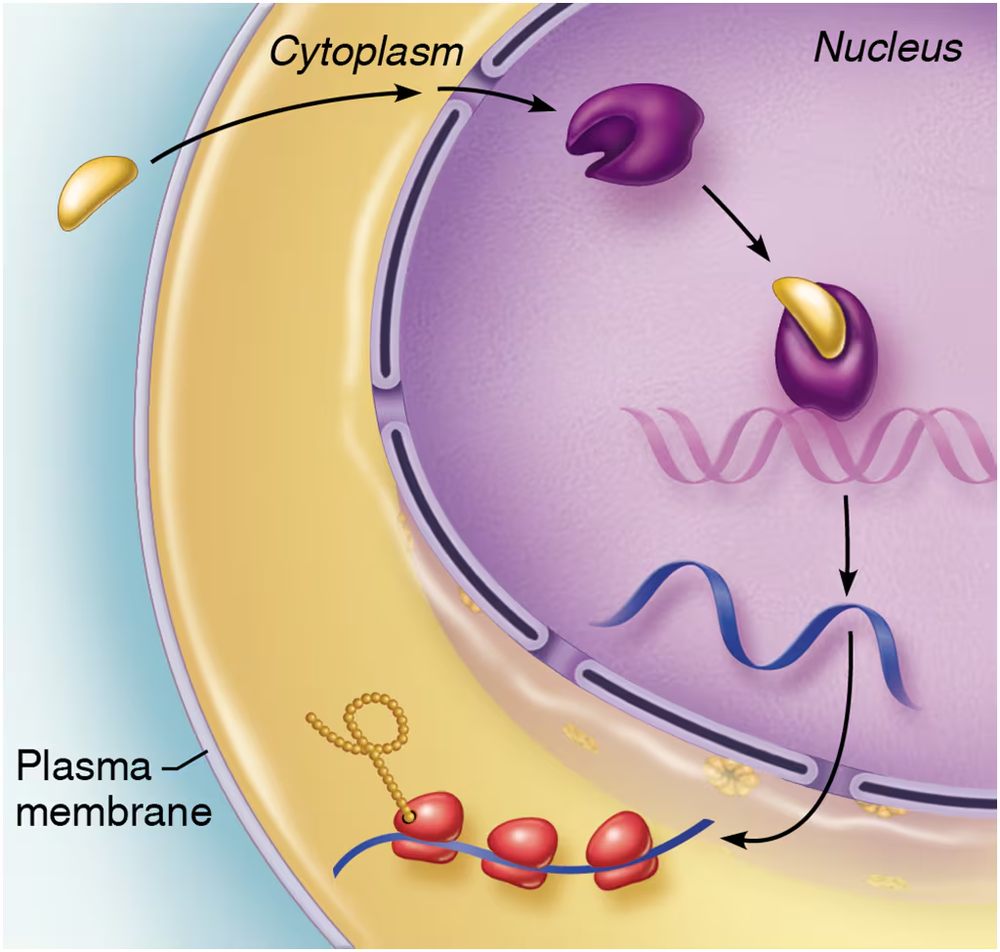
Explain what mechanism of hormone action is occurring in this image. How does it work? Give an example of a hormone that uses this mechanism.
Illustration of hormone action mechanism: hormone binds to receptor, triggering gene expression in the nucleus. Example: steroid hormones.

Guida verificata passo dopo passo
1
Step 1: Identify the mechanism of hormone action depicted in the image. Hormones typically act through one of two mechanisms: intracellular receptor binding (lipid-soluble hormones) or cell surface receptor binding (water-soluble hormones). Determine which type is shown based on the image details.
Step 2: If the hormone binds to a cell surface receptor, explain the process of signal transduction. This involves the hormone (first messenger) binding to the receptor, activating a G-protein, which then triggers a second messenger system (e.g., cyclic AMP or Ca²⁺). This amplifies the signal and leads to cellular responses.
Step 3: If the hormone binds to an intracellular receptor, describe how lipid-soluble hormones like steroid hormones diffuse through the cell membrane, bind to receptors in the cytoplasm or nucleus, and directly influence gene transcription to produce specific proteins.
Step 4: Provide an example of a hormone that uses the mechanism depicted. For cell surface receptor mechanisms, an example is epinephrine, which uses the cyclic AMP pathway. For intracellular receptor mechanisms, an example is cortisol, which binds to nuclear receptors to regulate gene expression.
Step 5: Summarize the importance of this mechanism in maintaining homeostasis and regulating physiological processes, emphasizing how the hormone's action leads to specific cellular responses tailored to the body's needs.

Risposta video verificata per un problema simile:

Questa soluzione video è stata consigliata dai nostri tutor come utile per risolvere questo problema.
Durata del video:
2m

Concetti chiave

Ecco i concetti essenziali che devi comprendere per rispondere correttamente alla domanda.

Hormone Action Mechanisms

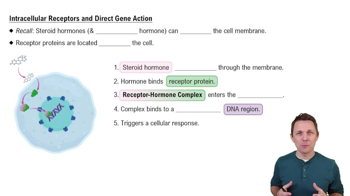
Hormones exert their effects through specific mechanisms of action, which can be broadly categorized into two types: hydrophilic and lipophilic. Hydrophilic hormones, such as peptides, bind to receptors on the cell surface, triggering a cascade of intracellular signaling. In contrast, lipophilic hormones, like steroid hormones, pass through the cell membrane and bind to intracellular receptors, directly influencing gene expression.
Video consigliato:
5:13
Actions of Steroid Hormones

Signal Transduction

Signal transduction refers to the process by which a cell responds to external signals, such as hormones. This involves the binding of a hormone to its receptor, leading to a series of biochemical events that amplify the signal and result in a specific cellular response. This process is crucial for maintaining homeostasis and regulating various physiological functions.
Video consigliato:
1:36
Introduction to Sensory Receptors Example 1

Example of a Hormone

An example of a hormone that utilizes the mechanism of action described is insulin. Insulin is a peptide hormone that binds to insulin receptors on the surface of target cells, such as muscle and fat cells. This binding activates a signaling pathway that facilitates the uptake of glucose from the bloodstream, demonstrating how hormone action can directly influence metabolic processes.
Video consigliato:
4:31
Hormone Review Table Example 1