Indietro
 Martini, Nath, Bartholomew 11th EditionCh. 1 An Introduction to Anatomy and Physiology
Problema 1
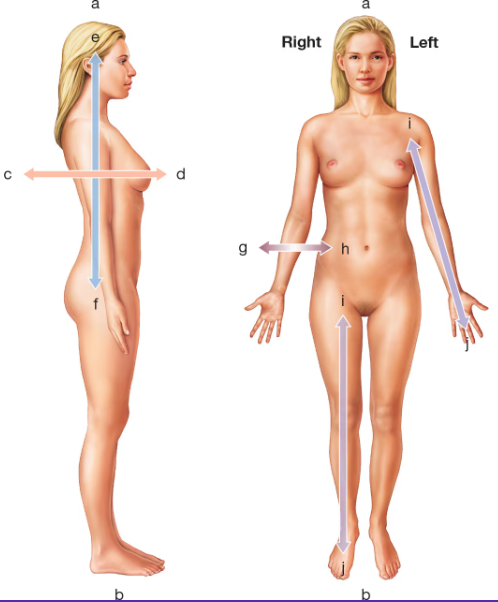
Label the directional terms in the figures below.
a. ____
b. ____
c. ____
d. ____
e. ____
f. ____
g. ____
h. ____
i. ____
j. ____
Problema 2
Match each numbered item with the most closely related lettered item. Use letters for answers in the spaces provided.
____ Cytology
a. Study of tissues
b. Constant internal environment
c. Face-up position
d. Study of functions
e. Positive feedback
f. Organ system
g. Study of cells
h. Negative feedback
i. Serous membrane
j. Study of internal and external body structures
k. Diaphragm
l. Tissue
m. Peritoneal cavity
n. Organ
o. Face-down position
Problema 3
Match each numbered item with the most closely related lettered item. Use letters for answers in the spaces provided.
____Physiology
a. Study of tissues
b. Constant internal environment
c. Face-up position
d. Study of functions
e. Positive feedback
f. Organ system
g. Study of cells
h. Negative feedback
i. Serous membrane
j. Study of internal and external body structures
k. Diaphragm
l. Tissue
m. Peritoneal cavity
n. Organ
o. Face-down position
Problema 4
Match each numbered item with the most closely related lettered item. Use letters for answers in the spaces provided.
____Histology
a. Study of tissues
b. Constant internal environment
c. Face-up position
d. Study of functions
e. Positive feedback
f. Organ system
g. Study of cells
h. Negative feedback
i. Serous membrane
j. Study of internal and external body structures
k. Diaphragm
l. Tissue
m. Peritoneal cavity
n. Organ
o. Face-down position
Problema 5a
Match each numbered item with the most closely related lettered item. Use letters for answers in the spaces provided.
_____ Anatomy
a. Study of tissues
b. Constant internal environment
c. Face-up position
d. Study of functions
e. Positive feedback
f. Organ system
g. Study of cells
h. Negative feedback
i. Serous membrane
j. Study of internal and external body structures
k. Diaphragm
l. Tissue
m. Peritoneal cavity
n. Organ
o. Face-down position
Problema 6
Match each numbered item with the most closely related lettered item. Use letters for answers in the spaces provided.
___ Homeostasis
a. Study of tissues
b. Constant internal environment
c. Face-up position
d. Study of functions
e. Positive feedback
f. Organ system
g. Study of cells
h. Negative feedback
i. Serous membrane
j. Study of internal and external body structures
k. Diaphragm
l. Tissue
m. Peritoneal cavity
n. Organ
o. Face-down position
Problema 7
Match each numbered item with the most closely related lettered item. Use letters for answers in the spaces provided.
____Muscle
a. Study of tissues
b. Constant internal environment
c. Face-up position
d. Study of functions
e. Positive feedback
f. Organ system
g. Study of cells
h. Negative feedback
i. Serous membrane
j. Study of internal and external body structures
k. Diaphragm
l. Tissue
m. Peritoneal cavity
n. Organ
o. Face-down position
Problema 8
Match each numbered item with the most closely related lettered item. Use letters for answers in the spaces provided.
___Heart
a. Study of tissues
b. Constant internal environment
c. Face-up position
d. Study of functions
e. Positive feedback
f. Organ system
g. Study of cells
h. Negative feedback
i. Serous membrane
j. Study of internal and external body structures
k. Diaphragm
l. Tissue
m. Peritoneal cavity
n. Organ
o. Face-down position
Problema 9
Match each numbered item with the most closely related lettered item. Use letters for answers in the spaces provided.
_____Endocrine
a. Study of tissues
b. Constant internal environment
c. Face-up position
d. Study of functions
e. Positive feedback
f. Organ system
g. Study of cells
h. Negative feedback
i. Serous membrane
j. Study of internal and external body structures
k. Diaphragm
l. Tissue
m. Peritoneal cavity
n. Organ
o. Face-down position
Problema 10
Match each numbered item with the most closely related lettered item. Use letters for answers in the spaces provided.
_____Temperature regulation
a. Study of tissues
b. Constant internal environment
c. Face-up position
d. Study of functions
e. Positive feedback
f. Organ system
g. Study of cells
h. Negative feedback
i. Serous membrane
j. Study of internal and external body structures
k. Diaphragm
l. Tissue
m. Peritoneal cavity
n. Organ
o. Face-down position
Problema 11
Match each numbered item with the most closely related lettered item. Use letters for answers in the spaces provided.
_____Labor and delivery
a. Study of tissues
b. Constant internal environment
c. Face-up position
d. Study of functions
e. Positive feedback
f. Organ system
g. Study of cells
h. Negative feedback
i. Serous membrane
j. Study of internal and external body structures
k. Diaphragm
l. Tissue
m. Peritoneal cavity
n. Organ
o. Face-down position
Problema 12
Match each numbered item with the most closely related lettered item. Use letters for answers in the spaces provided.
_____Supine
a. Study of tissues
b. Constant internal environment
c. Face-up position
d. Study of functions
e. Positive feedback
f. Organ system
g. Study of cells
h. Negative feedback
i. Serous membrane
j. Study of internal and external body structures
k. Diaphragm
l. Tissue
m. Peritoneal cavity
n. Organ
o. Face-down position
Problema 13
Match each numbered item with the most closely related lettered item. Use letters for answers in the spaces provided.
____Prone
a. Study of tissues
b. Constant internal environment
c. Face-up position
d. Study of functions
e. Positive feedback
f. Organ system
g. Study of cells
h. Negative feedback
i. Serous membrane
j. Study of internal and external body structures
k. Diaphragm
l. Tissue
m. Peritoneal cavity
n. Organ
o. Face-down position
Problema 14
Match each numbered item with the most closely related lettered item. Use letters for answers in the spaces provided.
_____Divides thoracic and abdominopelvic body cavities
a. Study of tissues
b. Constant internal environment
c. Face-up position
d. Study of functions
e. Positive feedback
f. Organ system
g. Study of cells
h. Negative feedback
i. Serous membrane
j. Study of internal and external body structures
k. Diaphragm
l. Tissue
m. Peritoneal cavity
n. Organ
o. Face-down position
Problema 15
Match each numbered item with the most closely related lettered item. Use letters for answers in the spaces provided.
_____Abdominopelvic cavity
a. Study of tissues
b. Constant internal environment
c. Face-up position
d. Study of functions
e. Positive feedback
f. Organ system
g. Study of cells
h. Negative feedback
i. Serous membrane
j. Study of internal and external body structures
k. Diaphragm
l. Tissue
m. Peritoneal cavity
n. Organ
o. Face-down position
Problema 16
Match each numbered item with the most closely related lettered item. Use letters for answers in the spaces provided.
______Pericardium
a. Study of tissues
b. Constant internal environment
c. Face-up position
d. Study of functions
e. Positive feedback
f. Organ system
g. Study of cells
h. Negative feedback
i. Serous membrane
j. Study of internal and external body structures
k. Diaphragm
l. Tissue
m. Peritoneal cavity
n. Organ
o. Face-down position
Problema 17
The following is a list of six levels of organization that make up the human body:
(1) Tissue
(2) Cell
(3) Organ
(4) Chemical
(5) Organism
(6) Organ system
The correct order, from the simplest to the most complex level, is
(a) 2, 4, 1, 3, 6, 5
(b) 4, 2, 1, 3, 6, 5
(c) 4, 2, 1, 6, 3, 5
(d) 4, 2, 3, 1, 6, 5
(e) 2, 1, 4, 3, 5, 6
Problema 18
The study of the structure of tissues is called (a) gross anatomy, (b) cytology, (c) histology, (d) organology.
Problema 21
A plane through the body that passes perpendicular to the long axis of the body and divides the body into a superior and an inferior section is a
(a) Sagittal section,
(b) Transverse section,
(c) Coronal section,
(d) Frontal section.
Problema 22
Which body cavity would enclose each of the following organs?
(a) Heart
(b) Small intestine, large intestine
(c) Lung
(d) Kidneys
Problema 23
The mediastinum is the region between the
(a) Lungs and heart
(b) Two pleural cavities
(c) Chest and abdomen
(d) Heart and pericardium
Problema 25a
(a) Define anatomy.
Problema 25b
(b) Define physiology.
Problema 26
The two major body cavities of the trunk are the
(a) Pleural cavity and pericardial cavity
(b) Pericardial cavity and peritoneal cavity
(c) Pleural cavity and peritoneal cavity
(d) Thoracic cavity and abdominopelvic cavity
Problema 28
Describe the anatomical position.
Problema 29
Which sectional plane could divide the body so that the face remains intact?
(a) Sagittal plane
(b) Frontal (coronal) plane
(c) Equatorial plane
(d) Midsagittal plane
(e) Parasagittal plane