Ch. 26 The Urinary System
Martini - Fundamentals of Anatomy & Physiology 12th Edition
Martini, Nath, Bartholomew12th EditionFundamentals of Anatomy & PhysiologyISBN: 9780137854011Non è quello che usi tu?Cambia libro di testo
Capitolo 25, Problema 17

Sympathetic activation of nerve fibers in the nephron causes 
(a) the regulation of glomerular blood flow and pressure, 
(b) the stimulation of renin release from the juxtaglomerular complex, 
(c) the direct stimulation of water and Na+ reabsorption, 
(d) all of these.

Guida verificata passo dopo passo
1
Step 1: Understand the role of sympathetic activation in the nephron. Sympathetic nerve fibers innervate various parts of the nephron and influence kidney function, especially during stress or low blood pressure conditions.
Step 2: Analyze option (a) - Sympathetic activation causes vasoconstriction of the afferent arterioles, which regulates glomerular blood flow and pressure. This helps maintain systemic blood pressure by adjusting filtration rate.
Step 3: Analyze option (b) - Sympathetic stimulation triggers the juxtaglomerular cells to release renin, initiating the renin-angiotensin-aldosterone system (RAAS), which increases blood volume and pressure.
Step 4: Analyze option (c) - Sympathetic activation directly promotes reabsorption of sodium (Na+) and water in the proximal tubules, helping to conserve fluid and maintain blood pressure.
Step 5: Combine the insights from steps 2, 3, and 4 to determine that sympathetic activation causes all these effects, making option (d) the comprehensive answer.

Risposta video verificata per un problema simile:

Questa soluzione video è stata consigliata dai nostri tutor come utile per risolvere questo problema.

Concetti chiave

Ecco i concetti essenziali che devi comprendere per rispondere correttamente alla domanda.

Sympathetic Nervous System and Nephron Function

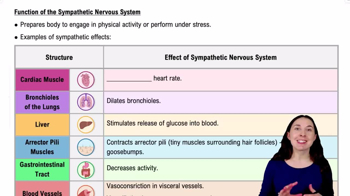
The sympathetic nervous system regulates kidney function by activating nerve fibers in the nephron, influencing blood flow, pressure, and tubular reabsorption. This activation helps the body respond to stress by conserving sodium and water, thus maintaining blood volume and pressure.
Video consigliato:
2:52
Function of the Sympathetic Nervous System

Renin Release from the Juxtaglomerular Apparatus

The juxtaglomerular apparatus releases renin in response to sympathetic stimulation, low blood pressure, or decreased sodium delivery. Renin initiates the renin-angiotensin-aldosterone system (RAAS), which increases blood pressure and sodium retention to restore homeostasis.
Video consigliato:
Percorso guidato
11:30
Renin-Angiotensin-Aldosterone-System

Regulation of Glomerular Blood Flow and Tubular Reabsorption

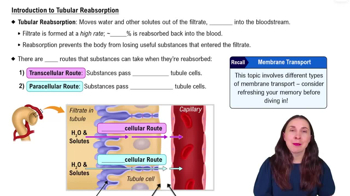
Sympathetic activation causes vasoconstriction of afferent arterioles, reducing glomerular blood flow and filtration rate. It also directly stimulates sodium and water reabsorption in renal tubules, aiding in fluid retention and blood pressure maintenance during stress or volume depletion.
Video consigliato:
4:06
Introduction to Tubular Reabsorption