 Indietro
Biochemistry Foundations: Genes, Proteins, and Biomolecules
Guida di studio - Note intelligenti
 Appunti personalizzati basati sui tuoi materiali, ampliati con definizioni chiave, esempi e contesto.
Introduction to Biochemistry
Overview of Biochemistry
Biochemistry is the study of the chemical compounds, their structures, mechanisms of activity, and chemical processes that occur in living organisms. It forms the foundation for understanding cellular structure, function, and the molecular basis of life.
Key Focus: Chemical nature of biological molecules, their interactions, and their roles in cellular processes.
Applications: Medicine, biotechnology, genetics, and molecular biology.
Origin of Life and Abiotic Synthesis of Biomolecules
Miller-Urey Experiment and Chemical Evolution
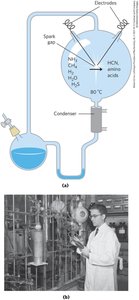
The Miller-Urey experiment demonstrated that simple biomolecules, such as amino acids, could be synthesized abiotically under conditions thought to resemble those of early Earth. This experiment provided evidence for the chemical evolution hypothesis.
Experimental Setup: Closed system with simple gases (NH3, CH4, H2O, H2S) subjected to electrical sparks.
Results: Formation of amino acids and other organic compounds.
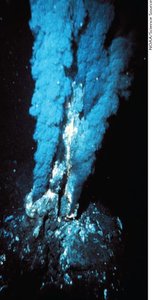
Implications: Biomolecules may have originated near hydrothermal vents or through lightning and high temperatures.
RNA World Hypothesis
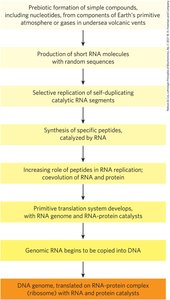
RNA or related precursors may have been the first genes and catalysts, suggesting that simple metabolic pathways evolved first at oceanic hot vents. RNA could serve both as a catalyst and as a repository of genetic information.
Key Points: Evolution of simple compounds and metabolic pathways.
RNA's Role: First catalyst and genetic material.
Biological Evolution and Cell Structure
Major Events in Biological Evolution
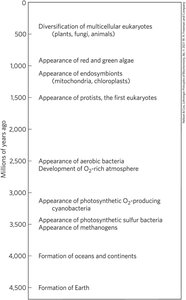
Biological evolution spans over 3.5 billion years, with multicellular organisms developing specialized cell types. Key evolutionary milestones include the development of chromosomes, nuclei, and endosymbiosis, which led to mitochondria and chloroplasts.
Atmospheric Changes: Rise of O2-producing photosynthetic bacteria.
Energy Sources: Early cells used inorganic fuels.
Protocells: Lipid vesicles with self-replicating RNA.
Cellular Structure: Prokaryotes vs. Eukaryotes
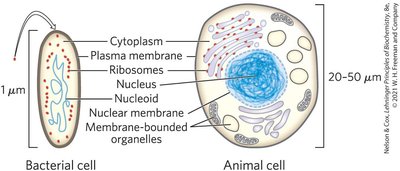
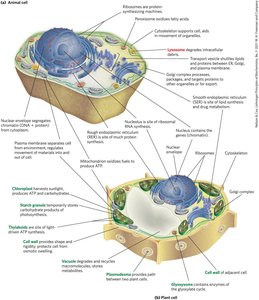
Cells are the structural and functional units of all living organisms. Prokaryotic cells lack a nucleus and membrane-bound organelles, while eukaryotic cells possess these features and are generally larger and more complex.
Prokaryotes: Bacteria and archaea; nucleoid region, no nucleus.
Eukaryotes: Plants, animals, fungi; nucleus, organelles.
Elements and Chemical Constituents of Cells
Essential Elements for Life
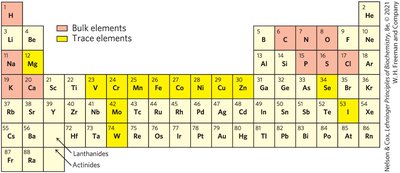
Life depends on a set of essential elements, with carbon, hydrogen, oxygen, nitrogen, phosphorus, and sulfur being the most common. Metal ions such as potassium, sodium, calcium, magnesium, zinc, and iron are crucial for metabolism.
Bulk Elements: Required in large amounts (e.g., C, H, O, N).
Trace Elements: Required in small amounts (e.g., Fe, Zn, Cu).
Carbon Chemistry and Functional Groups
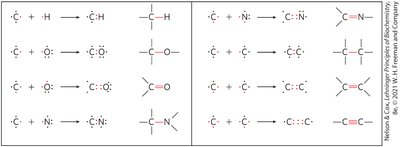
Carbon forms the backbone of biomolecules, capable of single, double, and triple covalent bonds. Its tetrahedral geometry allows for diverse molecular structures and free rotation around single bonds, which is limited in double bonds.
Bond Types: Single, double, triple bonds.
Functional Groups: Amino, carboxyl, hydroxyl, phosphate, etc.

Major Biomolecules: Structure and Function
Macromolecules and Their Building Blocks
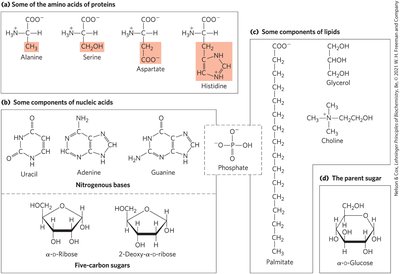
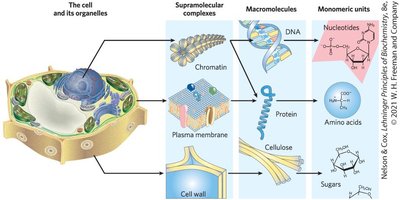
Cells contain macromolecules (polymers with molecular weights > 5,000) assembled from simple precursors. These include nucleic acids, proteins, and polysaccharides. Oligomers are shorter polymers, and lipids are nonpolymeric hydrophobic molecules.
Nucleic Acids: Polymers of nucleotides.
Proteins: Polymers of amino acids.
Polysaccharides: Polymers of glucose.
Lipids: Fats, oils, hormones, pigments.
Small Molecules: Water, amino acids, nucleotides, simple sugars, ions, vitamins, trace metals.
Nucleic Acids: DNA and RNA
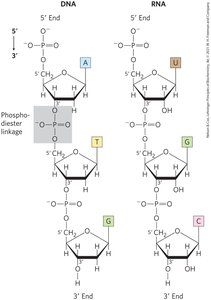
Nucleic acids are polymers of nucleotides, each consisting of a pentose sugar (deoxyribose in DNA, ribose in RNA), a nitrogenous base, and a phosphate group. DNA stores genetic information, while RNA is involved in protein synthesis and gene regulation.
DNA Bases: Adenine (A), Cytosine (C), Guanine (G), Thymine (T).
RNA Bases: Adenine (A), Cytosine (C), Guanine (G), Uracil (U).
Phosphodiester Bonds: Link nucleotides via 5'-3' connection.
Functions: DNA for genetic storage and regulation; RNA for protein synthesis and regulatory roles.
Proteins: Structure and Function
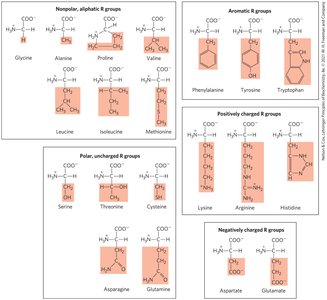
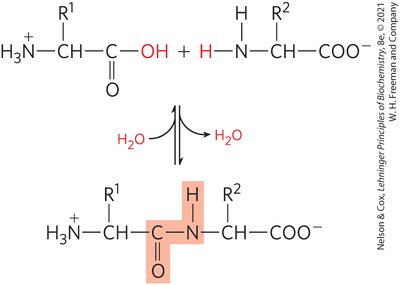
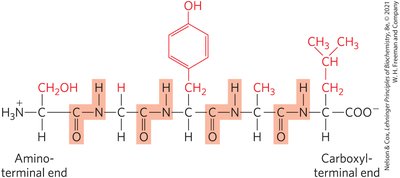
Proteins are polymers of 20 amino acids, each with a central carbon attached to an amino group, carboxyl group, hydrogen, and a unique R group. Amino acids are linked by peptide bonds, forming polypeptide chains with distinct amino and carboxyl terminals.
Primary Structure: Sequence of amino acids, genetically determined.
Functions: Enzymes, antibodies, energy storage, transport channels, hormones, receptors, structural support, contractile and motor proteins.
Carbohydrates: Structure and Function
Carbohydrates include simple sugars (monosaccharides), disaccharides, and polysaccharides. They serve as energy storage molecules, structural components, and are involved in cell communication.
Monosaccharides: Glucose, fructose.
Disaccharides: Sucrose, lactose.
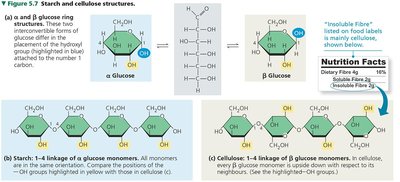
Polysaccharides: Starch, cellulose (plants), glycogen (animals).
Functions: Energy storage, structural support, nucleic acid components, cell-cell binding.
Lipids: Structure and Function
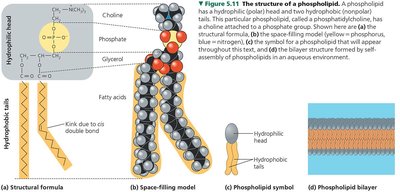
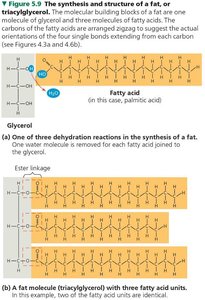
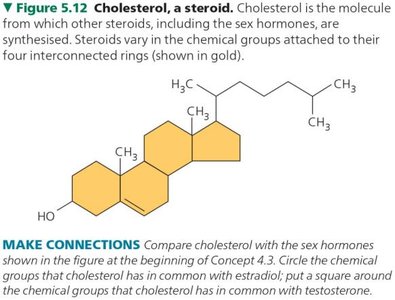
Lipids are hydrophobic molecules with diverse structures, including triglycerides, phospholipids, cholesterol, hormones, pigments, and vitamins. They are essential for energy storage, membrane structure, and signaling.
Triglycerides: Fats and oils for energy storage.
Phospholipids: Structural component of membranes.
Cholesterol: Membrane support and precursor for steroid hormones.
Hormones: Testosterone, estrogen.
Pigments: Chlorophylls, carotenoids.
Vitamins: Vitamin D.
Summary Table: Major Biomolecules
Biomolecule | Monomer | Polymer | Main Functions |
|---|---|---|---|
Nucleic Acids | Nucleotide | DNA, RNA | Genetic information storage, protein synthesis |
Proteins | Amino acid | Polypeptide | Enzymes, structure, transport, signaling |
Carbohydrates | Monosaccharide | Polysaccharide | Energy storage, structure, cell communication |
Lipids | Fatty acid, glycerol | Triglyceride, phospholipid | Energy storage, membrane structure, signaling |
Additional info:
Some academic context was inferred for completeness, such as the summary table and expanded explanations of biomolecule functions.
Suggested readings include Lehninger Principles of Biochemistry (Nelson & Cox, Ed. VIII) and Campbell Biology (Ed. XII).
