 Indietro
Biochemistry Foundations: Structure, Water, pH, Thermodynamics, and Nucleic Acids
Guida di studio - Note intelligenti
 Appunti personalizzati basati sui tuoi materiali, ampliati con definizioni chiave, esempi e contesto.
Biochemistry and the Language of Chemistry
Historical Foundations of Biochemistry
Biochemistry emerged as a scientific discipline in the 19th century, challenging the doctrine of vitalism, which posited that living and nonliving matter were fundamentally different. Key experiments demonstrated that organic molecules could be synthesized from inorganic precursors, bridging chemistry and biology.
Vitalism Disproved: In 1828, Friedrich Wöhler synthesized urea from ammonium cyanate, showing that organic compounds could be formed from inorganic substances.
Fermentation Studies: Louis Pasteur and the Buchner brothers demonstrated that fermentation could occur outside living cells, implicating enzymes and cellular extracts in biochemical reactions.
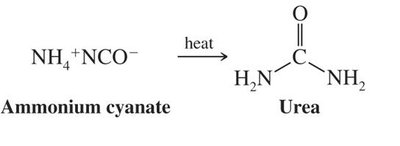
Example: The synthesis of urea from ammonium cyanate is a classic experiment that marked the birth of biochemistry as a science.
Discovery of DNA Structure
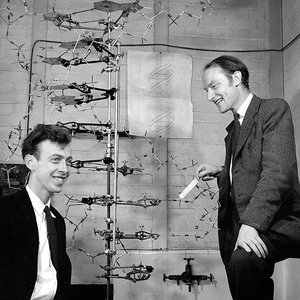
In 1953, the double-helical structure of DNA was described, revolutionizing our understanding of genetic information storage and transfer.
Watson and Crick: Used model-building and X-ray diffraction data to propose the double helix structure of DNA, explaining base pairing and genetic replication.
The Chemical Foundation of Life
Levels of Biological Organization
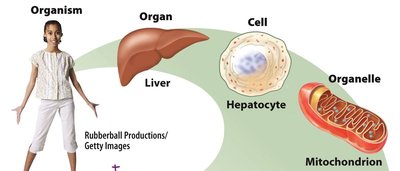
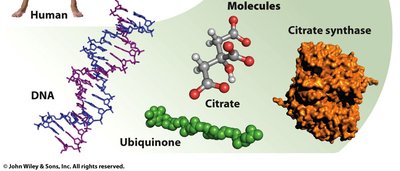
Living systems are organized hierarchically, from atoms and molecules to cells, organs, and organisms. Each level builds upon the previous, with increasing complexity and specialization.
Atoms and Elements: Life is composed primarily of a limited set of elements, with carbon, hydrogen, oxygen, and nitrogen being the most abundant.
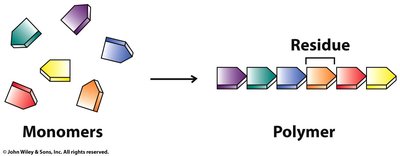
Molecules and Macromolecules: Small molecules combine to form macromolecules such as proteins, nucleic acids, polysaccharides, and lipids.
Major Classes of Biomolecules
Cells are constructed from four major classes of biological macromolecules, each with distinct structures and functions:
Nucleic Acids (DNA and RNA): Polymers of nucleotide monomers, linked by phosphodiester bonds, responsible for information storage and transfer.
Proteins: Polymers of amino acids, linked by amide (peptide) bonds, performing catalytic, structural, and regulatory roles.
Polysaccharides: Polymers of monosaccharides, linked by glycosidic bonds, serving as energy storage and structural components.
Lipids: Diverse group, primarily hydrophobic, forming membranes and storing energy.
Functions of Biopolymers
Biopolymer | Encode Information | Carry Out Metabolic Reactions | Store Energy | Support Cellular Structures |
|---|---|---|---|---|
Proteins | ✓ (minor) | ✓ (major) | ✓ (minor) | ✓ (major) |
Nucleic acids | ✓ (major) | ✓ (minor) | ||
Polysaccharides | ✓ (major) | ✓ (major) |
The Energetics of Life
Thermodynamic Principles
Biochemical reactions are governed by the laws of thermodynamics, which determine the direction and spontaneity of processes in living systems.
First Law (Conservation of Energy): Energy cannot be created or destroyed, only transformed.
Second Law (Entropy): The entropy (disorder) of an isolated system tends to increase.
Enthalpy (H): The heat content of a system at constant pressure.
Entropy (S): A measure of disorder or randomness.
Gibbs Free Energy (G): Determines the spontaneity of a reaction:
Key Points:
Exergonic Reactions: , spontaneous.
Endergonic Reactions: , non-spontaneous.
Equilibrium: .
Example: The hydrolysis of ATP is highly exergonic and is used to drive many endergonic cellular processes.
Nucleic Acids
Structure and Components
Nucleic acids are polymers of nucleotides, which consist of three components:
Base: Purine (adenine, guanine) or pyrimidine (cytosine, thymine, uracil).
Sugar: Ribose (RNA) or deoxyribose (DNA).
Phosphate Group: Usually attached at the 5' position.
Phosphodiester Linkage: Nucleotides are joined by phosphodiester bonds between the 3' hydroxyl of one sugar and the 5' phosphate of the next.
DNA Double Helix
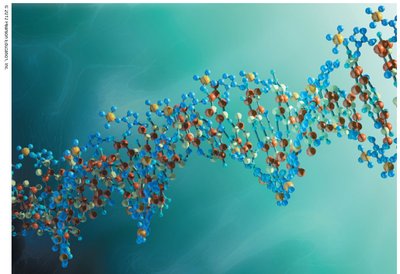
The DNA molecule consists of two antiparallel strands forming a right-handed double helix. The bases pair specifically (A with T, G with C) via hydrogen bonds, and the backbone is composed of alternating sugars and phosphates.
Base Pairing: A-T pairs have 2 hydrogen bonds; G-C pairs have 3 hydrogen bonds.
Stability: The double helix is stabilized by hydrogen bonding and base stacking interactions (π-π interactions).
Central Dogma of Molecular Biology
The flow of genetic information in cells follows the central dogma:
Replication: DNA is copied to produce identical DNA molecules.
Transcription: DNA is transcribed into RNA.
Translation: RNA is translated into protein.
Example: The Meselson-Stahl experiment demonstrated the semiconservative nature of DNA replication.
Additional info:
Biochemistry integrates chemistry and biology to explain life at the molecular level, including the structure, function, and energetics of biomolecules.
Understanding water chemistry, pH, and buffer systems is essential for studying biochemical reactions and cellular processes.
