 Indietro
Enzymes: Catalysis, Mechanisms, and Energetics in Biochemistry
Guida di studio - Note intelligenti
 Appunti personalizzati basati sui tuoi materiali, ampliati con definizioni chiave, esempi e contesto.
Enzymes and Their Central Role in Biochemistry
Introduction to Enzymes
Enzymes are biological catalysts that accelerate chemical reactions in living organisms, enabling life-sustaining metabolic processes to occur efficiently under physiological conditions. They are essential for metabolism, which encompasses all chemical reactions within an organism.
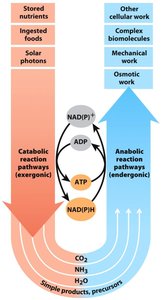
Metabolism: The sum of all chemical reactions in a cell, divided into catabolic (degradative, energy-releasing) and anabolic (biosynthetic, energy-consuming) pathways.
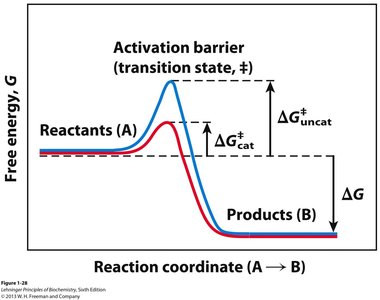
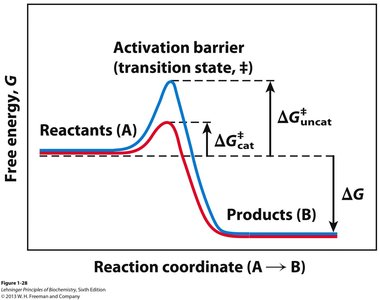
Enzyme Function: Enzymes lower the activation energy of reactions, increasing reaction rates without altering the equilibrium position.
Energetics of Enzyme-Catalyzed Reactions
Understanding the energetics of enzyme-catalyzed reactions is crucial for interpreting how enzymes facilitate biological processes.
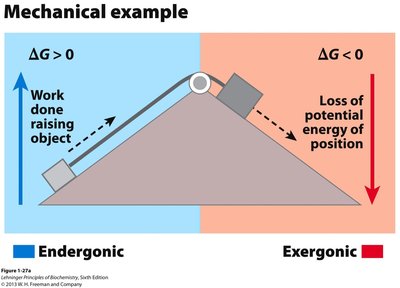
Free Energy (G): The energy available to do work. Changes in free energy (ΔG) determine reaction spontaneity.
Exergonic Reactions: Release energy (ΔG < 0), spontaneous.
Endergonic Reactions: Require energy input (ΔG > 0), non-spontaneous.
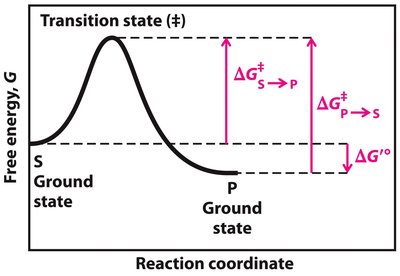
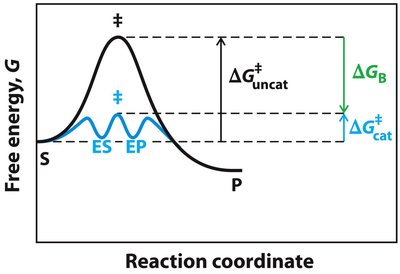
Activation Energy (ΔG‡): The energy barrier that must be overcome for a reaction to proceed.
Metabolic Pathways: Catabolism and Anabolism
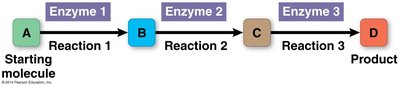
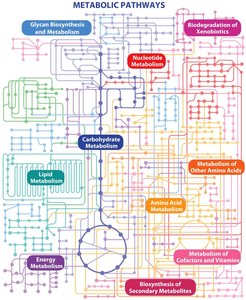
Metabolic pathways are sequences of enzyme-catalyzed reactions that transform substrates into products. These pathways are interconnected and tightly regulated.
Catabolic Pathways: Break down complex molecules, releasing energy (exergonic).
Anabolic Pathways: Synthesize complex molecules, consuming energy (endergonic).
Energy Coupling: ATP and other energy carriers link catabolic and anabolic reactions.
Examples: Glucose Oxidation and Photosynthesis
Two central metabolic processes illustrate the role of enzymes and energy transformations:
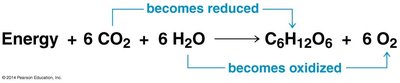
Glucose Oxidation (Cellular Respiration): Glucose is oxidized, oxygen is reduced, and energy is released.
Photosynthesis: Carbon dioxide and water are reduced to glucose, storing energy.

Enzyme Structure and Classification
Holoenzymes and Their Components
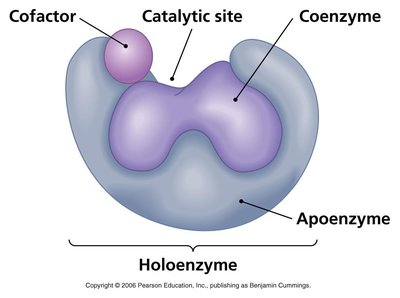
A holoenzyme is a catalytically active enzyme with all necessary cofactors and coenzymes bound. The protein portion alone is called the apoenzyme.
Cofactors: Inorganic ions (e.g., Mg2+, Zn2+) required for activity.
Coenzymes: Organic molecules (often derived from vitamins) that assist in catalysis.
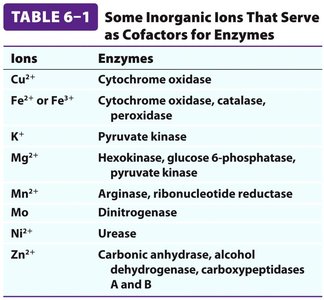
Ions | Enzymes |
|---|---|
Cu2+ | Cytochrome oxidase |
Fe2+ or Fe3+ | Cytochrome oxidase, catalase, peroxidase |
K+ | Pyruvate kinase |
Mg2+ | Hexokinase, glucose 6-phosphatase, pyruvate kinase |
Mn2+ | Arginase, ribonucleotide reductase |
Mo | Dinitrogenase |
Ni2+ | Urease |
Zn2+ | Carbonic anhydrase, alcohol dehydrogenase, carboxypeptidases A and B |
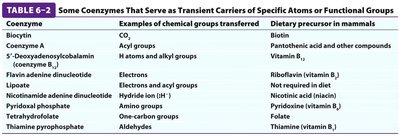
Coenzyme | Groups Transferred | Dietary Precursor |
|---|---|---|
Biotin | CO2 | Biotin |
Coenzyme A | Acyl groups | Pantothenic acid |
Flavin adenine dinucleotide | Electrons | Riboflavin (B2) |
NAD+ | Hydride ion (H-) | Niacin |
Pyridoxal phosphate | Amino groups | Pyridoxine (B6) |
Enzyme Nomenclature and Classification
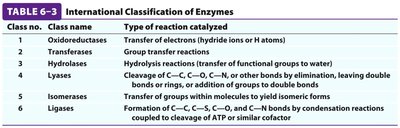
Enzymes are classified by the type of reaction they catalyze, according to the International Union of Biochemistry and Molecular Biology (IUBMB).
Class No. | Class Name | Type of Reaction Catalyzed |
|---|---|---|
1 | Oxidoreductases | Transfer of electrons |
2 | Transferases | Group transfer reactions |
3 | Hydrolases | Hydrolysis reactions |
4 | Lyases | Cleavage of bonds by elimination |
5 | Isomerases | Transfer of groups within molecules |
6 | Ligases | Formation of bonds with ATP hydrolysis |
Mechanisms of Enzyme Action
Active Site and Substrate Binding
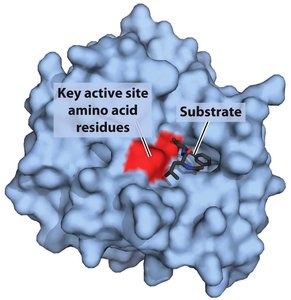
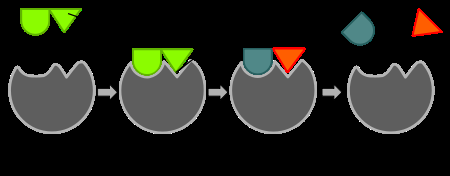
The active site of an enzyme is a specialized region where substrate molecules bind and undergo a chemical transformation. The specificity and catalytic efficiency of enzymes arise from the precise arrangement of amino acid residues in the active site.
Lock-and-Key Model: Substrate fits precisely into the active site.
Induced Fit Model: Enzyme changes conformation upon substrate binding, optimizing interactions.
Transition State Stabilization and Catalysis
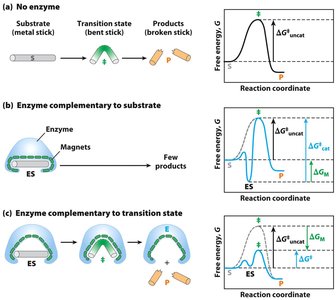
Enzymes accelerate reactions by stabilizing the transition state, thereby lowering the activation energy required for the reaction to proceed.
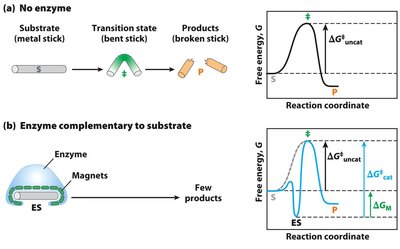
Binding Energy (ΔGB): The energy derived from enzyme-substrate interactions, used to lower the activation barrier.
Transition State Complementarity: Enzymes are most complementary to the transition state, not the substrate, maximizing stabilization.
Enzyme Kinetics and Regulation
Enzyme kinetics describes the rates of enzyme-catalyzed reactions and how they are affected by substrate concentration, enzyme concentration, and other factors.
Rate Constant (k): Proportionality constant in the rate equation.
First-Order Reaction: Rate depends linearly on substrate concentration.
Second-Order Reaction: Rate depends on the product of two reactant concentrations.
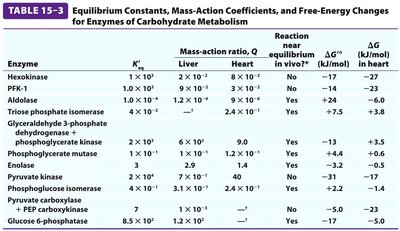
Regulation: Enzymes catalyzing reactions far from equilibrium are common regulatory points in metabolism.
Relationship Between Equilibrium, Free Energy, and Reaction Direction
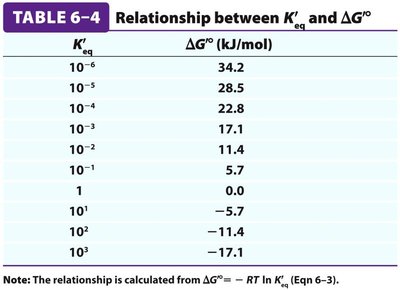
The direction and spontaneity of a reaction are determined by the equilibrium constant (Keq) and the standard free energy change (ΔG°').
Relationship:
Interpretation:
If Keq > 1, ΔG°' is negative: reaction proceeds forward.
If Keq = 1, ΔG°' is zero: reaction is at equilibrium.
If Keq < 1, ΔG°' is positive: reaction proceeds in reverse.
K'eq | ΔG°' (kJ/mol) |
|---|---|
10-6 | 34.2 |
10-3 | 17.1 |
1 | 0.0 |
103 | -17.1 |
K'eq | ΔG°' | Direction |
|---|---|---|
>1.0 | negative | proceeds forward |
1.0 | zero | at equilibrium |
<1.0 | positive | proceeds in reverse |
Mechanisms of Enzyme Catalysis
Catalytic Strategies
Enzymes employ several catalytic strategies to accelerate reactions:
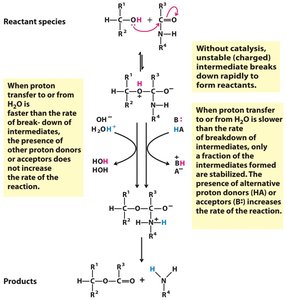
Acid-Base Catalysis: Enzyme side chains donate or accept protons to stabilize intermediates.
Covalent Catalysis: Enzyme forms a transient covalent bond with the substrate.
Metal Ion Catalysis: Metal ions stabilize charges or participate in redox reactions.
Summary Table: Enzyme Catalytic Mechanisms
Mechanism | Description | Example |
|---|---|---|
Acid-Base Catalysis | Proton transfer stabilizes intermediates | Chymotrypsin |
Covalent Catalysis | Transient covalent bond with substrate | Serine proteases |
Metal Ion Catalysis | Metal ions stabilize charges | Carbonic anhydrase |
Conclusion
Enzymes are indispensable for life, enabling the complex and highly regulated chemistry of cells. Their catalytic power, specificity, and regulation are central to all aspects of biochemistry, from metabolism to genetic information processing.
