 Indietro
The Origin and Early Evolution of Life: Chemical and Biological Foundations
Guida di studio - Note intelligenti
 Appunti personalizzati basati sui tuoi materiali, ampliati con definizioni chiave, esempi e contesto.
Introduction to the Origin of Life
The study of the origin and early evolution of life is foundational to biochemistry, as it explores how simple chemical processes gave rise to complex biological systems. This topic integrates evidence from geology, chemistry, and molecular biology to reconstruct the emergence of life on Earth.
When Did Life Begin?
Geological and Fossil Evidence
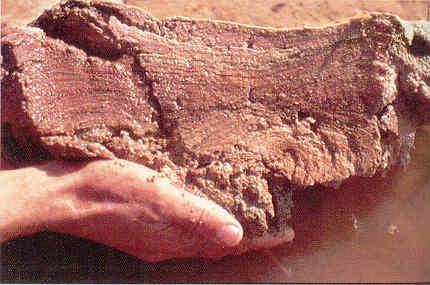
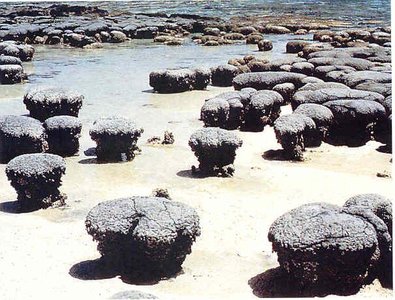
Stromatolites: Layered rock structures formed by microbial mats, dating back 3.5 billion years, provide some of the earliest direct evidence of life.
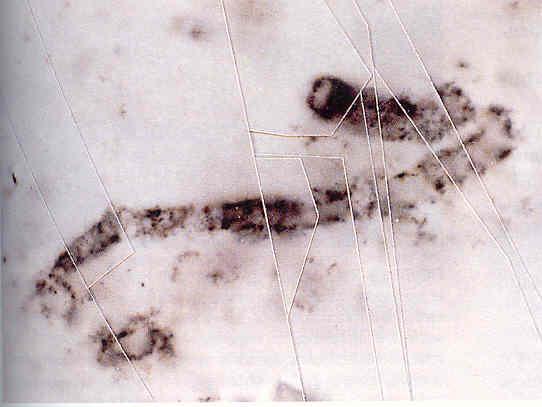
Microfossils: Microscopic fossilized remains, also around 3.5 billion years old, have been found to contain organic carbon, distinguishing them from purely mineral structures.
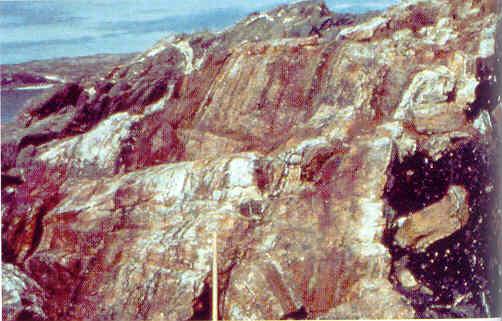
Isotopic Signatures: Metamorphic rocks as old as 3.85 billion years show a low 13C/12C ratio, indicating biological activity since living organisms preferentially use 12C.
Where Did Life Begin?
Land: Unlikely due to lack of oxygen and ozone, resulting in destructive UV radiation.
Shallow Ponds: Once favored for concentrating organic molecules, but likely lacked sufficient chemical energy.
Deep-Sea Vents/Hot Springs: Supported by DNA evidence and the abundance of chemical energy, these environments are considered probable sites for the origin of life.
How Did Life Begin? Chemical Evolution
Organic Chemistry on Early Earth
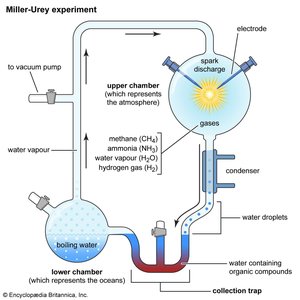
Early hypotheses suggested that Earth's primitive atmosphere, energized by sunlight or lightning, could spontaneously generate organic molecules.
The Miller-Urey experiment (1950s) simulated these conditions and produced amino acids and other organic compounds.
Sources of Organic Molecules
Atmospheric Reactions: Laboratory experiments confirm the plausibility of organic synthesis in the early atmosphere.
Extraterrestrial Delivery: Comets and meteorites (carbonaceous chondrites) contain organic molecules, suggesting delivery from space.
Hydrothermal Vents: Chemical reactions fueled by undersea volcanoes could synthesize organic molecules.
Transition from Chemistry to Biology
Organic molecules are the building blocks of life, but the spontaneous formation of life is statistically improbable without intermediate steps.
Surface catalysis (e.g., on clay or iron pyrite) could concentrate and assemble complex molecules, including RNA strands.
Self-Replicating Molecules and the RNA World
Search for the First Self-Replicating Molecule
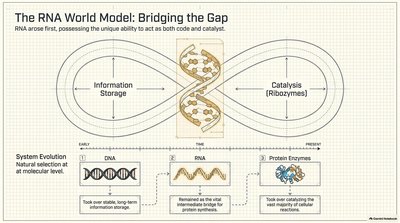
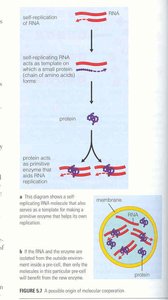
RNA: Simpler than DNA, capable of storing hereditary information and serving as a template for replication.
Discovery of ribozymes (catalytic RNA) in the 1980s suggested that RNA could catalyze its own replication, supporting the "RNA World" hypothesis.
RNA-based life likely preceded DNA-based life, with DNA eventually taking over as the primary genetic material due to its greater stability.
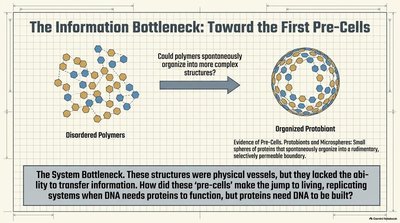
Formation of Early Cell-like Structures
Enclosing RNA and enzymes within a membrane increased reaction rates and isolated the internal environment.
Laboratory experiments show that membrane-bound structures (protocells) can form spontaneously from lipids and amino acids.
These pre-cells could grow, divide, selectively transport molecules, and store energy as electric voltage—key properties of living cells.
Handedness (Chirality) in Organic Molecules
Organic molecules exist in left- and right-handed forms (enantiomers).
Biological systems exhibit a preference for one form (e.g., left-handed amino acids), while non-biological processes do not.
The origin of this preference remains an open question in biochemistry.
Panspermia: An Alternative Hypothesis
Panspermia: The hypothesis that life originated elsewhere in the universe and was transported to Earth via space dust, meteorites, or comets.
Variants include lithopanspermia (transfer inside rocks), radiopanspermia (propelled by radiation), directed panspermia (deliberate seeding), and pseudo-panspermia (delivery of organic molecules).
Key evidence includes the resilience of extremophiles, rapid emergence of life on Earth, and the organic richness of space debris.
Major challenges: radiation exposure, survival during atmospheric entry, and the fact that panspermia does not explain the ultimate origin of life.
Early Evolution and the Rise of Oxygen
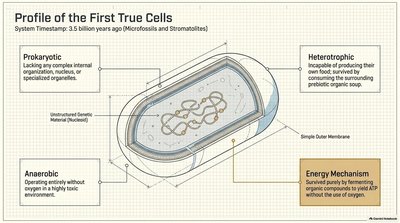
First organisms were likely anaerobic chemoheterotrophs, obtaining energy from chemical reactions involving hydrogen, sulfur, and iron compounds.
Photosynthesis evolved gradually, with early forms using H2S instead of H2O. Cyanobacteria later developed oxygenic photosynthesis, releasing O2 as a byproduct.
O2 initially reacted with rocks and minerals; atmospheric accumulation began only after these sinks were saturated, as evidenced by banded iron formations.
The rise of O2 created both opportunities (aerobic metabolism) and crises (toxicity for anaerobes), driving evolutionary innovation.
Emergence of Eukaryotes and Multicellularity
Fossil evidence for eukaryotes dates to 2.1 billion years ago, coinciding with rising O2 levels.
Eukaryotes possess internal membranes and organelles, enabling more efficient energy production and greater complexity.
The Cambrian Explosion (~545 million years ago) saw the rapid diversification of animal body plans.
Colonization of Land and Mass Extinctions
Life originated in water; colonization of land required adaptations for water retention, nutrient acquisition, and UV protection.
Plants evolved from algae, followed by animals. Mass extinctions, caused by impacts, volcanism, or climate change, periodically reshaped the biosphere.
Human Evolution and Cultural Development
Humans share a common ancestor with other primates; the divergence from chimpanzees occurred a few million years ago.
Modern humans (Homo sapiens) appeared about 100,000 years ago, coexisting with Neanderthals for a time.
Recent human history is marked by cultural and technological evolution rather than significant biological change.
Summary Table: Timeline of Major Events in the Origin and Evolution of Life
Time (billion years ago) | Event |
|---|---|
4.6 | Formation of Earth |
3.85 | Earliest isotopic evidence of life |
3.5 | Stromatolites and microfossils |
2.1 | First eukaryotes |
2.0 | Rise of atmospheric O2 |
0.545 | Cambrian Explosion (animal diversity) |
0.0001 | Appearance of modern humans |
Key Concepts and Definitions
Abiogenesis: The process by which life arises naturally from non-living matter.
Stromatolites: Layered structures formed by microbial communities, among the oldest evidence of life.
Ribozyme: An RNA molecule capable of catalyzing specific biochemical reactions.
Panspermia: The hypothesis that life exists throughout the universe and can be distributed by space debris.
Cambrian Explosion: A period of rapid evolutionary diversification of animal life.
