 Indietro
Cell Signaling and Communication in Multicellular Organisms
Guida di studio - Note intelligenti
 Appunti personalizzati basati sui tuoi materiali, ampliati con definizioni chiave, esempi e contesto.
Cell Signaling: An Overview
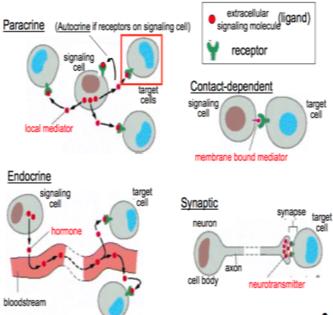
Types of Cell Signals
Cell signaling is essential for the coordination of activities in multicellular organisms. The main differences between signaling categories are the distance the signal travels, the nature of the signaling molecule, the method of reception, and the purpose of the signal.
Paracrine signaling: Local mediators act on nearby cells.
Autocrine signaling: Cells respond to signals they themselves produce.
Endocrine signaling: Hormones travel through the bloodstream to distant target cells.
Contact-dependent signaling: Requires direct contact between cells via membrane-bound mediators.
Synaptic signaling: Neurotransmitters are released at synapses between neurons and target cells.
Purpose of Cell Signals
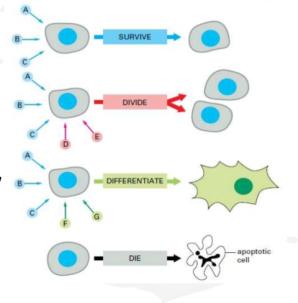
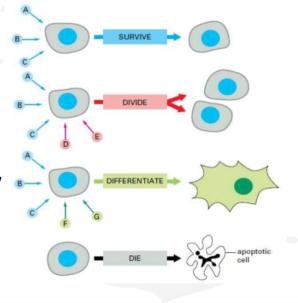
Signals can induce a variety of cellular responses, including survival, division, differentiation, or apoptosis (cell death). The specific outcome depends on the signal and the cell's context.
Survive: Signals promote cell survival.
Divide: Signals stimulate cell division.
Differentiate: Signals induce cell specialization.
Die: Signals trigger programmed cell death (apoptosis).
Cell-Cell Communication
Physical Cell Connections (Short Distance)
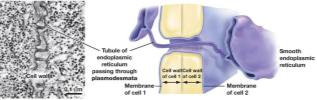
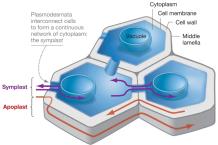
Cells in tissues communicate via direct physical connections, which allow for the transfer of ions, nutrients, and signaling molecules.
Gap junctions (animal cells): Protein channels that connect adjacent cells, enabling the flow of small molecules.
Plasmodesmata (plant cells): Gaps in the cell wall where plasma membranes, cytoplasm, and smooth ER of two cells connect.
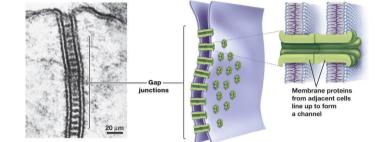
Structure of Tissue
Tissues are composed of tightly packed cells, often with limited exposure to vesicles for transport. Information and nutrients are transferred via specialized connections.
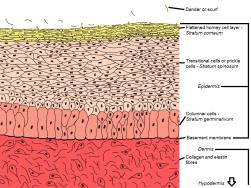
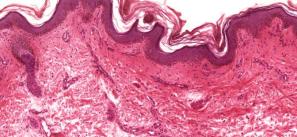
Cell-Cell Communication: Distant
Long-Distance Signals
Long-distance communication involves hormones or signaling molecules that are secreted, circulate in the body, and act on target cells far from the signaling cell. Proper communication requires four steps: signal reception, signal processing, signal response, and signal deactivation.
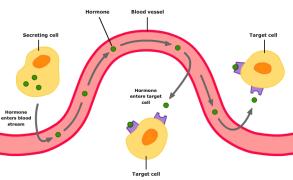
Signal Reception
Receptors and Signal Specificity
Only cells with the appropriate receptor protein can respond to a particular signaling molecule. Receptors may be located inside the cell or on the cell surface, and their number and binding ability can change dynamically.
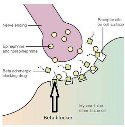
Example: Beta-blockers block adrenaline from binding to heart cell receptors, reducing blood pressure.
Signal Processing
Lipid-Soluble vs. Lipid-Insoluble Signaling Molecules
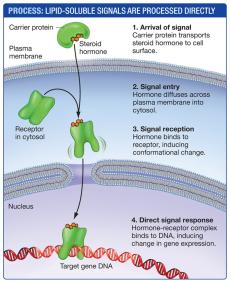
Lipid-soluble molecules: Diffuse through the cell membrane and bind to receptors in the cytosol, directly affecting gene expression.
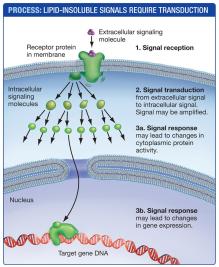
Lipid-insoluble molecules: Bind to membrane receptors and require a signal transduction pathway to convert the extracellular signal to an intracellular one.
Phosphorylation Cascade
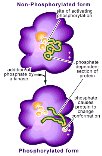
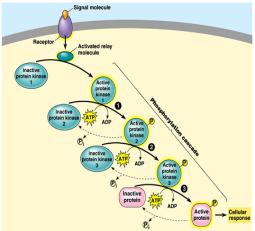
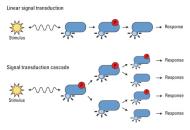
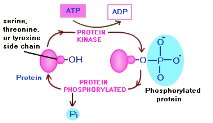
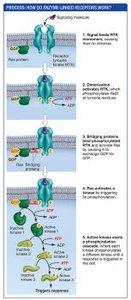
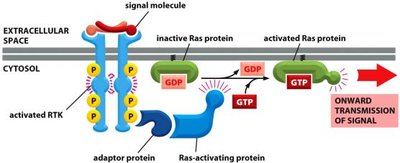
Signal transduction often involves a phosphorylation cascade, where a series of enzymes phosphorylate each other, amplifying the signal.
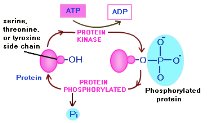
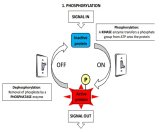
Kinase: An enzyme that catalyzes the transfer of a phosphate group.
Phosphorylation: Changes the shape and activity of proteins.
Dephosphorylation: Removal of phosphate groups, also alters protein activity.
Signal Transduction Systems
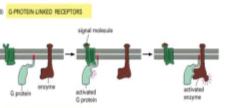
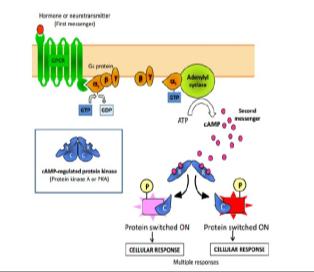
G proteins: Initiate production of intracellular second messengers, amplifying and diversifying the signal.
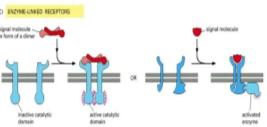
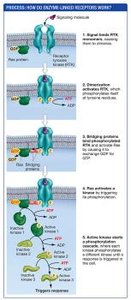
Enzyme-linked receptors: Trigger phosphorylation cascades, activating multiple proteins and cellular responses.
G Proteins
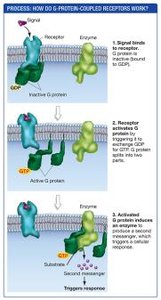
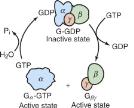
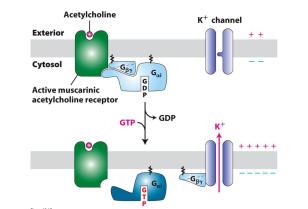
G-proteins are activated when a signaling molecule binds to its membrane receptor, causing the G protein to exchange GDP for GTP. The active G protein then activates nearby enzymes, producing second messengers that amplify the signal.
Second messengers: Small molecules that diffuse rapidly and amplify hormone signals.
Example: G-protein regulation of K+ ion channels to regulate heartbeat.
Enzyme-Linked Receptors
Enzyme-linked receptors, such as receptor tyrosine kinases, bind hormone signals and phosphorylate each other, activating a cascade of enzymes that amplify the signal.
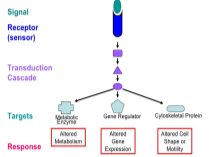
Signal transduction: Converts extracellular messages into intracellular ones and amplifies the response.
Cellular Response to Signals
Types of Cellular Responses
Cells respond to signals in ways that depend on the nature of the signal and the cell's context. Responses include changes in gene expression, metabolism, growth, death, or termination of the signal cascade.
Crosstalk Between Signaling Pathways
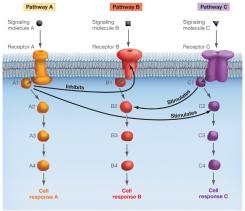
Signal transduction pathways often intersect, forming complex networks that allow integrated cellular responses. Crosstalk can inhibit or stimulate steps in other pathways, leading to diverse outcomes.
Signal Deactivation
Mechanisms of Signal Deactivation
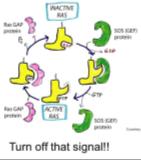
Turning off cell signals is crucial for maintaining sensitivity and proper cellular function. Phosphatases remove phosphate groups from proteins, terminating the phosphorylation cascade.
Example: RAS GAP protein deactivates Ras, preventing uncontrolled cell growth (cancer).
Signaling in Prokaryotic Cells
Quorum Sensing
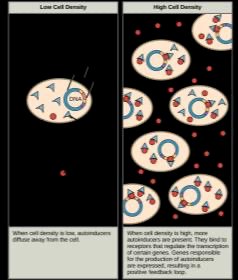
Bacteria use quorum sensing to monitor extracellular conditions and communicate with each other. Autoinducers are secreted and detected by bacteria, triggering gene expression when cell density reaches a threshold.
Example: Bioluminescent bacteria produce light when population density is high.
Summary Table: Types of Cell Signaling
Type | Distance | Signaling Molecule | Target |
|---|---|---|---|
Paracrine | Short | Local mediator | Nearby cells |
Autocrine | Short | Self-produced | Same cell |
Endocrine | Long | Hormone | Distant cells |
Contact-dependent | Direct | Membrane-bound | Adjacent cells |
Synaptic | Short/Long | Neurotransmitter | Neurons/target cells |
Key Terms and Concepts
Signal transduction: The process by which a cell converts an extracellular signal into a functional response.
Phosphorylation cascade: A series of events where enzymes phosphorylate each other, amplifying the signal.
Second messenger: Small molecules that relay signals inside the cell.
Quorum sensing: Bacterial communication based on cell density.
Kinase: Enzyme that adds phosphate groups to proteins.
Phosphatase: Enzyme that removes phosphate groups from proteins.
Important Equations
Phosphorylation reaction:
G-protein activation:
Signal amplification:
Additional info: Academic context and expanded explanations were added to ensure completeness and clarity for exam preparation.
