 Indietro
Introduction to Metabolism: Energy, Enzymes, and Regulation
Guida di studio - Note intelligenti
 Appunti personalizzati basati sui tuoi materiali, ampliati con definizioni chiave, esempi e contesto.
Introduction to Metabolism
Overview of Metabolism
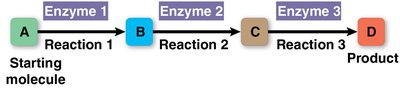
Metabolism encompasses all chemical reactions occurring within a living organism. These reactions are organized into metabolic pathways, where a starting molecule is converted through a series of steps, each catalyzed by a specific enzyme, to yield a final product.
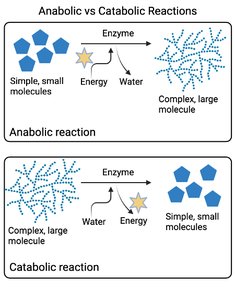
Catabolic pathways break down complex molecules into simpler ones, releasing energy (e.g., cellular respiration).
Anabolic pathways build complex molecules from simpler ones, consuming energy (e.g., protein synthesis).
Bioenergetics is the study of how energy flows through living organisms.
Energy and Thermodynamics in Biological Systems
Forms and Laws of Energy
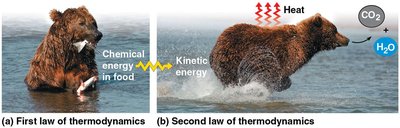
Energy is the capacity to cause change and is essential for cellular work. Cells transform energy from one form to another to perform life processes.
First Law of Thermodynamics: Energy cannot be created or destroyed, only transformed.
Second Law of Thermodynamics: Every energy transfer increases the entropy (disorder) of the universe.
ATP: The Energy Currency of the Cell
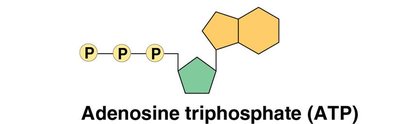
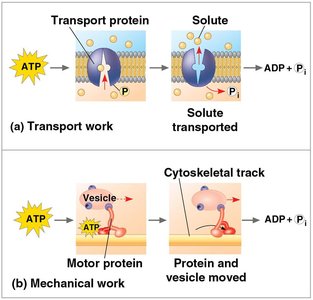
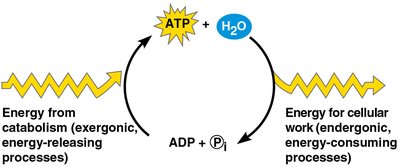
Adenosine triphosphate (ATP) is the primary energy carrier in cells. It consists of adenine, ribose, and three phosphate groups. Energy is released when ATP is hydrolyzed to ADP and inorganic phosphate (Pi), which is used to drive cellular work.
ATP is regenerated from ADP and Pi through cellular respiration (catabolism of glucose).
Cells use ATP for chemical work (driving endergonic reactions), transport work (pumping substances across membranes), and mechanical work (movement of cilia, muscle contraction).
Free Energy and Metabolic Reactions
Gibbs Free Energy (ΔG)
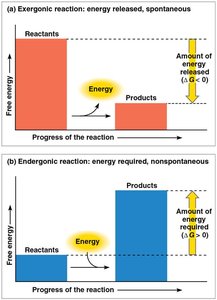
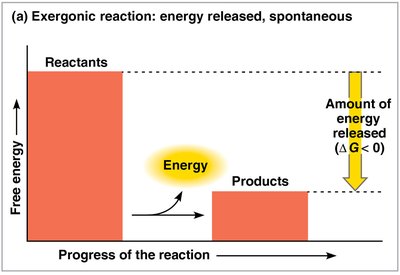
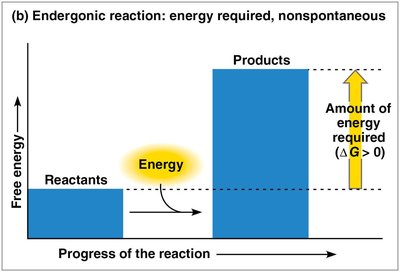
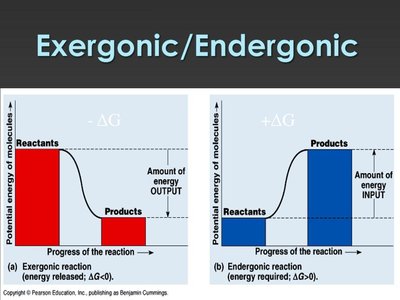
Free energy is the portion of a system's energy that can perform work. The change in free energy (ΔG) during a reaction determines whether the process is spontaneous.
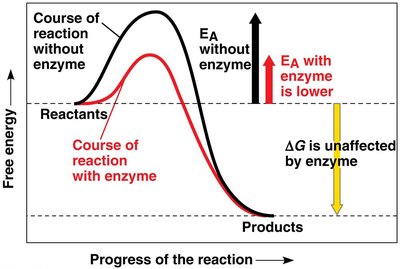
ΔG < 0: Spontaneous (exergonic) reaction; energy is released.
ΔG > 0: Nonspontaneous (endergonic) reaction; energy is required.
ΔG = 0: System is at equilibrium.
Enzymes and Activation Energy
Role of Enzymes
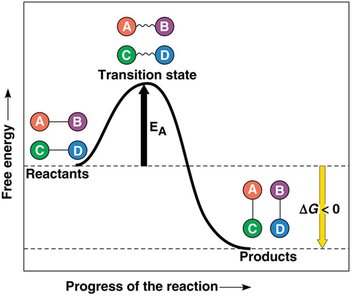
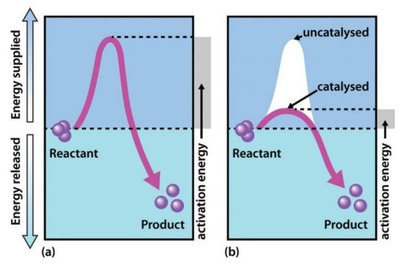
Enzymes are biological catalysts, usually proteins, that speed up chemical reactions by lowering the activation energy (EA) required for the reaction to proceed. They do not alter the ΔG of the reaction.
Activation energy (EA): The initial energy input needed to start a reaction.
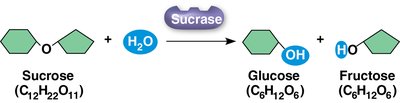
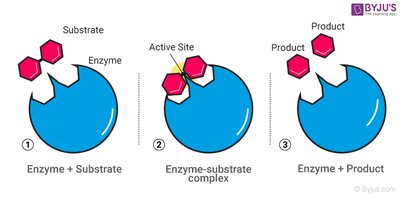
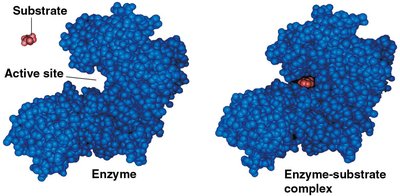
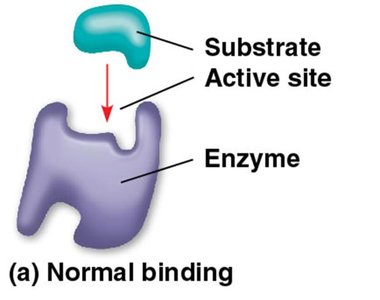
Enzymes bind specific substrates at their active site, forming an enzyme-substrate complex.
Enzymes are highly specific, typically catalyzing only one reaction or type of reaction.
Enzyme Kinetics and Substrate Concentration
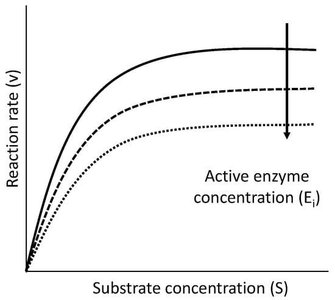
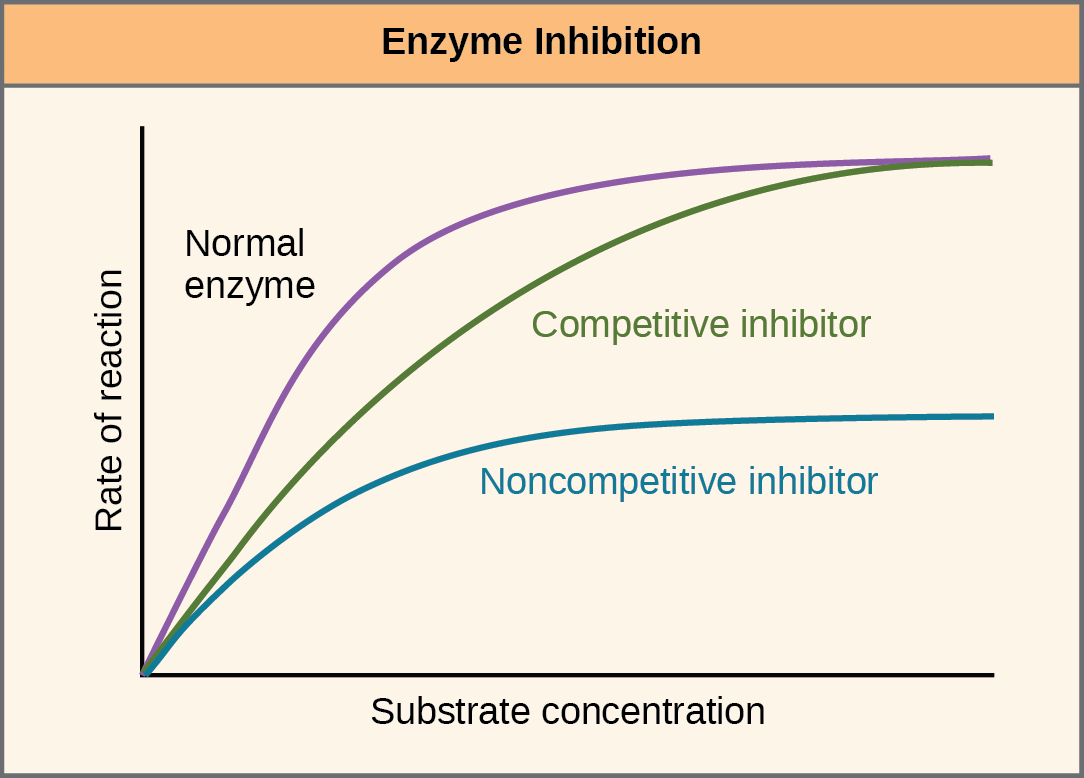
The rate of an enzyme-catalyzed reaction increases with substrate concentration until the enzyme becomes saturated. At saturation, the reaction rate can only be increased by adding more enzyme.
Regulation of Enzyme Activity
Environmental Effects
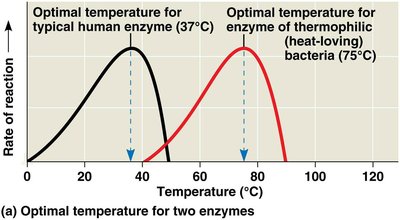
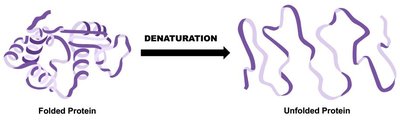
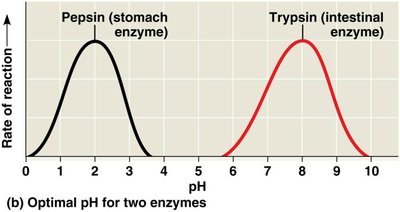
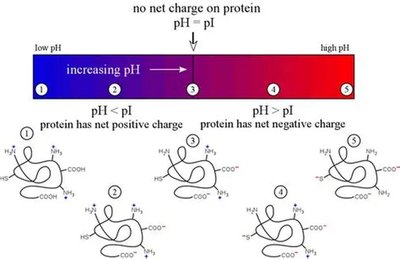
Enzyme activity is influenced by environmental factors such as temperature and pH. Each enzyme has an optimal temperature and pH at which its activity is maximal. Deviations can lead to reduced activity or denaturation (loss of structure and function).
Cofactors and Coenzymes
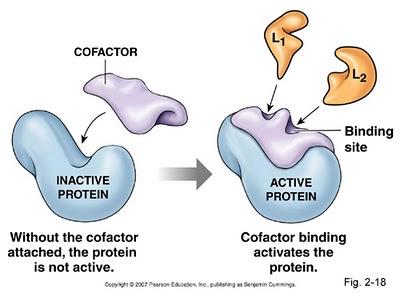
Cofactors are nonprotein molecules that assist enzymes. They may be inorganic (e.g., metal ions) or organic (coenzymes, often derived from vitamins). Cofactors are essential for the catalytic activity of many enzymes.
Enzyme Inhibition
Enzyme inhibitors are molecules that decrease or block enzyme activity. Inhibition can be reversible or irreversible.
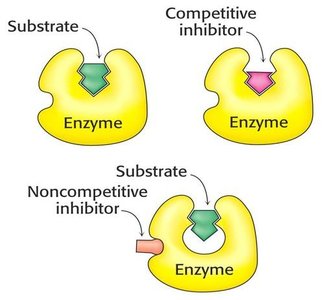
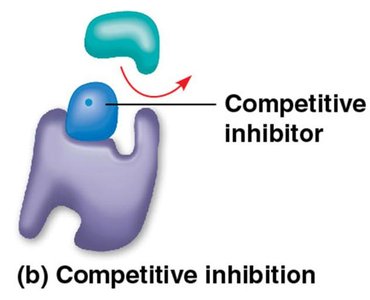
Competitive inhibitors resemble the substrate and bind to the active site, blocking substrate access. Their effect can be overcome by increasing substrate concentration.
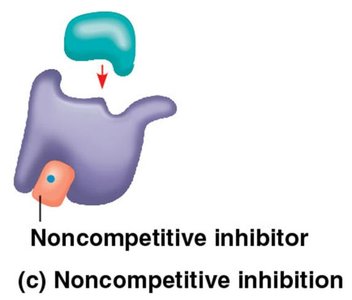
Noncompetitive inhibitors bind to a site other than the active site, causing a conformational change that reduces enzyme activity. Their effect cannot be overcome by increasing substrate concentration.
Feedback Inhibition
Cells regulate metabolic pathways through feedback inhibition, where the end product of a pathway inhibits an enzyme involved earlier in the pathway. This prevents the overproduction of products and conserves resources.
Summary Table: Types of Enzyme Regulation
Type | Mechanism | Effect |
|---|---|---|
Competitive Inhibition | Inhibitor binds active site | Can be overcome by increasing substrate |
Noncompetitive Inhibition | Inhibitor binds allosteric site | Cannot be overcome by increasing substrate |
Feedback Inhibition | End product inhibits pathway | Prevents overproduction |
Additional info: Enzyme regulation is essential for maintaining homeostasis and efficient cellular function. Cells can also regulate enzymes by controlling gene expression or by post-translational modifications.
