 Indietro
Lipids, Membranes, and the First Cells: Study Notes for General Biology
Guida di studio - Note intelligenti
 Appunti personalizzati basati sui tuoi materiali, ampliati con definizioni chiave, esempi e contesto.
Lipids, Membranes, and the First Cells
Introduction to Membrane-Bound Cells
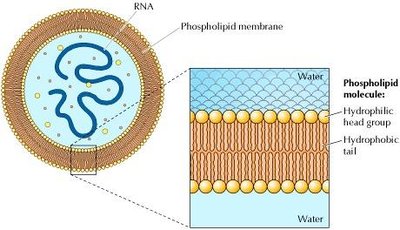
All living organisms are composed of membrane-bound cells. The plasma (or cell) membrane is a fundamental structure that separates life from nonlife, providing a selective barrier and facilitating essential cellular functions.
Key Functions of Membranes:
Keep damaging materials out of the cell
Allow entry of materials needed by the cell
Facilitate the chemical reactions necessary for life
Section 6.1: Lipid Structure
Lipids are the last major class of biological macromolecules. They are primarily composed of carbon and are essential for structure, communication, and energy storage in cells.
Functional Groups in Biological Molecules:
Amino groups (–NH2): proteins
Carboxyl groups (–COOH): proteins & lipids
Carbonyl groups (C=O): carbohydrates
Hydroxyl groups (–OH): carbohydrates & lipids
Phosphate groups (–OPO32-): nucleic acids & phospholipids
Sulfhydryl groups (–SH): proteins
Properties and Classification of Lipids
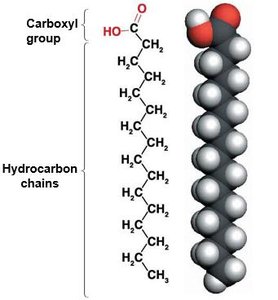
Lipids are carbon compounds found in organisms, largely nonpolar and hydrophobic. Many lipids include hydrocarbons, which are molecules containing only carbon and hydrogen.
Hydrophobic Nature:
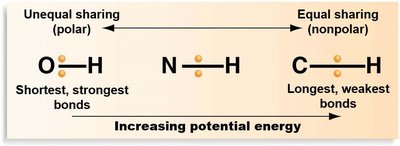
Electrons are shared equally in C-H bonds, making lipids hydrophobic.
Comparison to Other Macromolecules:
Similar: Made primarily of carbon; important for structure, communication, and energy storage.
Different: Do not have a common structure; not a chain of monomers.
Hydrocarbon Structure and Fatty Acids
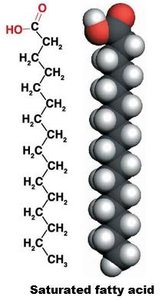
Hydrocarbons are the building blocks for complex lipids, though they are not monomers. A fatty acid is a simple lipid consisting of a hydrocarbon chain bonded to a carboxyl (-COOH) functional group.
Fatty Acid Structure: Hydrocarbon chain + Carboxyl group = Fatty acid
Bond Saturation and Hydrocarbon Structure
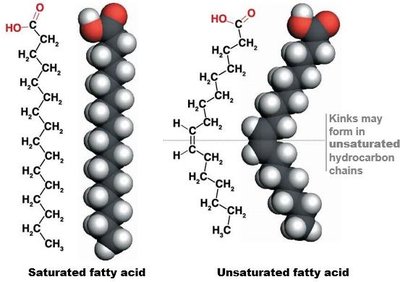
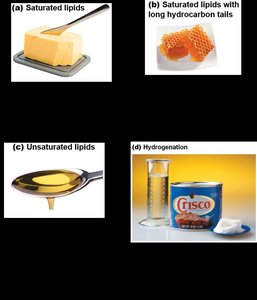
The degree of saturation in hydrocarbon chains affects their structure and properties.
Saturated Hydrocarbon Chains:
Consist of only C-C bonds and have the maximum number of hydrogen atoms.
Unsaturated Hydrocarbon Chains:
Contain one or more C=C double bonds (cis configuration).
Hydrogen atoms are removed to form double bonds, resulting in "kinks" in the chain.
Polyunsaturated chains have multiple double bonds.
Types of Lipids Found in Cells
There are three major types of lipids found in cells, classified by their insolubility in water rather than a shared chemical structure.
Steroids
Fats (Triglycerides)
Phospholipids
Steroids
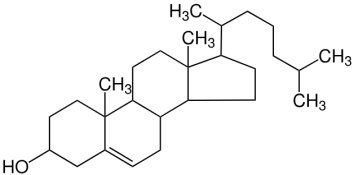
Steroids are a family of lipids distinguished by a bulky, four-ring structure. They differ based on functional groups attached to the rings.
Examples:
Hormones such as estrogen and testosterone
Cholesterol, a component of plasma membranes
Assembly: Not assembled by polymerization of simple subunits
Fats (Triglycerides)
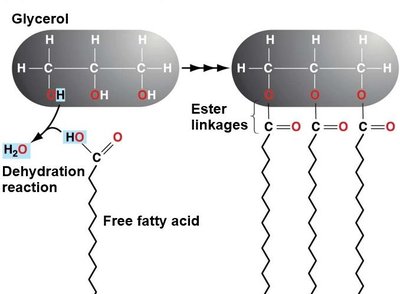
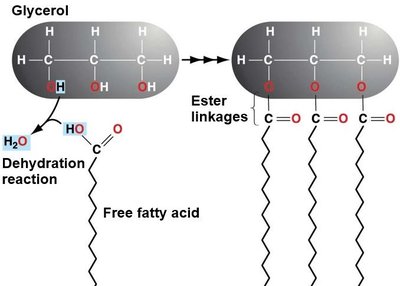
Fats, also known as triglycerides, consist of three fatty acids linked to a glycerol molecule. Their primary role is energy storage.
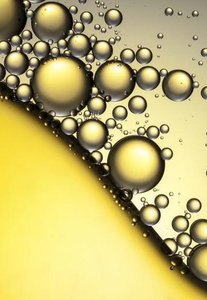
Polyunsaturated Fats: Liquid at room temperature and form oils.
Formation:
Formed by ester linkage between the hydroxyl group of glycerol and the carboxyl group of a fatty acid.
Not polymers.
Fats vs Carbohydrates: Chemical Potential Energy
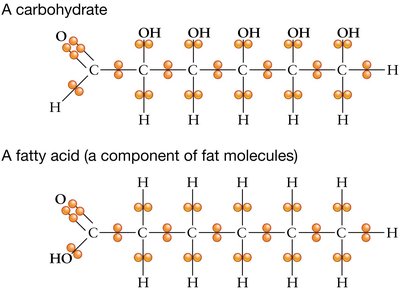
The potential energy in molecules is related to the position of shared electrons in covalent bonds. Molecules with more nonpolar bonds (such as fats) have higher chemical potential energy.
Bond Strength and Energy:
Shared electrons far from nuclei: long, weak bonds (high potential energy)
Shared electrons close to nuclei: short, strong bonds (low potential energy)
Phospholipids
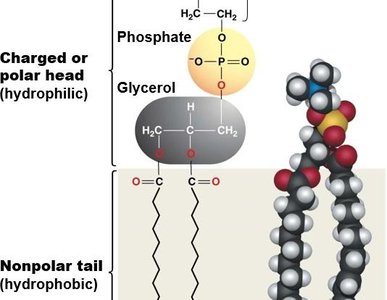
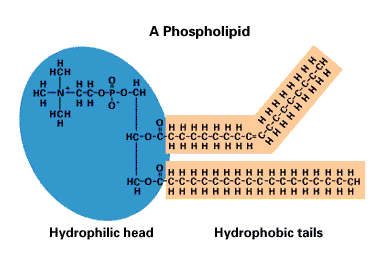
Phospholipids are composed of two fatty acids linked to glycerol, which is also linked to a phosphate group bonded to a charged or polar molecule. Their primary role is to form cell membranes.
Structure:
Hydrophilic "head" region: glycerol, negatively charged phosphate group, and a charged or polar group
Hydrophobic "tail" region: two nonpolar fatty acid or isoprene chains
Amphipathic Nature: Contain both hydrophobic and hydrophilic regions
Phospholipid Bilayers and Membrane Formation
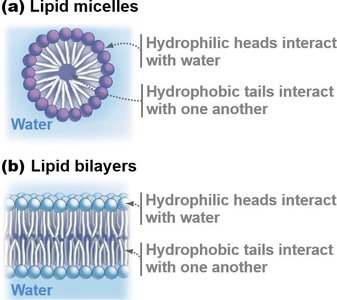
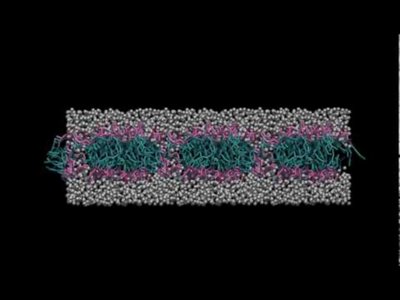
Phospholipids spontaneously form bilayers in aqueous solution, with hydrophilic heads facing water and hydrophobic tails facing inward. This structure is essential for cell membrane formation.
Interaction with Water:
Hydrophobic tails avoid water, forming the interior of the bilayer
Hydrophilic heads interact with water, forming the exterior surfaces
Lipids and Chemical Evolution
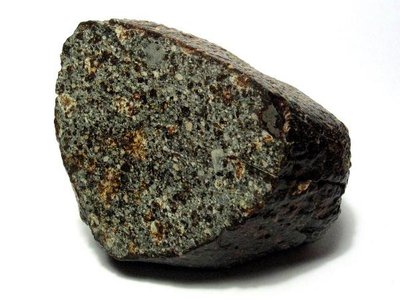
There is evidence that lipids were present during chemical evolution. Simple lipids, such as fatty acids, can be synthesized under early Earth conditions, and modern meteorites contain lipids.
Implications: Lipids may have played a role in the origin of cellular life by forming primitive membranes.
Summary Table: Types of Lipids
Type | Structure | Main Function | Example |
|---|---|---|---|
Steroids | Four-ring structure | Hormones, membrane component | Cholesterol, estrogen, testosterone |
Fats (Triglycerides) | Three fatty acids + glycerol | Energy storage | Butter, oils |
Phospholipids | Two fatty acids + glycerol + phosphate group | Membrane formation | Cell membrane phospholipids |
Key Terms and Definitions
Lipid: A largely nonpolar, hydrophobic carbon compound found in organisms.
Fatty Acid: A hydrocarbon chain bonded to a carboxyl group.
Saturated: Hydrocarbon chains with only single bonds (maximum hydrogen).
Unsaturated: Hydrocarbon chains with one or more double bonds (cis configuration).
Amphipathic: Molecule containing both hydrophobic and hydrophilic regions.
Phospholipid: Lipid with two fatty acids, glycerol, and a phosphate group; forms cell membranes.
Steroid: Lipid with four-ring structure; includes hormones and cholesterol.
Triglyceride: Fat molecule with three fatty acids linked to glycerol.
----------------------------------------
