 Indietro
Macromolecules: Structure, Function, and Diversity of Biological Molecules
Guida di studio - Note intelligenti
 Appunti personalizzati basati sui tuoi materiali, ampliati con definizioni chiave, esempi e contesto.
Macromolecules: The Structure and Function of Large Biological Molecules
Key Concepts of Macromolecules
Macromolecules are essential to life, forming the structural and functional foundation of cells. There are four main classes: carbohydrates, lipids, proteins, and nucleic acids. Each class has unique properties and biological roles.
Macromolecules are large molecules formed by the polymerization of smaller subunits called monomers.
Carbohydrates serve as fuel and building material.
Lipids are a diverse group of hydrophobic molecules.
Proteins exhibit a diversity of structures and functions.
Nucleic acids store, transmit, and help express hereditary information.
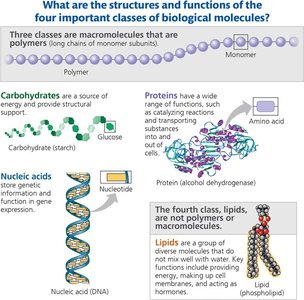
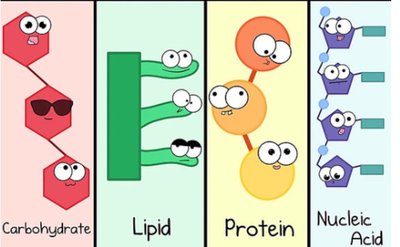
The Four Main Classes of Large Biological Molecules
Carbohydrates
Lipids
Proteins
Nucleic Acids
Polymers and Monomers
Structure of Polymers
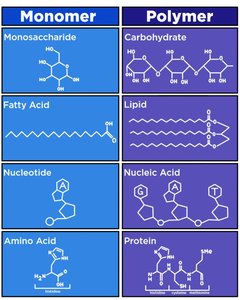
Most macromolecules (except lipids) are polymers, which are long chains of repeating units called monomers. The process of linking monomers to form polymers is called polymerization.
Polymer: A long molecule consisting of many similar or identical building blocks linked by covalent bonds.
Monomer: The repeating unit that serves as the building block of a polymer.
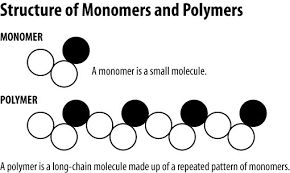
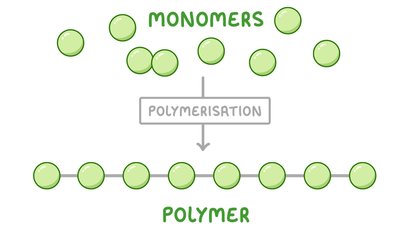
Synthesis and Breakdown of Polymers
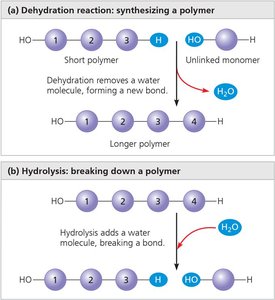
Cells use similar chemical mechanisms to assemble and disassemble polymers. These reactions are catalyzed by enzymes, which are biological catalysts (mostly proteins).
Condensation (Dehydration) Reaction: Joins two monomers by removing a water molecule.
Hydrolysis: Breaks a bond between two monomers by adding a water molecule.
Carbohydrates: Fuel and Building Material
Monosaccharides
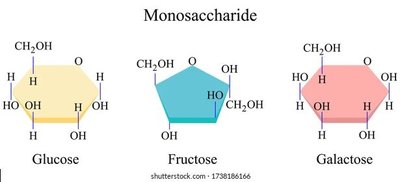
Monosaccharides are the simplest carbohydrates and serve as the monomers for more complex carbohydrates. Their general formula is (CH2O)n.
Examples: Glucose (C6H12O6), fructose, galactose
Major nutrients for cells and raw materials for synthesizing other organic molecules
Disaccharides
Disaccharides are formed by joining two monosaccharides via a glycosidic linkage (a covalent bond formed by a dehydration reaction).
Examples: Maltose (glucose + glucose), sucrose (glucose + fructose), lactose (glucose + galactose)
Must be broken down into monosaccharides to be used for energy
Polysaccharides
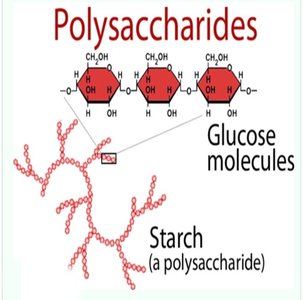
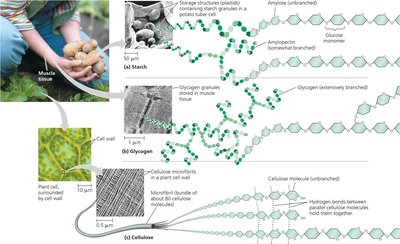
Polysaccharides are large polymers of monosaccharides. Their structure and function depend on the type of monomers and the glycosidic linkages.
Storage polysaccharides: Starch (plants), glycogen (animals)
Structural polysaccharides: Cellulose (plants), chitin (fungi and arthropods)
Lipids: Diverse Hydrophobic Molecules
General Properties of Lipids
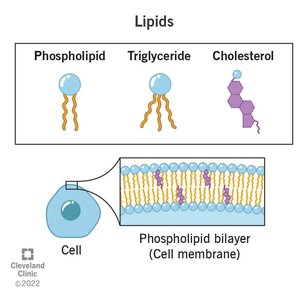
Lipids are not true polymers and are grouped together because they are hydrophobic. They consist mainly of hydrocarbon regions and include fats, phospholipids, and steroids.
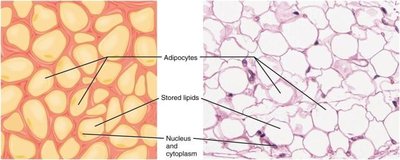
Fats (Triglycerides): Composed of three fatty acids linked to a glycerol molecule via ester linkages. Main function is energy storage.
Phospholipids: Major component of cell membranes, consisting of two fatty acids, a glycerol, and a phosphate group.
Steroids: Characterized by a carbon skeleton of four fused rings; includes cholesterol and hormones.
Saturated and Unsaturated Fats
The structure of fatty acids determines whether a fat is saturated or unsaturated.
Saturated fatty acids: No double bonds; solid at room temperature; found in animal fats.
Unsaturated fatty acids: One or more double bonds (usually cis); liquid at room temperature; found in plant and fish fats.
Trans Fats
Trans fats are artificially produced by hydrogenating unsaturated fats, resulting in trans double bonds. They are associated with negative health effects, such as increased risk of coronary heart disease.
Phospholipids
Phospholipids have hydrophilic heads and hydrophobic tails, allowing them to form bilayers that are the foundation of cell membranes.
Steroids
Steroids have a structure of four fused rings. Cholesterol is a key steroid in animal cell membranes and a precursor for other steroids, including hormones.
Summary Table: Monomers and Polymers of Biological Molecules
Class | Monomer | Polymer | Example |
|---|---|---|---|
Carbohydrate | Monosaccharide | Polysaccharide | Starch, Cellulose |
Lipid | Fatty Acid, Glycerol | Not true polymers | Triglyceride, Phospholipid |
Protein | Amino Acid | Polypeptide | Enzymes, Hemoglobin |
Nucleic Acid | Nucleotide | Polynucleotide | DNA, RNA |
Key Equations
Dehydration Reaction (Polymerization):
Hydrolysis (Depolymerization):
Additional info:
Enzymes are crucial for both the synthesis and breakdown of macromolecules, ensuring reactions occur efficiently under physiological conditions.
Lipids, while not true polymers, are essential for membrane structure, energy storage, and signaling.
