 Indietro
Meiosis, Genetic Variation, and Mendelian Inheritance
Guida di studio - Note intelligenti
 Appunti personalizzati basati sui tuoi materiali, ampliati con definizioni chiave, esempi e contesto.
Inheritance and Sources of Genetic Variation
Overview of Meiosis and Its Role in Inheritance
Meiosis is a specialized type of cell division that reduces the chromosome number by half, producing haploid gametes (sperm and egg cells) from diploid cells. This process is fundamental for sexual reproduction and ensures genetic diversity in offspring.
Diploid (2n): Cells with two sets of chromosomes (one from each parent).
Haploid (n): Cells with one set of chromosomes, produced by meiosis.
Gametes: Sperm and egg cells, each containing one copy of every gene.
Fertilization: Fusion of two haploid gametes to form a diploid zygote.
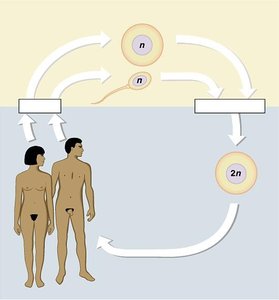
Phases of Meiosis and Mitosis
Meiosis consists of two sequential divisions: Meiosis I and Meiosis II. Mitosis, in contrast, is a single division that produces genetically identical diploid cells. The ploidy and DNA content change throughout these processes.
Mitosis: Occurs in somatic (body) cells for growth and repair; produces two identical diploid cells.
Meiosis: Occurs in gonads (ovaries/testes); produces four genetically unique haploid gametes.
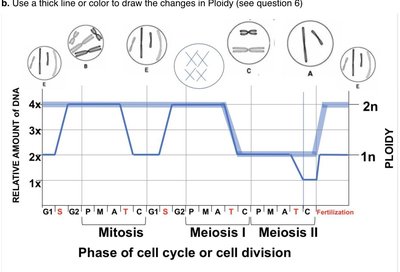
Comparison of Mitosis and Meiosis
Process | Location | Products | Purpose |
|---|---|---|---|
Mitosis | Somatic cells | 2 identical diploid cells | Growth, repair, asexual reproduction |
Meiosis | Gonads (ovaries/testes) | 4 unique haploid gametes | Sexual reproduction |
Key Differences:
Mitosis: 2n → 2n (no change in chromosome number)
Meiosis I: 2n → 1n (reductional division)
Meiosis II: 1n → 1n (equational division)
Crossing over and independent assortment occur only in meiosis.

Mechanisms of Genetic Variation in Sexual Reproduction
1. Homologous Recombination (Crossing Over)
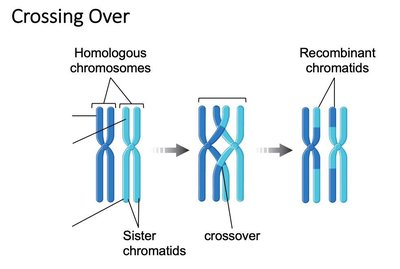
During Prophase I of meiosis, homologous chromosomes pair up and exchange segments in a process called crossing over. This recombination creates new combinations of alleles, increasing genetic diversity among gametes.
Homologous chromosomes: Chromosomes with the same genes but possibly different alleles.
Sister chromatids: Identical copies of a chromosome, joined at the centromere.
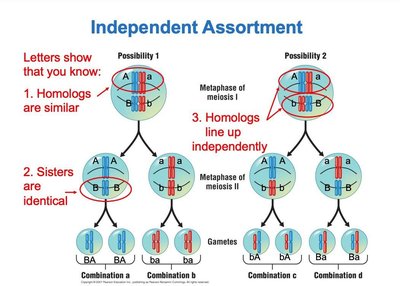
2. Independent Assortment
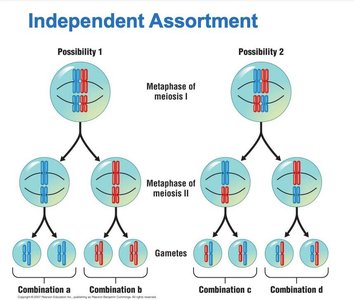
During Metaphase I of meiosis, homologous chromosome pairs align randomly at the metaphase plate. This random orientation leads to independent assortment, where each gamete receives a random mix of maternal and paternal chromosomes.
Each pair of chromosomes segregates independently of the others.
For n chromosome pairs, there are 2n possible combinations in gametes (e.g., for humans, 223 = 8,388,608 combinations).
3. Random Fertilization
Any sperm can fertilize any egg, further increasing genetic variation. The combination of independent assortment and random fertilization results in a vast number of possible genetic outcomes in offspring.
Number of possible zygote combinations = (number of possible sperm) × (number of possible eggs).
For humans: 8,388,608 × 8,388,608 > 70 trillion combinations (not including crossing over).
4. Mutation
Mutations are changes in DNA sequence and are the ultimate source of all genetic variation. While less frequent than the mechanisms above, mutations introduce new alleles into a population.
Mendelian Inheritance and Laws of Segregation and Independent Assortment
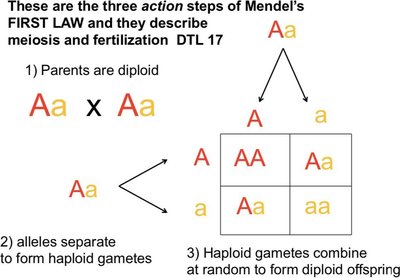
Mendel’s First Law: Law of Segregation
During gamete formation, the two alleles for a gene separate (segregate) so that each gamete receives only one allele. This occurs during Anaphase I of meiosis.
Explains why offspring inherit one allele from each parent.
Mendel’s Second Law: Law of Independent Assortment
Alleles of different genes assort independently of one another during gamete formation, provided the genes are on different chromosomes. This law is a direct result of the random orientation of homologous pairs during Metaphase I of meiosis.
Punnett Squares and Genetic Predictions
Punnett squares are tools used to predict the possible genetic outcomes of a cross. The letters on the margins represent the possible gametes, and the boxes show the possible zygote genotypes.
Summary Table: Mitosis vs. Meiosis
Feature | Mitosis | Meiosis I | Meiosis II |
|---|---|---|---|
Chromosome Number Change | 2n → 2n | 2n → 1n | 1n → 1n |
Sister Chromatids Separate? | Yes | No | Yes |
Homologs Separate? | No | Yes | No |
Crossing Over? | No | Yes | No |
Independent Assortment? | No | Yes | No |
Products | 2 identical diploid cells | 2 unique haploid cells | 4 unique haploid cells (total) |
Checklist for Studying Meiosis and Inheritance
Differentiate between sister chromatids and homologous chromosomes.
Define haploid (n) and diploid (2n).
Understand the advantages of meiosis for genetic diversity.
Describe the phases of meiosis I and II.
Compare and contrast mitosis and meiosis.
Know where meiosis and mitosis occur and what each process generates.
