 Indietro
Mendelian Genetics: Principles, Laws, and Applications
Guida di studio - Note intelligenti
 Appunti personalizzati basati sui tuoi materiali, ampliati con definizioni chiave, esempi e contesto.
Mendelian Genetics
Introduction to Mendelian Genetics
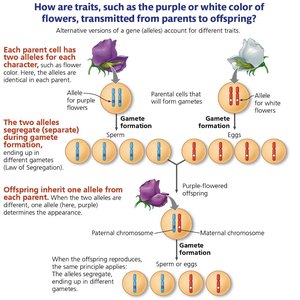
Mendelian genetics is the study of how traits are inherited from one generation to the next, based on the foundational work of Gregor Mendel. Mendel's experiments with pea plants led to the discovery of fundamental laws that describe the transmission of genetic information.
Alleles are alternative forms of a gene that lead to different traits.
Genotype refers to the genetic composition of an individual (e.g., AA, Aa, or aa).
Phenotype is the observable appearance or trait of an individual (e.g., purple or white flowers).
Genes, Alleles, and Chromosomes
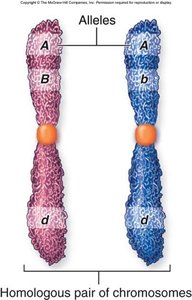
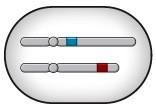
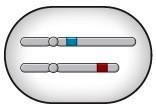
Genes are segments of DNA located on chromosomes that code for specific traits. Each gene can exist in different forms called alleles. Homologous chromosomes carry the same genes but may have different alleles.
Each individual inherits one allele from each parent for every gene.
Alleles can be dominant (expressed in the phenotype when present) or recessive (expressed only when both alleles are recessive).
Genotype and Phenotype
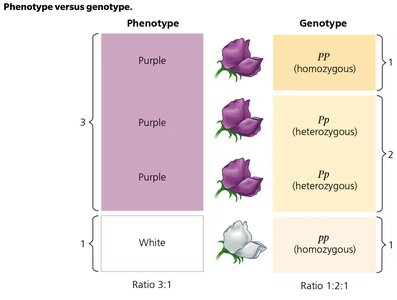
The genotype determines the phenotype. For example, in pea plants, the genotype PP or Pp results in purple flowers, while pp results in white flowers. The relationship between genotype and phenotype is central to understanding inheritance patterns.
Homozygous dominant: Both alleles are dominant (e.g., AA).
Heterozygous: One dominant and one recessive allele (e.g., Aa).
Homozygous recessive: Both alleles are recessive (e.g., aa).

Mendel’s Laws of Inheritance
Law of Segregation
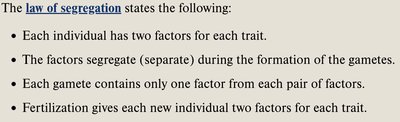
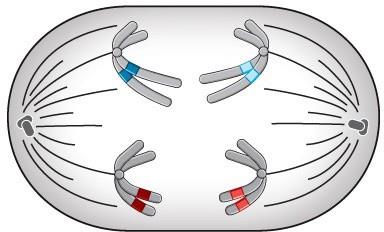
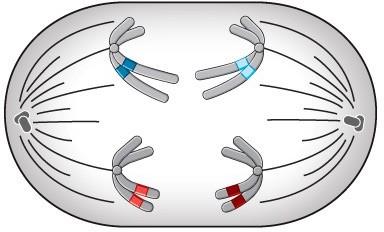
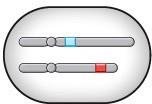
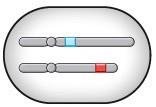
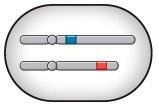
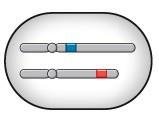
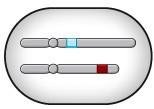
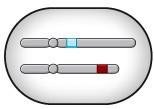
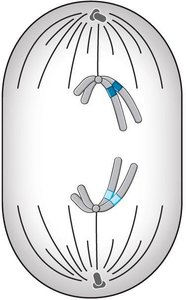
Mendel’s first law states that the two alleles for each trait separate during gamete formation, and each gamete receives only one allele. Fertilization restores the pair of alleles in the offspring.
Each individual has two factors (alleles) for each trait.
The factors segregate during the formation of gametes.
Each gamete contains only one factor from each pair.
Fertilization gives each new individual two factors for each trait.
Law of Independent Assortment
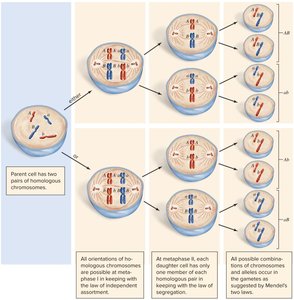
Mendel’s second law states that alleles of different genes assort independently of one another during gamete formation, provided the genes are on different chromosomes. This law explains the genetic variation observed in offspring.
Random orientation of homologous chromosomes during metaphase I of meiosis leads to independent assortment.
Each combination of alleles is equally likely in gametes.
Punnett Squares and Probability
Punnett squares are used to predict the possible genotypes and phenotypes of offspring from a genetic cross. Probability laws are applied to determine the likelihood of specific outcomes.
Monohybrid cross (one trait): Genotypic ratio is 1:2:1, phenotypic ratio is 3:1.
Dihybrid cross (two traits): Phenotypic ratio is 9:3:3:1 if genes assort independently.
Genotype | Phenotype | Ratio |
|---|---|---|
PP | Purple | 1 |
Pp | Purple | 2 |
pp | White | 1 |
Test Crosses
A test cross is used to determine the genotype of an individual with a dominant phenotype by crossing it with a homozygous recessive individual. The resulting offspring phenotypes reveal the unknown genotype.
If all offspring show the dominant trait, the unknown parent is homozygous dominant.
If offspring show a 1:1 ratio of dominant to recessive traits, the unknown parent is heterozygous.
Pedigrees and Human Genetics
Pedigrees are diagrams that show the inheritance of traits across generations in families. They are useful for tracking autosomal dominant, autosomal recessive, and sex-linked traits.
Autosomal recessive: Trait appears only when both alleles are recessive (e.g., bb).
Autosomal dominant: Trait appears when at least one dominant allele is present.
Genetic Variation and Mutation
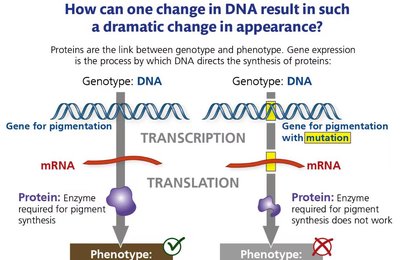
Genetic variation arises from the segregation and independent assortment of alleles, as well as from mutations. A single change in DNA can alter the protein produced, leading to a different phenotype.
Summary Table: Key Terms in Mendelian Genetics
Term | Definition |
|---|---|
Allele | Alternative form of a gene |
Genotype | Genetic makeup of an organism |
Phenotype | Observable trait |
Homozygous | Two identical alleles for a gene |
Heterozygous | Two different alleles for a gene |
Dominant | Allele that masks the effect of another |
Recessive | Allele whose effect is masked by dominant allele |
Example Problems
If two heterozygous parents (Aa) are crossed, the probability of an offspring being homozygous recessive (aa) is 1/4.
In a dihybrid cross AaBb x AaBb, the probability of an offspring with genotype aabb is 1/16.
Applications and Importance
Mendelian genetics forms the basis for understanding inheritance patterns in all sexually reproducing organisms. It is essential for fields such as medicine, agriculture, and evolutionary biology.
