 Indietro
Photosynthesis: Mechanisms and Importance in Biology
Guida di studio - Note intelligenti
 Appunti personalizzati basati sui tuoi materiali, ampliati con definizioni chiave, esempi e contesto.
Photosynthesis: Overview and Significance
Introduction to Photosynthesis
Photosynthesis is the process by which autotrophic organisms, such as plants, algae, and some bacteria, convert light energy into chemical energy stored in glucose. This process is fundamental to life on Earth, as it provides the organic molecules and oxygen required by most living organisms.
Autotrophs: Organisms that produce their own food from inorganic substances. Examples include cyanobacteria, algae, and plants.
Heterotrophs: Organisms that obtain food by consuming other organisms. Examples include animals, fungi, and many bacteria.
Producers: Another term for autotrophs, as they produce organic molecules that serve as food for other organisms in the biosphere.
General Equation of Photosynthesis
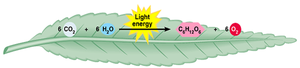
The overall chemical equation for photosynthesis is:
Structure of the Chloroplast
Chloroplast Anatomy
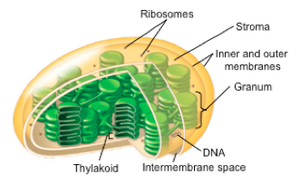
Photosynthesis occurs within the chloroplasts of plant cells. Key structures include:
Thylakoid membranes: Site of the light reactions.
Stroma: Fluid-filled space where the Calvin cycle (light-independent reactions) occurs.
Granum: Stack of thylakoids.
Stages of Photosynthesis
Light Reactions
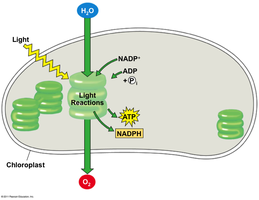
The light reactions convert solar energy into chemical energy in the form of ATP and NADPH. These reactions occur in the thylakoid membranes and require light.
Inputs: H2O, NADP+, ADP, Pi, and light energy
Outputs: O2, NADPH, ATP
Water is split, releasing O2 as a by-product.
NADP+ is reduced to NADPH, which stores high-energy electrons.
ATP is produced via photophosphorylation.
ATP and NADPH: Energy Carriers
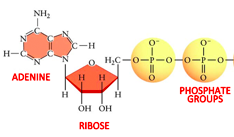
ATP (adenosine triphosphate) and NADPH are the main energy carriers produced in the light reactions. ATP provides energy for cellular processes, while NADPH provides reducing power for biosynthetic reactions.
ATP Structure: Composed of adenine, ribose, and three phosphate groups.
ATP Cycle: ATP is converted to ADP when a phosphate group is removed, releasing energy. ADP is converted back to ATP when a phosphate group is added, requiring energy.
NADP+/NADPH: NADP+ is reduced to NADPH by gaining electrons and a proton (H+).
Detailed Steps of the Light Reactions
The light reactions involve two photosystems (Photosystem II and Photosystem I) and an electron transport chain:
Light excites electrons in Photosystem II (PSII), which are transferred to a primary electron acceptor.
Water is split to replace electrons in PSII, releasing O2 and protons (H+).
Electrons move down the electron transport chain, generating ATP.
Electrons reach Photosystem I (PSI), are re-excited by light, and transferred to NADP+ to form NADPH.

Calvin Cycle (Light-Independent Reactions)
The Calvin cycle uses ATP and NADPH from the light reactions to convert CO2 into glucose. It occurs in the stroma and does not require light directly, but depends on the products of the light reactions.
Three Main Phases:
Carbon Fixation: CO2 is attached to a five-carbon sugar (RuBP) by the enzyme Rubisco.
Reduction: ATP and NADPH are used to reduce 3-phosphoglycerate into G3P (glyceraldehyde-3-phosphate).
Regeneration: Some G3P is used to regenerate RuBP, enabling the cycle to continue.
For one glucose molecule, the cycle must turn twice, fixing six CO2 molecules.

Summary Table: Photosynthesis Stages
Stage | Location | Inputs | Outputs |
|---|---|---|---|
Light Reactions | Thylakoid membranes | H2O, NADP+, ADP, Pi, Light | O2, NADPH, ATP |
Calvin Cycle | Stroma | CO2, ATP, NADPH | Glucose, ADP, NADP+, Pi |
Importance of Photosynthesis in Ecosystems
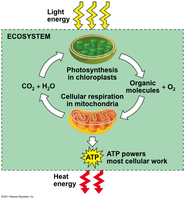
Photosynthesis is the foundation of energy flow in ecosystems. It provides the organic molecules and oxygen necessary for cellular respiration in heterotrophs and autotrophs alike.
Producers convert solar energy into chemical energy.
Consumers rely on producers for food and oxygen.
Photosynthesis and cellular respiration form a cycle that maintains atmospheric O2 and CO2 levels.
Key Terms and Concepts
Autotroph: An organism capable of synthesizing its own food from inorganic substances using light or chemical energy.
Heterotroph: An organism that obtains organic food molecules by eating other organisms or their by-products.
Photosystem: A complex of proteins and pigments that absorbs light and transfers energy and electrons in photosynthesis.
ATP (Adenosine Triphosphate): The primary energy carrier in cells.
NADP+/NADPH: Electron carrier molecules involved in redox reactions during photosynthesis.
Calvin Cycle: The set of light-independent reactions in photosynthesis that produce glucose from CO2.
