 Indietro
Photosynthesis: Mechanisms and Importance in Plants
Guida di studio - Note intelligenti
 Appunti personalizzati basati sui tuoi materiali, ampliati con definizioni chiave, esempi e contesto.
Photosynthesis
Introduction to Photosynthetic Organisms
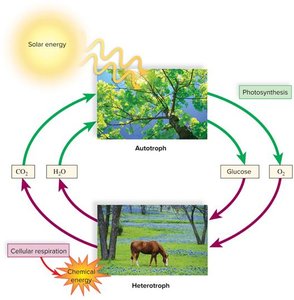
Photosynthesis is a fundamental biological process that sustains life on Earth by converting solar energy into chemical energy. This process is carried out by autotrophs—organisms such as plants, algae, and cyanobacteria—that produce their own food. In contrast, heterotrophs (consumers) rely on autotrophs for organic molecules and energy.
Autotrophs use sunlight to synthesize carbohydrates from carbon dioxide and water.
Heterotrophs obtain energy by consuming autotrophs or other heterotrophs.
Both groups depend on the organic molecules produced by photosynthesis for cellular work.
The Process of Photosynthesis
Photosynthesis Overview
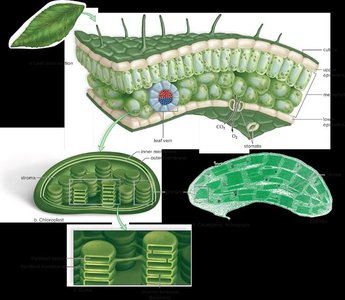
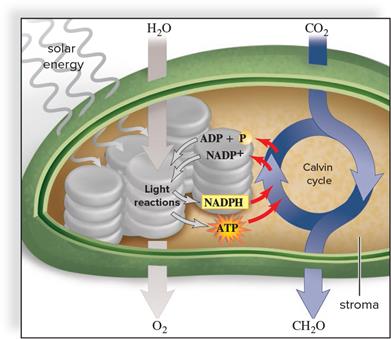
Photosynthesis occurs in the chloroplasts of plant cells and consists of two main stages: the light reactions and the Calvin cycle (light-independent reactions). The overall chemical equation for photosynthesis is:
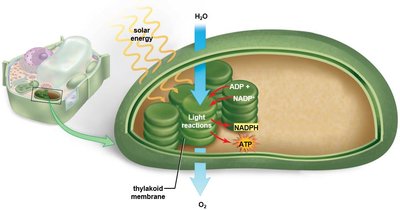
Light reactions capture solar energy and convert it into chemical energy (ATP and NADPH).
Calvin cycle uses ATP and NADPH to fix carbon dioxide and synthesize carbohydrates.
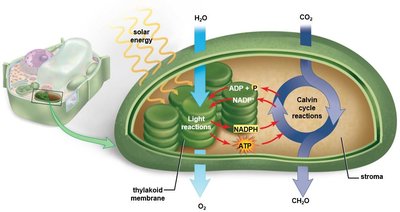
Plants Convert Solar Energy
Pigments and Photosystems
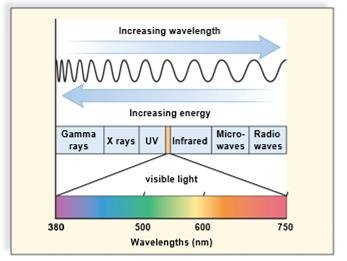
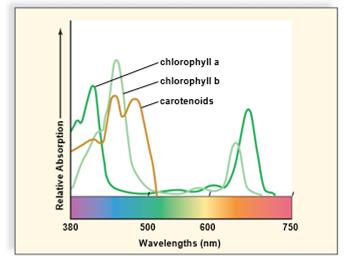
Photosynthetic pigments are molecules that absorb specific wavelengths of light. The main pigment in plants is chlorophyll, which absorbs red and blue light and reflects green, giving plants their color. Carotenoids are accessory pigments that absorb light in the violet-blue-green range and reflect yellow and orange.
Absorption spectrum: A graph showing the relative absorption of different wavelengths by pigments.
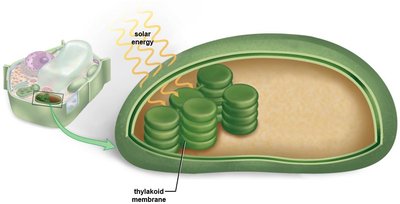
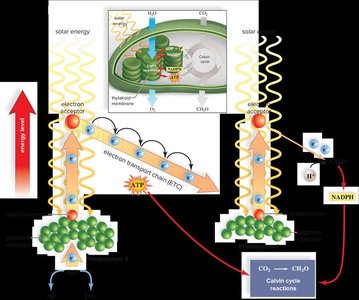
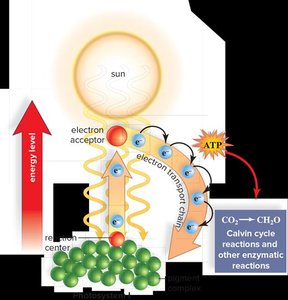
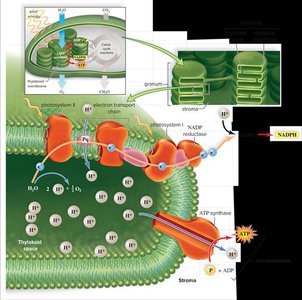
Photosystems: Complexes of pigments and proteins in the thylakoid membrane that capture light energy.
Electron Flow in the Light Reactions
Light reactions involve two electron pathways: the noncyclic pathway and the cyclic pathway. Both occur in the thylakoid membranes and use two types of photosystems (PS I and PS II).
Noncyclic pathway: Produces ATP and NADPH; electrons flow from water to NADP+.
Cyclic pathway: Produces ATP only; electrons cycle back to the same photosystem.
Plants Fix Carbon Dioxide
The Calvin Cycle
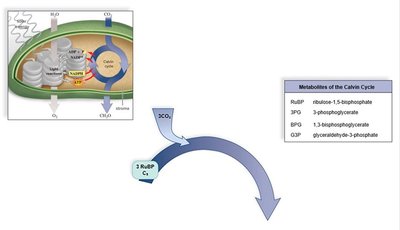
The Calvin cycle is the set of light-independent reactions in photosynthesis that fix atmospheric carbon dioxide into organic molecules. It occurs in the stroma of the chloroplast and consists of three main phases: carbon fixation, reduction, and regeneration of RuBP.
Step 1: Fixation of Carbon Dioxide
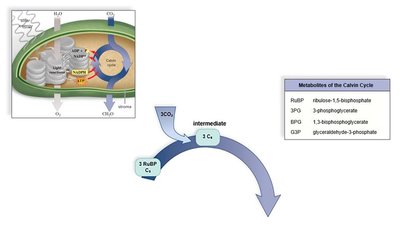
CO2 is attached to a 5-carbon molecule, RuBP, by the enzyme RuBP carboxylase/oxygenase (Rubisco).
This forms an unstable 6-carbon intermediate that splits into two 3-carbon molecules of 3-phosphoglycerate (3PG).
Step 2: Reduction of Carbon Dioxide
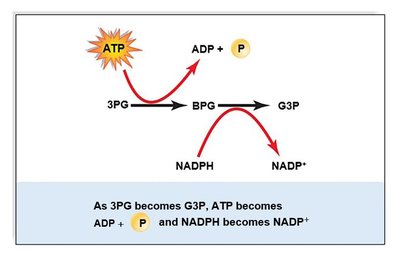
3PG is phosphorylated by ATP to form 1,3-bisphosphoglycerate (BPG).
BPG is reduced by NADPH to form glyceraldehyde-3-phosphate (G3P).
G3P can be used to synthesize glucose and other organic molecules.
Step 3: Regeneration of RuBP
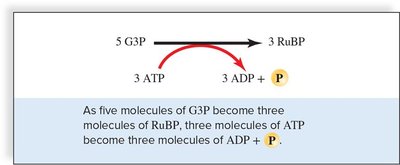
Some G3P molecules are used to regenerate RuBP, enabling the cycle to continue.
This process requires ATP.
The Importance of the Calvin Cycle
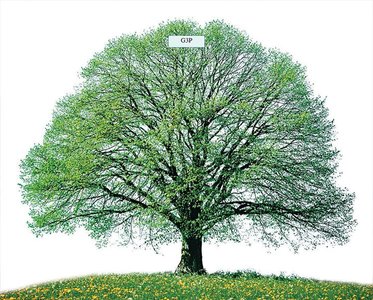
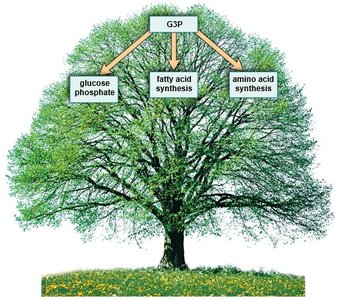
G3P produced in the Calvin cycle is a versatile molecule that can be converted into various organic compounds:
Glucose phosphate (for energy storage and transport)
Fatty acids and glycerol (for lipid synthesis)
Amino acids (for protein synthesis)
Starch and cellulose (for structural and storage purposes)
Other Types of Photosynthesis
C3, C4, and CAM Pathways
Plants have evolved different mechanisms to fix carbon dioxide, adapting to various environmental conditions:
C3 plants: Use the Calvin cycle directly; most common in temperate climates.
C4 plants: Fix CO2 into a 4-carbon compound before entering the Calvin cycle; adapted to high light and temperature.
CAM plants: Open stomata at night to fix CO2, reducing water loss; common in arid environments.
Type | CO2 Fixation | Adaptation |
|---|---|---|
C3 | Direct Calvin cycle | Cool, moist climates |
C4 | 4-carbon intermediate | Hot, sunny climates |
CAM | Nighttime fixation | Arid, dry climates |
Example: Corn is a C4 plant, while cacti are CAM plants.
Additional info: The Calvin cycle is also known as the C3 pathway because the first stable product is a 3-carbon compound (3PG). C4 and CAM pathways are adaptations to minimize photorespiration and water loss.
