 Indietro
Proteins and Amino Acids: Structure, Classification, and Synthesis
Guida di studio - Note intelligenti
 Appunti personalizzati basati sui tuoi materiali, ampliati con definizioni chiave, esempi e contesto.
Proteins: Structure and Function
Basic Structure of Amino Acids
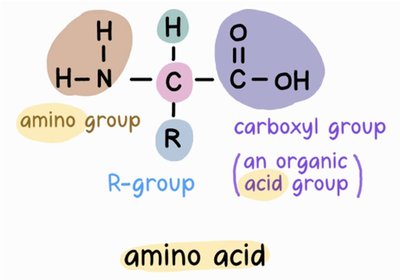
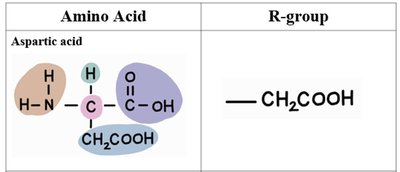
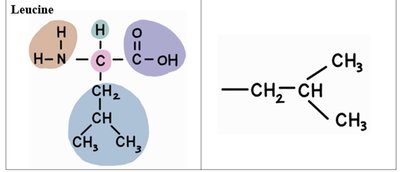
Amino acids are the fundamental building blocks of proteins. Each amino acid shares a common structure consisting of a central carbon atom (the alpha carbon) bonded to four groups: an amino group, a carboxyl group, a hydrogen atom, and a variable R-group (side chain). The R-group determines the unique properties of each amino acid.
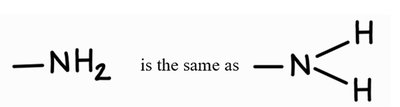
Amino group (–NH2): Acts as a base, accepting protons.
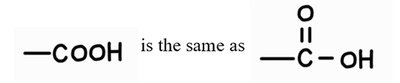
Carboxyl group (–COOH): Acts as an acid, donating protons.
R-group: Variable side chain; defines the identity and chemical behavior of the amino acid.
Classification of Amino Acids
Amino acids are classified based on the nature of their R-groups. This classification affects their solubility and role in protein structure.
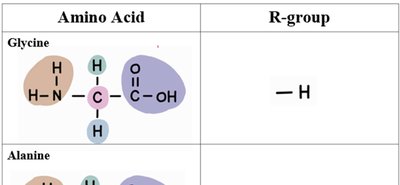
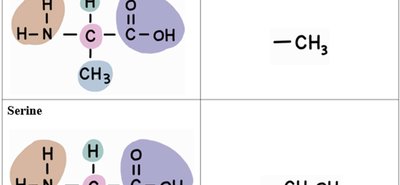
Nonpolar (hydrophobic): R-group contains only hydrogen or hydrogen and carbon. Examples: Glycine (R = H), Alanine (R = CH3), Leucine.
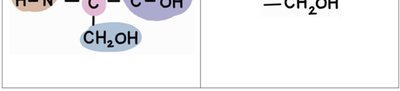
Polar (hydrophilic): R-group contains atoms like oxygen or nitrogen, making them soluble in water. Example: Serine (R = CH2OH).
Acidic: R-group contains a carboxyl group (–COOH). Examples: Aspartic acid (R = CH2COOH), Glutamic acid.
Basic: R-group contains an amino group (–NH2). Example: Lysine (R = CH2CH2CH2CH2NH2).
Representative Amino Acids and Their R-Groups
Amino Acid | R-group |
|---|---|
Glycine | –H |
Alanine | –CH3 |
Serine | –CH2OH |
Aspartic Acid | –CH2COOH |
Leucine | –CH2CH(CH3)2 |
Bonding and Chemical Properties
The chemical structure of amino acids allows them to form peptide bonds, which are essential for protein synthesis. Each carbon atom forms four bonds, each oxygen forms two, and each hydrogen forms one, following basic chemical principles.
Proteins as Polymers
Monomers and Polymers
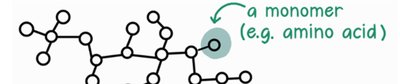
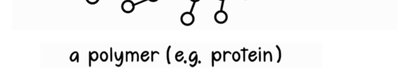
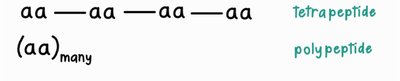
Proteins are polymers composed of amino acid monomers. The term 'polymer' refers to a molecule made up of repeating subunits (monomers). In proteins, the monomers are amino acids.
Monomer: A single subunit (e.g., an amino acid).
Polymer: A chain of monomers (e.g., a protein).
Formation of Peptide Bonds
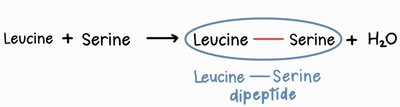
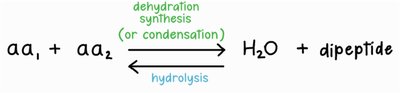
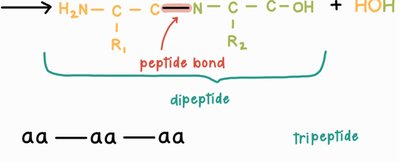
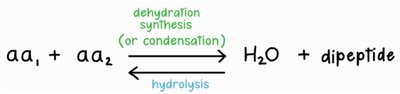
Amino acids are joined together by peptide bonds through a dehydration synthesis (condensation) reaction. This process removes a molecule of water (H2O) as the carboxyl group of one amino acid reacts with the amino group of another.
Peptide bond: The covalent bond formed between the carboxyl group of one amino acid and the amino group of another.
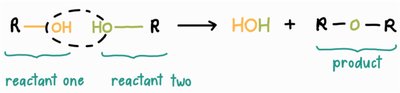
Dehydration synthesis: The process of joining two molecules by removing water.
Hydrolysis: The reverse process, breaking a peptide bond by adding water.
Dehydration Synthesis and Hydrolysis
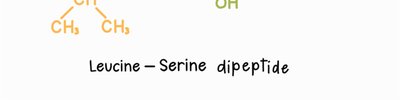
Dehydration synthesis is essential for building proteins, while hydrolysis is used to break them down. The general reaction for peptide bond formation is:
Dehydration synthesis:
Hydrolysis:
Protein Synthesis and Genetic Code
Central Dogma: DNA to Protein
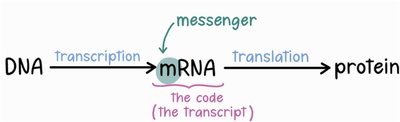
The flow of genetic information in cells follows the central dogma: DNA is transcribed into messenger RNA (mRNA), which is then translated into protein. This process ensures that the genetic code is expressed as functional proteins.
Transcription: DNA is copied into mRNA.
Translation: mRNA is decoded to synthesize proteins.
Summary Table: Amino Acid Properties
Amino Acid | R-group | Classification |
|---|---|---|
Glycine | H | Nonpolar (hydrophobic) |
Alanine | CH3 | Nonpolar (hydrophobic) |
Leucine | CH2CH(CH3)2 | Nonpolar (hydrophobic) |
Serine | CH2OH | Polar (hydrophilic) |
Aspartic Acid | CH2COOH | Acidic |
Glutamic Acid | CH2CH2COOH | Acidic |
Lysine | CH2CH2CH2CH2NH2 | Basic |
Key Concepts and Review Questions
Monomers vs. Polymers: Monomers are the building blocks; polymers are chains of monomers.
Peptide bond formation: Requires dehydration synthesis; hydrolysis breaks peptide bonds.
Order of amino acids: The sequence determines the unique properties of the resulting peptide or protein.
Central dogma: DNA → mRNA → Protein.
Review Questions
Write a reaction to illustrate how a tyrosine-lysine dipeptide forms.
Out of the amino acids mentioned, indicate which are nonpolar, acidic, basic, or just polar.
How many electrons are being shared in the amino acid phenylalanine?
Draw a tripeptide.
Additional info: The notes expand on the chemical structure, classification, and synthesis of proteins, providing context for General Biology students. The tables and diagrams reinforce the relationships between amino acid structure and protein function.
