 Indietro
The Molecules of Cells: Structure and Function of Biological Macromolecules
Guida di studio - Note intelligenti
 Appunti personalizzati basati sui tuoi materiali, ampliati con definizioni chiave, esempi e contesto.
Chapter 3: The Molecules of Cells
Introduction to Organic Compounds
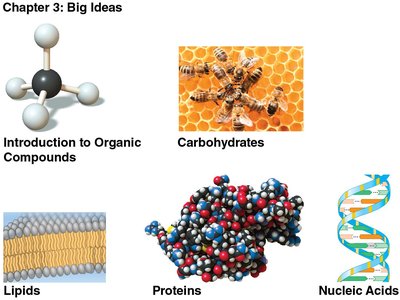
Organic compounds are the foundation of all living organisms. Their diversity and complexity arise from the unique properties of carbon, which forms the backbone of these molecules. This chapter explores the structure, function, and importance of the four main classes of biological macromolecules: carbohydrates, lipids, proteins, and nucleic acids.
Life’s Molecular Diversity Is Based on the Properties of Carbon
Carbon: The Backbone of Life
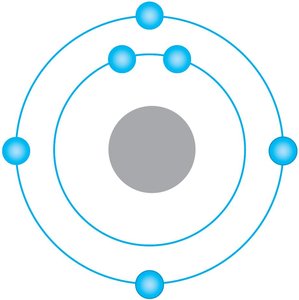
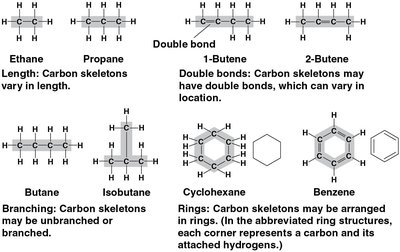
Carbon is unparalleled in its ability to form large, complex, and diverse molecules due to its four valence electrons, allowing it to form four covalent bonds with other atoms. This versatility enables the construction of a wide variety of molecular structures, including chains, branched molecules, and rings.
Valence Electrons: Carbon has four electrons in its outer shell, enabling it to bond with up to four other atoms.
Organic Compounds: Molecules containing carbon atoms bonded to hydrogen and often other elements.
Hydrocarbons: Compounds composed only of carbon and hydrogen; these are nonpolar and hydrophobic.
Carbon Skeleton: The chain or ring of carbon atoms that forms the structural framework of an organic molecule.
Isomers
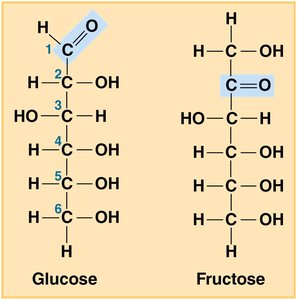
Isomers are compounds with the same molecular formula but different structural arrangements, resulting in distinct properties. For example, glucose and fructose are both C6H12O6 but differ in structure and function.
Structural Isomers: Differ in the covalent arrangement of atoms.
Cis-trans Isomers: Differ in spatial arrangement around double bonds.
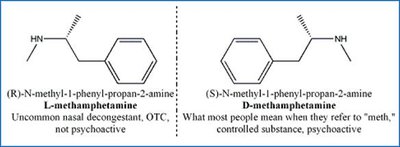
Enantiomers: Mirror images of each other, often with different biological activities.
Example: Methamphetamine exists as two enantiomers: one is a psychoactive drug, the other is a nasal decongestant.
Functional Groups and Chemical Properties
Key Chemical Groups in Biological Molecules
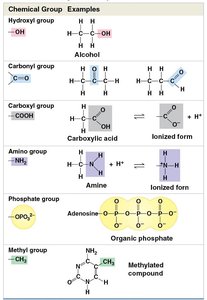
The chemical behavior of organic molecules is largely determined by the functional groups attached to the carbon skeleton. These groups are usually polar and hydrophilic, except for the methyl group, which is nonpolar and hydrophobic.
Hydroxyl (-OH): Found in alcohols; makes molecules polar.
Carbonyl (>C=O): Found in sugars; increases reactivity.
Carboxyl (-COOH): Acts as an acid; found in amino acids and fatty acids.
Amino (-NH2): Acts as a base; found in amino acids.
Phosphate (-OPO32-): Involved in energy transfer (e.g., ATP).
Methyl (-CH3): Nonpolar; affects gene expression.
Macromolecules: Structure and Synthesis
Monomers and Polymers
Macromolecules are large molecules formed by the joining of smaller units called monomers. Polymers are long chains of monomers linked by covalent bonds. The diversity of macromolecules arises from the arrangement and types of monomers used.
Monomer: A single subunit (e.g., glucose, amino acid, nucleotide).
Polymer: A long molecule consisting of many similar or identical monomers linked together.
Dehydration Synthesis and Hydrolysis
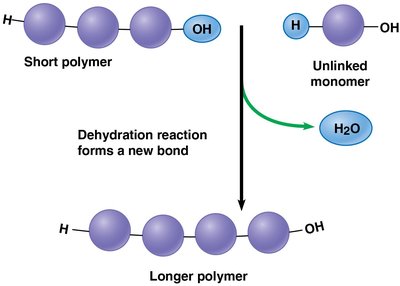
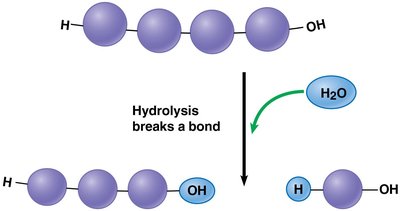
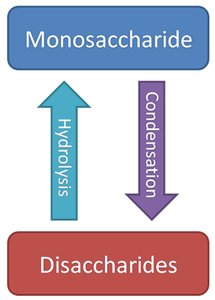
Polymers are assembled by dehydration synthesis (removal of water to form a bond) and broken down by hydrolysis (addition of water to break a bond). Enzymes catalyze these reactions.
Dehydration Synthesis: Joins two monomers by removing a water molecule.
Hydrolysis: Breaks a polymer into monomers by adding water.
The Four Classes of Biological Macromolecules
Carbohydrates
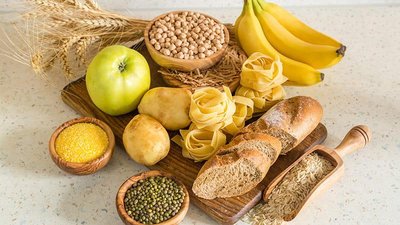
Carbohydrates are sugars and polymers of sugars. They serve as energy sources and structural materials in cells. Carbohydrates are hydrophilic due to their many hydroxyl groups.
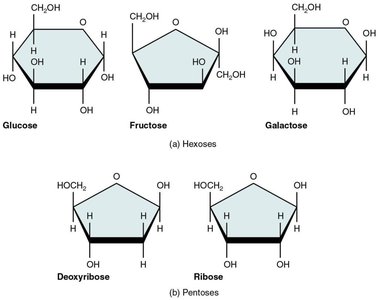
Monosaccharides: Simple sugars (e.g., glucose, fructose, ribose).
Disaccharides: Two monosaccharides joined by a glycosidic bond (e.g., sucrose, maltose).
Polysaccharides: Long chains of monosaccharides (e.g., starch, glycogen, cellulose, chitin).
Monosaccharides
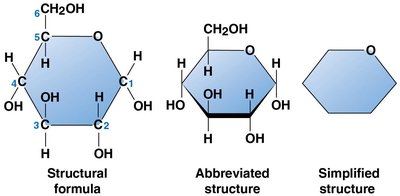
Structure: Usually have a formula (CH2O)n.
Function: Main fuel for cellular work; building blocks for other molecules.
Examples: Glucose, fructose, ribose, deoxyribose.
Disaccharides
Structure: Two monosaccharides joined by dehydration synthesis.
Function: Energy transport and storage.
Examples: Sucrose (glucose + fructose), maltose (glucose + glucose).
Polysaccharides
Structure: Polymers of hundreds to thousands of monosaccharides.
Function: Energy storage (starch in plants, glycogen in animals), structural support (cellulose in plants, chitin in fungi and arthropods).
Lipids
Structure and Function of Lipids
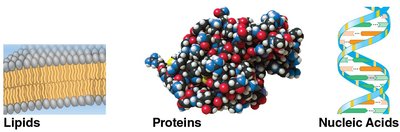
Lipids are a diverse group of hydrophobic molecules, including fats, phospholipids, and steroids. They are not true polymers but are grouped together due to their insolubility in water.
Fats (Triglycerides): Composed of glycerol and three fatty acids; main function is energy storage.
Phospholipids: Major component of cell membranes; consist of glycerol, two fatty acids, and a phosphate group.
Steroids: Four fused carbon rings; include cholesterol and hormones like testosterone and estrogen.
Proteins
Structure and Function of Proteins
Proteins are polymers of amino acids and perform a vast array of functions, including catalysis, transport, structure, and signaling. The function of a protein is determined by its shape, which is specified by four levels of structure.
Primary Structure: Sequence of amino acids in a polypeptide chain.
Secondary Structure: Local folding into alpha-helices and beta-sheets, stabilized by hydrogen bonds.
Tertiary Structure: Overall 3D shape of a polypeptide, determined by interactions among R groups.
Quaternary Structure: Association of multiple polypeptide chains.
Nucleic Acids
Structure and Function of Nucleic Acids
Nucleic acids (DNA and RNA) store and transmit genetic information. They are polymers of nucleotides, each consisting of a sugar, a phosphate group, and a nitrogenous base.
DNA: Contains deoxyribose sugar; bases are adenine (A), thymine (T), guanine (G), cytosine (C).
RNA: Contains ribose sugar; bases are adenine (A), uracil (U), guanine (G), cytosine (C).
Structure: Nucleotides are joined by dehydration reactions to form a sugar-phosphate backbone; nitrogenous bases pair via hydrogen bonds in DNA to form a double helix.
Additional info: For further details on the structure and function of the four macromolecules, consult the chart in your lab manual (Ch 3).
