Indietro
The Structure and Function of Large Biological Molecules
Guida di studio - Note intelligenti
 Appunti personalizzati basati sui tuoi materiali, ampliati con definizioni chiave, esempi e contesto.
Introduction to Biomolecules
Overview of Biomolecules
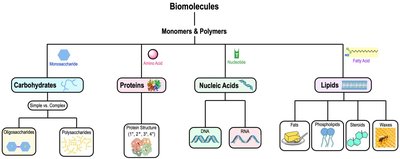
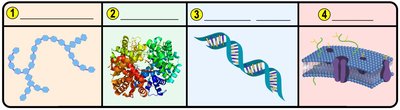
Biomolecules are organic molecules essential to living organisms, forming the basis of structure and function in cells. There are four primary classes of biomolecules: carbohydrates, proteins, nucleic acids, and lipids. Each class has unique monomers, polymers, and biological roles.
Classes of Biomolecules
Carbohydrates: Serve as energy sources and structural materials.
Proteins: Perform a vast array of functions including catalysis, structure, and signaling.
Nucleic Acids: Store and transmit genetic information.
Lipids: Provide energy storage, membrane structure, and signaling molecules.
Monomers and Polymers
Definitions and Relationships
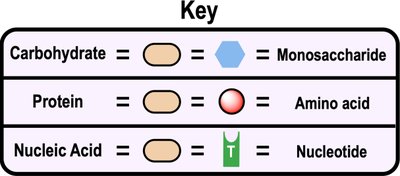
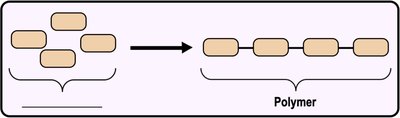
Monomers are the individual building blocks that can be repetitively linked together to form polymers, which are long chains of monomers. Carbohydrates, proteins, and nucleic acids are typically polymers, while lipids do not form true polymers.
Polymerization and Depolymerization
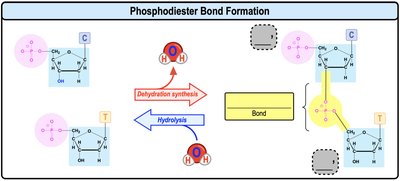
Dehydration Synthesis: Forms covalent bonds to link monomers, releasing water and building polymers.
Hydrolysis: Cleaves covalent bonds by adding water, breaking polymers into monomers.
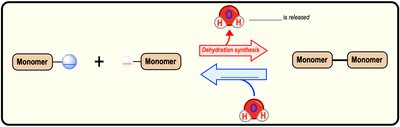
Example: Formation of a disaccharide from two monosaccharides via dehydration synthesis; breakdown via hydrolysis.
Carbohydrates
Structure and Classification
Carbohydrates are carbon-based molecules hydrated with many hydroxyl groups (-OH). They are also referred to as saccharides (Greek for "sugars"). Simple carbohydrates fit the formula (e.g., glucose), while complex carbohydrates may include additional elements such as nitrogen or sulfur.
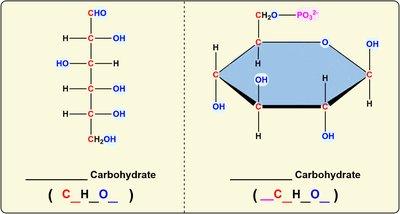
Size Classes of Carbohydrates
Monosaccharides: Single carbohydrate units (e.g., glucose).
Oligosaccharides: 2 to ~20 covalently linked monosaccharides.
Polysaccharides: More than 20 covalently linked monosaccharides (e.g., starch, cellulose).
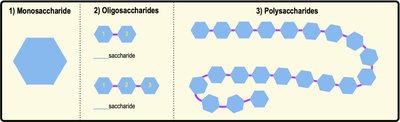
Formation and Breakdown of Polysaccharides
Polysaccharides are formed by linking monosaccharides via glycosidic bonds through dehydration synthesis. Hydrolysis breaks these bonds to release monosaccharides.
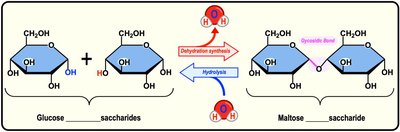
Functions of Carbohydrates
Structural Support: Cellulose in plants, chitin in arthropods.
Energy Storage: Starch in plants, glycogen in animals.
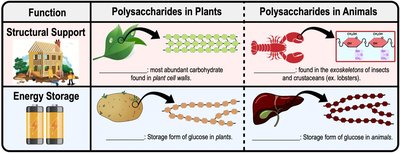
Example: Glycogen is the storage form of glucose in animals; starch is the storage form in plants.
Proteins
Structure and Monomers
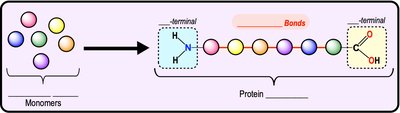
Proteins are polymers made of amino acid monomers linked by peptide bonds. Each protein has directionality, with an N-terminal (amino group) and a C-terminal (carboxyl group).
Amino Acid Structure
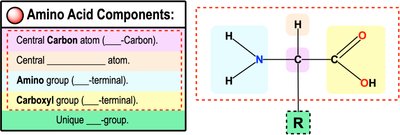
Each amino acid contains a central carbon atom, an amino group, a carboxyl group, a hydrogen atom, and a unique R-group. There are 20 different amino acids, each with a distinct R-group.
Protein-Related Terms
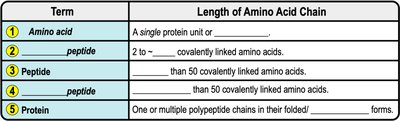
Term | Length of Amino Acid Chain |
|---|---|
Amino acid | A single protein unit or monomer |
Oligopeptide | 2 to ~20 covalently linked amino acids |
Peptide | Less than 50 covalently linked amino acids |
Polypeptide | More than 50 covalently linked amino acids |
Protein | One or multiple polypeptide chains in their folded/functional forms |
Levels of Protein Structure
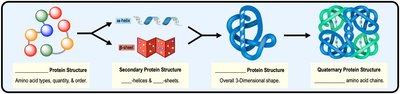
Primary Structure: Sequence of amino acids.
Secondary Structure: Formation of α-helices and β-sheets via hydrogen bonding.
Tertiary Structure: Overall 3D shape of a polypeptide chain.
Quaternary Structure: Association of multiple polypeptide chains.
Denatured Proteins and Chaperones
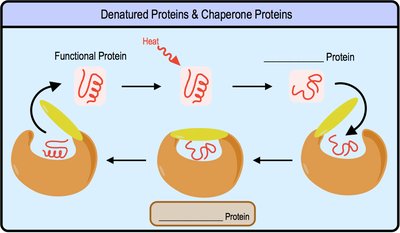
A protein’s structure is critical for its function. Denatured proteins are non-functional due to altered shape, often caused by changes in pH, temperature, or salt concentration. Chaperone proteins assist in the proper folding or re-naturing of proteins.
Nucleic Acids
Structure and Monomers
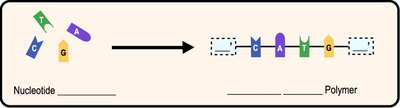
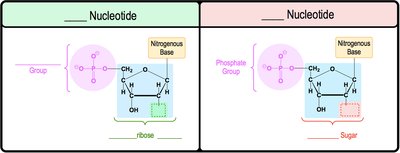
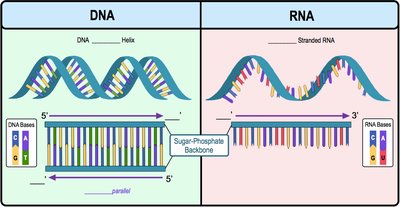
Nucleic acids are polymers that store and encode genetic information. Their monomers are nucleotides, each consisting of a phosphate group, a pentose sugar, and a nitrogenous base. DNA and RNA differ in their sugar components and nitrogenous bases.
Nitrogenous Bases
Type | Bases | Structure |
|---|---|---|
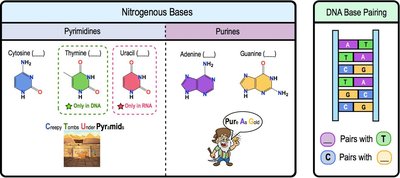
Pyrimidines | Cytosine, Thymine (DNA), Uracil (RNA) | Single-ring |
Purines | Adenine, Guanine | Double-ring |
Formation and Structure of Nucleic Acids
Nucleotides are linked by phosphodiester bonds via dehydration synthesis, forming a sugar-phosphate backbone with directionality (5’ phosphate to 3’ hydroxyl end). DNA is typically double-stranded and forms an antiparallel double helix, while RNA is usually single-stranded.
Lipids
Structure and Types
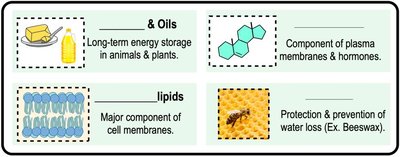
Lipids are hydrophobic biomolecules insoluble in water, highly diverse in structure and function. They are not true polymers and include fats, oils, phospholipids, steroids, and waxes. Some lipids are amphipathic, containing both hydrophobic and hydrophilic regions.
Fatty Acids
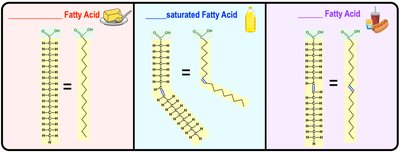
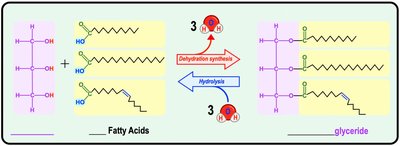
Saturated Fatty Acids: Fully saturated with hydrogens, only single C–C bonds, solid at room temperature.
Unsaturated Fatty Acids: Contain one or more C=C double bonds, causing kinks, liquid at room temperature.
Trans Fats: Artificial unsaturated fatty acids that are linear and not kinked.
Triglycerides
Triglycerides are lipids with three fatty acid chains covalently linked to a single glycerol molecule via dehydration synthesis.
Phospholipids
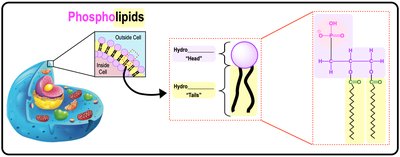
Phospholipids contain a phosphate group and are major components of all cell membranes. They are amphipathic, with a hydrophilic head and hydrophobic tails.
Steroids and Waxes
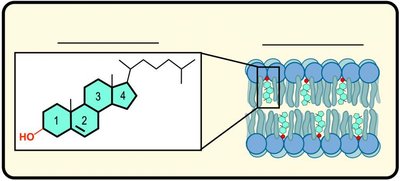
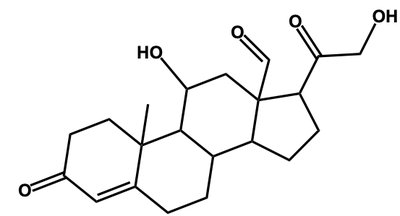
Steroids: Lipids with four fused carbon rings (e.g., cholesterol, important for animal cell membranes).
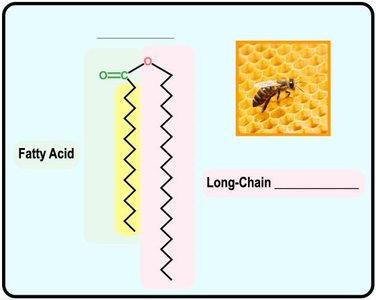
Waxes: Fatty acids bound to long-chain alcohols, used for protection and prevention of water loss (e.g., beeswax).