
Ch. 16 - How Genes Work
Freeman - Biological Science 8th Edition
Freeman8th EditionBiological ScienceISBN: 9780138276263Non è quello che usi tu?Cambia libro di testo
Capitolo 16, Problema 5

A friend says, 'Geneticists spend all their time talking about DNA, but that's silly because DNA really isn't that important in the functions of a cell.' In what ways is she right, and in what ways might she be wrong?

Guida verificata passo dopo passo
1
Step 1: Let's first understand the importance of DNA. DNA, or deoxyribonucleic acid, is the molecule that contains the genetic code of organisms. This includes animals, plants, protists, archaea and bacteria. DNA is in each cell in the organism and tells cells what proteins to make. Mostly, these proteins are enzymes. DNA is essential for life and its roles in the day to day functioning of the cell, in growth, reproduction and maintenance are vital.
Step 2: Now, let's consider the ways in which your friend might be right. While DNA is crucial for the functioning of a cell, it is not the only important component. Other structures, such as the mitochondria, endoplasmic reticulum, and ribosomes, also play key roles in cellular function. For example, mitochondria are responsible for energy production, ribosomes are involved in protein synthesis, and the endoplasmic reticulum assists in processing molecules created by the cell.
Step 3: Additionally, RNA, or ribonucleic acid, also plays a significant role in protein synthesis. RNA is a molecule similar to DNA that is used in various vital roles in coding, decoding, regulation and expression of genes. The actual process of protein synthesis, the primary function of cells, is performed by RNA, not DNA.
Step 4: Now, let's consider the ways in which your friend might be wrong. While it's true that other cellular components are important for the cell's function, none of them could perform their roles without the instructions provided by DNA. DNA holds the instructions for the creation and operation of all cells, tissues, organs, and indeed, the entire organism. Without DNA, the cell would lack the necessary information to function.
Step 5: In conclusion, while DNA is not the only important component of a cell, it is absolutely crucial for the cell's function. It provides the instructions for all of the cell's activities. Without DNA, a cell would not know how to function, and life as we know it could not exist.

Risposta video verificata per un problema simile:

Questa soluzione video è stata consigliata dai nostri tutor come utile per risolvere questo problema.
Durata del video:
2m

Concetti chiave

Ecco i concetti essenziali che devi comprendere per rispondere correttamente alla domanda.

Role of DNA in Cellular Function

DNA serves as the blueprint for all cellular functions by encoding the genetic information necessary for the synthesis of proteins. These proteins perform a vast array of functions, including catalyzing biochemical reactions, providing structural support, and regulating cellular processes. While DNA is crucial, it is not the sole determinant of cellular function, as other factors like RNA and proteins also play significant roles.
Video consigliato:
06:04
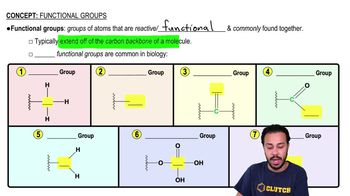
Functional Groups

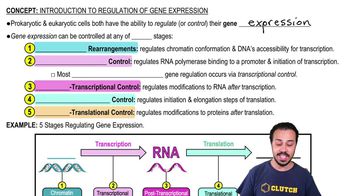
Gene Expression and Regulation

Gene expression is the process by which information from a gene is used to synthesize functional gene products, typically proteins. This process is tightly regulated, meaning that not all genes are expressed at all times or in all cells. Factors such as environmental signals, cellular conditions, and epigenetic modifications influence gene expression, highlighting that DNA's role is part of a larger regulatory network.
Video consigliato:
06:40
Introduction to Regulation of Gene Expression

The Central Dogma of Molecular Biology

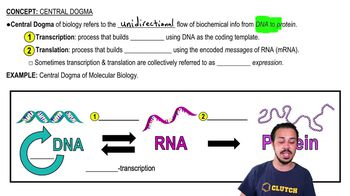
The Central Dogma describes the flow of genetic information within a biological system, typically summarized as DNA -> RNA -> Protein. This framework illustrates how DNA is transcribed into messenger RNA (mRNA), which is then translated into proteins. While this model emphasizes the importance of DNA, it also underscores the critical roles of RNA and proteins in executing cellular functions, suggesting that DNA alone does not dictate cellular activity.
Video consigliato:
05:45
Central Dogma
Pratica correlata
Domanda del libro di testo

Which of the following describes mutations? Select True or False for each statement.

T/F Point mutations can occur in any DNA sequence.

T/F Frameshift mutations can occur in any DNA sequence.

T/F Neutral mutations depend on the degeneracy of the genetic code.

T/F Deleterious mutations occur only in protein-coding sequences of DNA.

810
views
Domanda del libro di testo

A minimal genetic code requires only 21 codons—one for each amino acid, and one for a stop signal. Given this, what advantage might be offered by having a code with 64 codons?

1186
views
Domanda del libro di testo

DNA's primary structure is made up of just four different bases, and its secondary structure is regular and highly stable. How can a molecule with these characteristics hold the information required to build and maintain a cell?

1573
views
Domanda del libro di testo

Explain what's wrong with this statement: All point mutations change the genotype and the phenotype.

907
views
Domanda del libro di testo

Which of the following describes the experimental strategy that was used to decipher the genetic code?

a. Comparing the amino acid sequences of proteins with the base sequence of their genes

b. Analyzing the sequence of RNAs produced from known DNA sequences

c. Analyzing mutants that changed the code

d. Examining the polypeptides produced when RNAs with particular sequences were translated

1025
views
Domanda del libro di testo

Which of the following is an important exception to the central dogma of molecular biology?

a. Many genes code for RNAs that function directly in the cell.

b. DNA is the repository of genetic information in all cells.

c. Messenger RNA is a short-lived 'information carrier.

d. Proteins are responsible for most aspects of the phenotype.

3343
views