
Ch. 16 - How Genes Work
Freeman - Biological Science 8th Edition
Freeman8th EditionBiological ScienceISBN: 9780138276263Non è quello che usi tu?Cambia libro di testo
Capitolo 16, Problema 1

If a base-pair change occurs in DNA, this a. is a mutation. b. would be a mutation only if it falls in a protein-coding part of a gene. c. would be a mutation only if it falls in a transcribed part of the genome. d. is not a mutation, because only one base pair has been altered.

Guida verificata passo dopo passo
1
Understand the definition of a mutation: A mutation is any change in the nucleotide sequence of DNA, regardless of where it occurs in the genome.
Recognize that a base-pair change in DNA qualifies as a mutation because it alters the genetic material, even if only one base pair is affected.
Clarify that mutations can occur anywhere in the genome, not just in protein-coding or transcribed regions. However, the impact of the mutation may vary depending on its location.
Evaluate the options provided in the question: Option (a) correctly identifies that a base-pair change is a mutation. Options (b), (c), and (d) incorrectly limit the definition of a mutation or dismiss the change entirely.
Conclude that the correct answer is (a), as a base-pair change in DNA is universally considered a mutation, regardless of its location or functional significance.

Risposta video verificata per un problema simile:

Questa soluzione video è stata consigliata dai nostri tutor come utile per risolvere questo problema.
Durata del video:
50s

Concetti chiave

Ecco i concetti essenziali che devi comprendere per rispondere correttamente alla domanda.

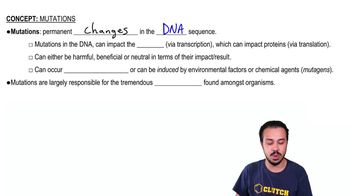
Mutation

A mutation is a permanent alteration in the DNA sequence that makes up a gene. Mutations can occur due to various factors, including environmental influences or errors during DNA replication. They can affect a single base pair or larger segments of DNA, and their consequences can range from benign to significant, potentially leading to diseases or phenotypic changes.
Video consigliato:
02:29
Mutations

Protein-Coding Genes

Protein-coding genes are segments of DNA that contain the instructions for synthesizing proteins. These genes are transcribed into messenger RNA (mRNA), which is then translated into a specific protein. Mutations in protein-coding regions can lead to changes in the amino acid sequence of proteins, potentially altering their function and impacting the organism's phenotype.
Video consigliato:
01:28
Genetic Code

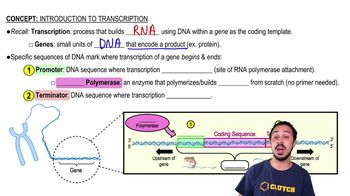
Transcription and Transcribed Regions

Transcription is the process by which the information in a gene's DNA is copied into mRNA. Transcribed regions include not only protein-coding sequences but also non-coding regions that may play regulatory roles. Mutations in these areas can influence gene expression and function, even if they do not directly alter the protein product.
Video consigliato:
05:51
Introduction to Transcription