Ch. 20 - The Molecular Revolution: Biotechnology, Genomics, and New Frontiers
Freeman - Biological Science 8th Edition
Freeman8th EditionBiological ScienceISBN: 9780138276263Non è quello che usi tu?Cambia libro di testo
Capitolo 20, Problema 15

How could the research group determine whether a homologous gene for blight resistance exists in the human genome?

Guida verificata passo dopo passo
1
Step 1: The first step in determining whether a homologous gene for blight resistance exists in the human genome is to identify the sequence of the gene in the organism where it is known to exist. This can be done using techniques such as gene sequencing.
Step 2: Once the sequence of the blight resistance gene is known, the next step is to search for this sequence in the human genome. This can be done using bioinformatics tools and databases that contain the complete sequence of the human genome.
Step 3: If a sequence in the human genome is found that matches the blight resistance gene, it is necessary to determine whether this sequence actually functions as a gene. This can be done by looking for evidence of transcription and translation of the sequence into a protein.
Step 4: If the sequence is transcribed and translated, the next step is to determine whether the protein it produces has a similar function to the blight resistance protein. This can be done using techniques such as protein structure analysis and functional assays.
Step 5: Finally, if the protein has a similar function, it can be concluded that a homologous gene for blight resistance exists in the human genome. However, it's important to note that the presence of a homologous gene does not necessarily mean that humans are resistant to blight, as the gene may not be expressed or may be regulated differently in humans.

Risposta video verificata per un problema simile:

Questa soluzione video è stata consigliata dai nostri tutor come utile per risolvere questo problema.
Durata del video:
2m

Concetti chiave

Ecco i concetti essenziali che devi comprendere per rispondere correttamente alla domanda.

Homologous Genes

Homologous genes are genes that share a common ancestry and typically have similar sequences and functions. They can be classified into orthologs, which are found in different species due to speciation, and paralogs, which arise from gene duplication within the same species. Understanding homologous genes is crucial for identifying potential gene functions across different organisms, including the search for blight resistance in humans.
Video consigliato:
08:09
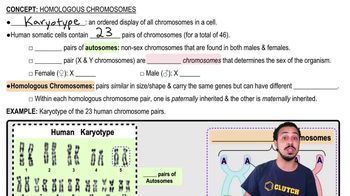
Homologous Chromosomes

Gene Mapping

Gene mapping is the process of determining the location of genes on a chromosome. This involves identifying the specific loci of genes and their relationships to one another. In the context of the question, gene mapping would help researchers locate any homologous genes related to blight resistance within the human genome, facilitating comparisons with known resistance genes in other species.
Video consigliato:
04:22
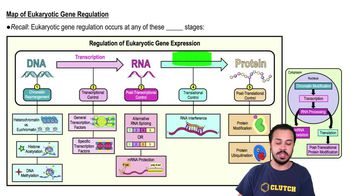
Map of Eukaryotic Gene Regulation

Comparative Genomics

Comparative genomics is the field of study that involves comparing the genomic features of different organisms to understand their evolutionary relationships and functional similarities. By analyzing the genomes of various species, researchers can identify conserved genes and regulatory elements, which may indicate the presence of homologous genes for traits like blight resistance in humans. This approach is essential for uncovering genetic information that may not be immediately apparent from human genomic data alone.
Video consigliato:
05:30
Genomes and Genome Evolution
Pratica correlata
Domanda del libro di testo

Why was it important to include a positive control and a negative control in the PCR analysis?

1361
views

Domanda del libro di testo

Potato blight causes potato plants to shrivel and rot. The disease is caused by the pathogen Phytophthora infestans, infamous for its role in Ireland's Great Potato Famine in the mid-1840s. The disease can devastate crops during wet weather, sometimes leading to total crop loss. Researchers aim to use recombinant DNA methods to transfer blight resistance genes from resistant varieties into susceptible varieties of potato. Transgenic plants usually contain genes of bacterial plasmid origin. In a recent study, researchers designed a strategy that avoided using any plasmid genes. They transformed cells from a susceptible potato variety with a potato blight resistance gene cloned from a resistant variety. Next, to determine which plants from this group were also free of plasmid DNA (cloning vector) sequences, they performed PCR using primers specific for the plasmid. The positive control lane shows PCR amplification of plasmid DNA only, and the negative control lane shows an attempted PCR amplification of no added DNA. Based on the gel analysis of PCR products shown below, which plants contain only the potato gene? Explain your answer.

628
views
Domanda del libro di testo

If the sequence of DNA in Question 12 were amplified using 25 PCR cycles, then the amount of this DNA would be predicted to increase by          -fold.

905
views