Potato blight causes potato plants to shrivel and rot. The disease is caused by the pathogen Phytophthora infestans, infamous for its role in Ireland's Great Potato Famine in the mid-1840s. The disease can devastate crops during wet weather, sometimes leading to total crop loss. Researchers aim to use recombinant DNA methods to transfer blight resistance genes from resistant varieties into susceptible varieties of potato. Transgenic plants usually contain genes of bacterial plasmid origin. In a recent study, researchers designed a strategy that avoided using any plasmid genes. They transformed cells from a susceptible potato variety with a potato blight resistance gene cloned from a resistant variety. Next, to determine which plants from this group were also free of plasmid DNA (cloning vector) sequences, they performed PCR using primers specific for the plasmid. The positive control lane shows PCR amplification of plasmid DNA only, and the negative control lane shows an attempted PCR amplification of no added DNA. Based on the gel analysis of PCR products shown below, which plants contain only the potato gene? Explain your answer.

- Ch. 1 - Biology: The Study of Life13
- Ch. 2 - Water and Carbon: The Chemical Basis of Life14
- Ch.3 - Protein Structure and Function10
- Ch.4 - Nucleic Acids and the RNA World10
- Ch. 5 - An Introduction to Carbohydrates10
- Ch. 6 - Lipids, Membranes, and the First Cells11
- Ch. 7 - Inside the Cell10
- Ch. 8 - Energy and Enzymes: An Introduction to Metabolism10
- Ch. 9 - Cellular Respiration and Fermentation11
- Ch. 10 - Photosynthesis12
- Ch. 11 - Cell-Cell Interactions12
- Ch. 12 - The Cell Cycle8
- Ch. 13 - Meiosis12
- Ch. 14 - Mendel and the Gene23
- Ch. 15 - DNA and the Gene: Synthesis and Repair15
- Ch. 16 - How Genes Work16
- Ch. 17 - Transcription, RNA Processing, and Translation16
- Ch. 18 - Control of Gene Expression in Bacteria16
- Ch. 19 - Control of Gene Expression in Eukaryotes12
- Ch. 20 - The Molecular Revolution: Biotechnology, Genomics, and New Frontiers15
- Ch. 21 - Genes, Development, and Evolution12
- Ch. 22 - Evolution by Natural Selection16
- Ch. 23 - Evolutionary Processes13
- Ch. 24 - Speciation15
- Ch. 25 - Phylogenies and the History of Life13
- Ch. 26 - Bacteria and Archaea15
- Ch. 27 - Diversification of Eukaryotes16
- Ch. 28 - Green Algae and Land Plants16
- Ch. 29 - Fungi18
- Ch. 30 - An Introduction to Animals9
- Ch. 31 - Protostome Animals15
- Ch. 32 - Deuterostome Animals17
- Ch. 33 - Viruses16
- Ch. 34 - Plant Form and Function16
- Ch. 35 - Water and Sugar Transport in Plants16
- Ch. 36 - Plant Nutrition13
- Ch. 37 - Plant Sensory Systems, Signals, and Responses16
- Ch. 38 - Flowering Plant Reproduction and Development16
- Ch. 39 - Animal Form and Function17
- Ch. 40 - Water and Electrolyte Balance in Animals16
- Ch. 41 - Animal Nutrition16
- Ch. 42 - Gas Exchange and Circulation16
- Ch. 43 - Animal Nervous Systems16
- Ch. 44 - Animal Sensory Systems16
- Ch. 45 - Animal Movement11
- Ch. 46 - Chemical Signals in Animals16
- Ch. 47 - Animal Reproduction and Development16
- Ch. 48 - The Immune System in Animals16
- Ch. 49 - An Introduction to Ecology15
- Ch. 50 - Behavioral Ecology16
- Ch. 51 - Population Ecology16
- Ch. 52 - Community Ecology20
- Ch. 53 - Ecosystems and Global Ecology17
- Ch. 54 - Biodiversity and Conservation Ecology18
 Freeman 8th EditionCh. 20 - The Molecular Revolution: Biotechnology, Genomics, and New FrontiersProblema 14
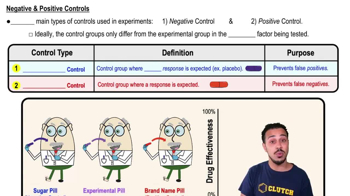
Why was it important to include a positive control and a negative control in the PCR analysis?
 Guida verificata passo dopo passo
Risposta video verificata per un problema simile:

Concetti chiave
Positive Control
 07:42
07:42
Negative Control
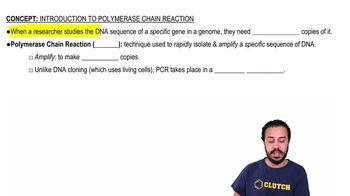
07:42PCR (Polymerase Chain Reaction)
 01:31
01:31If the sequence of DNA in Question 12 were amplified using 25 PCR cycles, then the amount of this DNA would be predicted to increase by -fold.
How could the research group determine whether a homologous gene for blight resistance exists in the human genome?
Potato blight causes potato plants to shrivel and rot. The disease is caused by the pathogen Phytophthora infestans, infamous for its role in Ireland's Great Potato Famine in the mid-1840s. The disease can devastate crops during wet weather, sometimes leading to total crop loss. Researchers aim to use recombinant DNA methods to transfer blight resistance genes from resistant varieties into susceptible varieties of potato. Explain how restriction endonucleases and DNA ligase could be used to insert a potato blight resistance gene into a plasmid.