
Ch. 30 - An Introduction to Animals
Freeman - Biological Science 8th Edition
Freeman8th EditionBiological ScienceISBN: 9780138276263Non è quello che usi tu?Cambia libro di testo
Capitolo 30, Problema 5

Why is it ecologically significant that animals are heterotrophic and multicellular?

Guida verificata passo dopo passo
1
Understand the terms: Heterotrophic organisms obtain their energy by consuming other organisms, while multicellular organisms are composed of multiple cells that can differentiate and perform specialized functions.
Recognize the ecological role of heterotrophs: Heterotrophic animals play a crucial role in ecosystems by transferring energy across different trophic levels, from producers to higher-level consumers through feeding relationships.
Consider the importance of multicellularity: Multicellular organisms can develop complex structures and systems (like digestive systems in animals) that allow them to efficiently process food and absorb nutrients, supporting higher levels of organization and interaction within ecosystems.
Link to biodiversity and ecosystem stability: Multicellular, heterotrophic animals contribute to biodiversity. Their interactions with other species (predation, herbivory, decomposition) help regulate population dynamics and nutrient cycling, which are essential for ecosystem stability.
Reflect on evolutionary significance: The evolution of multicellularity and heterotrophy has allowed animals to exploit a variety of ecological niches, leading to a wide range of forms and behaviors that increase the adaptability and resilience of ecosystems.

Risposta video verificata per un problema simile:

Questa soluzione video è stata consigliata dai nostri tutor come utile per risolvere questo problema.
Durata del video:
2m

Concetti chiave

Ecco i concetti essenziali che devi comprendere per rispondere correttamente alla domanda.

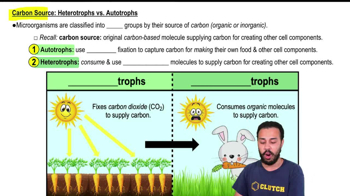
Heterotrophy

Heterotrophy refers to the mode of nutrition in which organisms obtain their food by consuming other organisms or organic matter. Unlike autotrophs, which produce their own food through photosynthesis or chemosynthesis, heterotrophs rely on the energy stored in the bodies of plants, animals, and decomposed materials. This process is crucial for energy transfer within ecosystems, as it links various trophic levels and supports food webs.
Video consigliato:
02:59
Carbon Source: Heterotrophs vs. Autotrophs

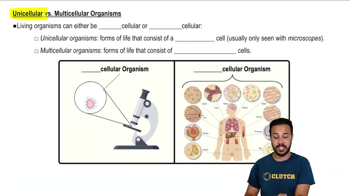
Multicellularity

Multicellularity is the condition of being composed of multiple cells that work together to perform various functions. This organization allows for greater complexity and specialization of cells, leading to the development of tissues and organs. In ecological terms, multicellular organisms can occupy diverse niches and interact with their environment in more sophisticated ways, enhancing ecosystem stability and resilience.
Video consigliato:
02:09
Unicellular vs. Multicellular

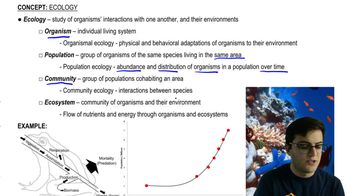
Ecological Interdependence

Ecological interdependence refers to the interconnected relationships among organisms within an ecosystem, where the survival of one species often depends on others. Heterotrophic and multicellular animals play vital roles in nutrient cycling, energy flow, and population control. Their interactions, such as predation, competition, and symbiosis, contribute to the overall health and balance of ecosystems, making their ecological significance profound.
Video consigliato:
06:50
Ecology