Ch. 48 - The Immune System in Animals
Freeman - Biological Science 8th Edition
Freeman8th EditionBiological ScienceISBN: 9780138276263Non è quello che usi tu?Cambia libro di testo
Capitolo 48, Problema 2

The overall role of the inflammatory response is to
a. Contain and eliminate foreign cells and material at the site of infection.
b. Increase heat at the site of infection to activate enzymes used in the immune response.
c. Produce antibodies that bind to and eliminate invading cells.
d. Increase blood flow at the site of a wound to flush out invading pathogens.

Guida verificata passo dopo passo
1
Understand the purpose of the inflammatory response: It is a part of the body's immune system designed to protect against infection and injury.
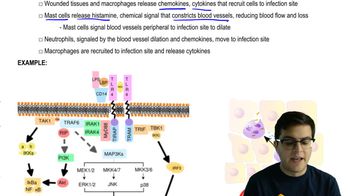
Identify the key components of the inflammatory response: These include increased blood flow, increased permeability of blood vessels, and the migration of white blood cells to the affected area.
Consider the role of increased blood flow: This helps deliver immune cells to the site of infection and can also help remove debris and pathogens.
Evaluate the role of heat: While heat can be a byproduct of increased blood flow and metabolic activity, the primary goal is not to activate enzymes but to support immune cell function.
Recognize that antibody production is a function of the adaptive immune response, not the immediate inflammatory response, which focuses on containing and eliminating foreign material.

Risposta video verificata per un problema simile:

Questa soluzione video è stata consigliata dai nostri tutor come utile per risolvere questo problema.
Durata del video:
2m

Concetti chiave

Ecco i concetti essenziali che devi comprendere per rispondere correttamente alla domanda.

Inflammatory Response

The inflammatory response is a biological process triggered by the immune system to protect the body from harmful stimuli, such as pathogens or damaged cells. It involves the activation of immune cells, release of cytokines, and increased blood flow to the affected area, aiming to contain and eliminate foreign invaders and promote healing.
Video consigliato:
03:06
Inflammatory Response

Role of Heat in Immune Response

Heat generated during inflammation can enhance the immune response by increasing the activity of enzymes and immune cells. Elevated temperatures can inhibit the growth of pathogens and improve the efficiency of immune reactions, aiding in the containment and elimination of infections.
Video consigliato:
05:20
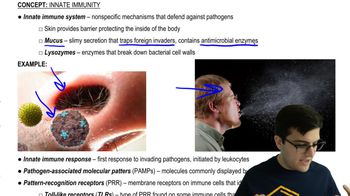
Innate Immune Response

Antibody Production

Antibodies are proteins produced by B cells in response to antigens. They specifically bind to foreign invaders, marking them for destruction by other immune cells. While antibody production is crucial for adaptive immunity, it is not a direct function of the inflammatory response, which primarily involves innate immune mechanisms.
Video consigliato:
04:36
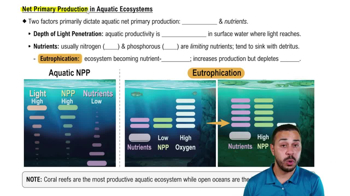
Primary Production in Aquatic Ecosystems