 Indietro
Business Calculus: Functions and Quadratic Functions – Properties, Graphs, and Applications
Guida di studio - Note intelligenti
 Appunti personalizzati basati sui tuoi materiali, ampliati con definizioni chiave, esempi e contesto.
Functions
Definition of a Function
A function is a rule that assigns to each element from one set (called the domain) exactly one element from another set (called the range). Functions are foundational in calculus and are used to model relationships in business, economics, and the sciences.
Domain: The set of all possible values of the independent variable (input).
Range: The set of all possible values of the dependent variable (output).
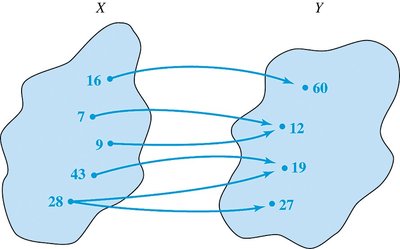
Example: If a function assigns each day to the closing value of the Dow Jones Industrial Average, the domain is the set of days, and the range is the set of closing values.
Domain and Range
Understanding the domain and range is essential for analyzing and graphing functions. The domain consists of all meaningful input values, while the range consists of all possible outputs.
For rational functions, exclude values that make the denominator zero.
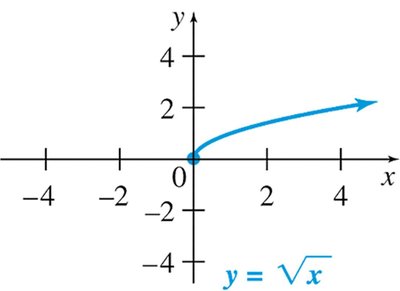
For square root functions, include only values that make the expression under the root non-negative (if considering real numbers).
Example: For , the domain is , and the range is .
Function Machine Model
The function machine is a conceptual model that illustrates how an input from the domain is processed by a function to produce an output in the range.

Evaluating Functions
To evaluate a function, substitute the given value (or expression) for the independent variable and simplify.
To solve for , set the function equal to and solve for $x$.
Example: Given , find and all such that .
Solve for .
Vertical Line Test
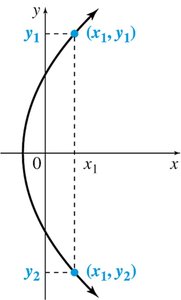
The vertical line test is a graphical method to determine if a curve is the graph of a function. If any vertical line intersects the graph more than once, the graph does not represent a function.
Even and Odd Functions
Functions can be classified as even, odd, or neither based on their symmetry:
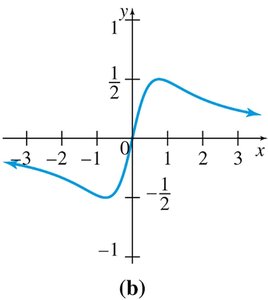
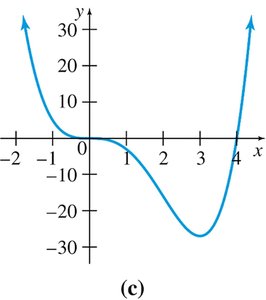
Even function: for all in the domain. The graph is symmetric about the y-axis.
Odd function: for all in the domain. The graph is symmetric about the origin.
Quadratic Functions; Translation and Reflection
Definition of a Quadratic Function
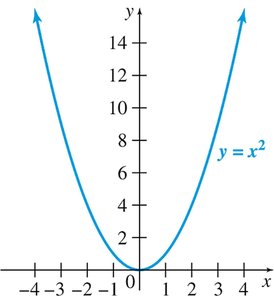
A quadratic function is a function of the form , where are real numbers and . The graph of a quadratic function is a parabola.
Graphing Quadratic Functions
The graph of has the following properties:
Opens upward if ; opens downward if .
Y-intercept at .
X-intercepts (if any) are solutions to .
Vertex at .
Axis of symmetry: .
Completing the Square
Completing the square is a method to rewrite a quadratic function in vertex form: , where is the vertex.
Factor from the and terms.
Add and subtract the square of half the coefficient of inside the parentheses.
Example: For , complete the square to find the vertex and intercepts.
Applications of Quadratic Functions
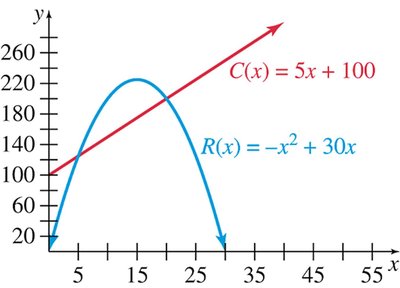
Quadratic functions are used in business to model revenue, cost, profit, and optimization problems.
Revenue function:
Cost function:
Profit function:
Maximum or minimum values occur at the vertex.
Translations and Reflections of Functions
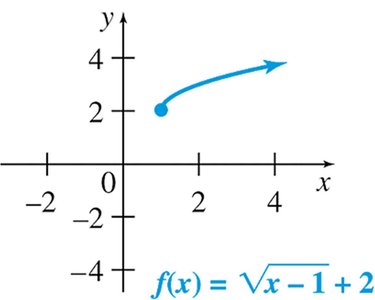
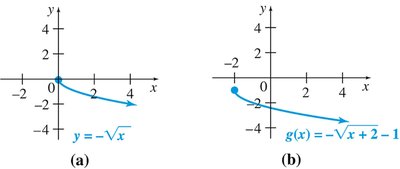
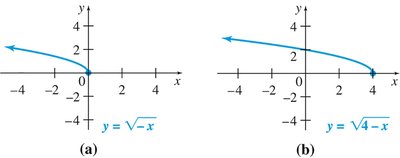
Transformations shift or reflect the graph of a function:
: Upward translation by units.
: Downward translation by units.
: Rightward translation by units.
: Leftward translation by units.
: Reflection across the x-axis.
: Reflection across the y-axis.
Summary Table: Properties of Quadratic Functions
Property | General Form | Vertex Form |
|---|---|---|
Equation | ||
Vertex | ||
Axis of Symmetry | ||
Opens | Up if , Down if | Up if , Down if |
Additional info: These foundational concepts are essential for understanding more advanced calculus topics such as limits, derivatives, and optimization in business contexts.
