 Indietro
Probability Concepts and Rules in Business Statistics
Guida di studio - Note intelligenti
 Appunti personalizzati basati sui tuoi materiali, ampliati con definizioni chiave, esempi e contesto.
Ch.4 - Probability in Business Statistics
Introduction to Probability
Probability is a fundamental concept in statistics, representing the likelihood or chance that a particular event will occur. It is expressed as a numerical value between 0 and 1, where 0 indicates impossibility and 1 indicates certainty. Probability forms the basis for inferential statistics, allowing us to make predictions and informed decisions based on data.
Key Definitions
Experiment: A process of measuring or observing an activity that leads to uncertain outcomes for the purpose of collecting data.
Outcome: The result of a single trial of a probability experiment.
Sample Space: The set of all possible outcomes of a probability experiment.
Event: One or more outcomes from the sample space.
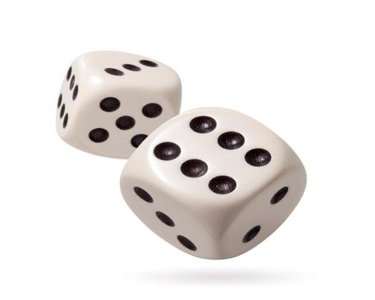


Examples of Experiments and Sample Spaces
Tossing a Coin: Sample space = {Head, Tail}
Rolling a Die: Sample space = {1, 2, 3, 4, 5, 6}
Drawing a Card: Sample space = 52 cards in a standard deck
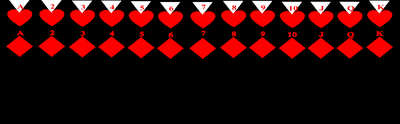
Probability Classifications
Types of Probability
There are three main types of probability used in business statistics:
Classical (A Priori) Probability: Used when all outcomes are equally likely and the sample space is known. No experiment is needed.
Empirical Probability: Based on observations or experiments where outcomes are not necessarily equally likely. Calculated using relative frequencies.
Subjective Probability: Based on personal judgment, intuition, or experience when neither classical nor empirical probabilities are available.
Formulas
Classical Probability:

Empirical Probability:
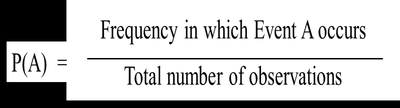
Examples
Classical: Probability of drawing a king from a deck:
Empirical: Probability that a surveyed person says "yes" to a question:
Subjective: Estimating the probability that a company will launch a new product next month based on expert opinion.
Basic Probability Properties
Probability Rules
Rule 1 (Certain Event): If , event A must occur.
Rule 2 (Impossible Event): If , event A cannot occur.
Rule 3 (Range): for any event A.
Rule 4 (Sum of Probabilities): The sum of probabilities for all outcomes in the sample space is 1.
Rule 5 (Complementary Events): The probability of the complement of event E is .
Valid and Invalid Probabilities
Valid probabilities: 0, 0.19, 0.51, 2/3, 1
Invalid probabilities: -0.6, 1.08, 124%, -1/6
Probability Rules for More Than One Event
Contingency Tables and Joint/Union Probabilities
Contingency tables are used to organize data involving two categorical variables, allowing calculation of marginal, joint, and conditional probabilities.
King | Non-King | Total | |
|---|---|---|---|
Red | 2 | 24 | 26 |
Black | 2 | 24 | 26 |
Total | 4 | 48 | 52 |
Marginal Probability: Probability of a single event (e.g., P(Red) = 26/52)
Joint Probability: Probability of two events occurring together (e.g., P(Red and King) = 2/52)
Union Probability: Probability that at least one of two events occurs (e.g., P(Red or King) = (26 + 4 - 2)/52 = 28/52)

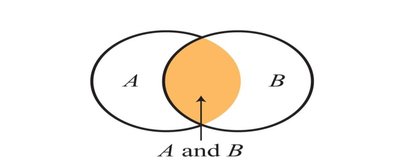
Mutually Exclusive and Non-Mutually Exclusive Events
Mutually Exclusive: Events that cannot occur at the same time (e.g., drawing a spade and a heart in one card draw).
Not Mutually Exclusive: Events that can occur together (e.g., drawing a 4 and a spade in one card draw).
Addition Rules
Addition Rule #1 (Mutually Exclusive):
Addition Rule #2 (Not Mutually Exclusive):
Multiplication Rules and Conditional Probability
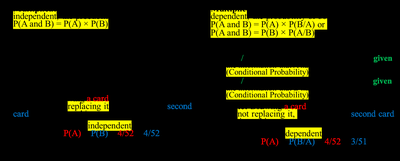
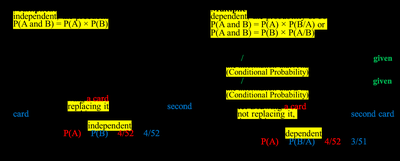
Independent Events:
Dependent Events:
Conditional Probability: is the probability that event B occurs given that A has occurred.
Counting Rules, Permutations, and Combinations
Fundamental Counting Rule
If there are choices for the first event, for the second, ..., for the nth event, the total number of possible outcomes is .
Example: If a meal consists of 4 appetizers, 7 entrées, 4 desserts, and 3 drinks, the total number of different meals is .
Permutation Rule
Permutations count the number of ways to arrange objects where order matters.
Formula:
Example: Number of ways to arrange 3 out of 8 swimmers:
Combination Rule
Combinations count the number of ways to select objects where order does not matter.
Formula:
Example: Number of ways to choose 3 books from 11:
Summary
Probability quantifies uncertainty and is foundational for inferential statistics.
Key probability types: classical, empirical, subjective.
Probability rules govern valid probability values, complements, and event combinations.
Counting rules, permutations, and combinations are essential for determining the number of possible outcomes in complex experiments.
