 Indietro
Bioenergetics: The Flow of Energy in the Cell – Study Notes
Guida di studio - Note intelligenti
 Appunti personalizzati basati sui tuoi materiali, ampliati con definizioni chiave, esempi e contesto.
Bioenergetics: The Flow of Energy in the Cell
Introduction to Bioenergetics
Bioenergetics is the study of how energy flows within cells, enabling life processes. Every cell requires molecular building blocks, chemical catalysts (enzymes), information to guide activities, and energy to drive essential reactions. Energy is defined as the capacity to cause specific chemical or physical changes.
The Importance of Energy in Cells
Types of Cellular Work
Cells utilize energy to perform six main types of work:
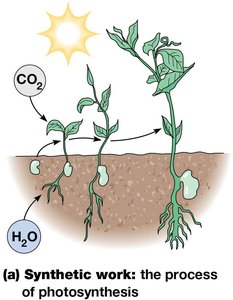
Synthetic work: Formation of new chemical bonds and molecules, essential for growth and maintenance.
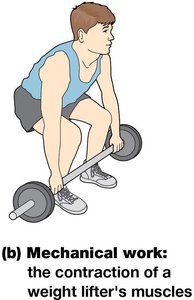
Mechanical work: Physical changes in position or orientation, such as cell movement or muscle contraction.
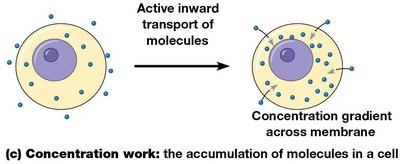
Concentration work: Accumulation or removal of substances against concentration gradients.
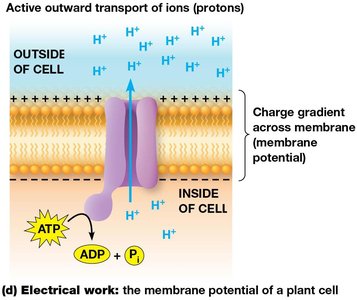
Electrical work: Movement of ions across membranes, creating membrane potentials.
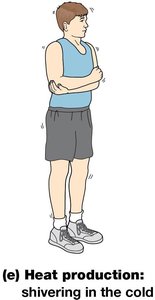
Heat production: Regulation of temperature in homeotherms.
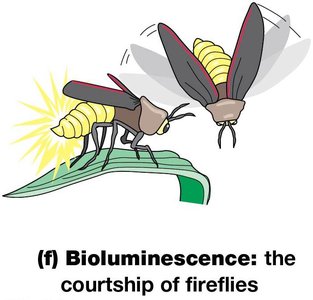
Bioluminescence: Production of light via chemical reactions.
Synthetic Work: Photosynthesis
Synthetic work involves biosynthesis, such as the process of photosynthesis, where energy is used to create energy-rich organic molecules.
Mechanical Work: Cell and Muscle Movement
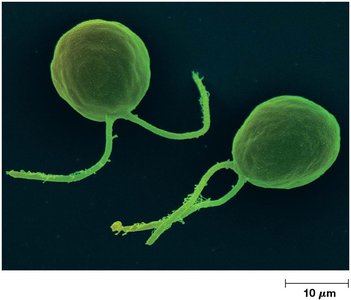
Mechanical work includes cell motility and muscle contraction, requiring energy for movement and orientation changes.
Concentration Work: Transport Across Membranes
Concentration work is the active transport of molecules across membranes, creating concentration gradients essential for cellular function.
Electrical Work: Membrane Potential
Electrical work involves the movement of ions, such as protons, across membranes, generating membrane potentials crucial for processes like neurotransmission and ATP production.
Heat Production
Heat production is a major use of energy in homeotherms, helping regulate body temperature.
Bioluminescence and Fluorescence
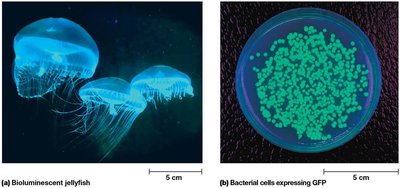
Bioluminescence is the production of light using energy sources like ATP or chemical oxidation. Fluorescence occurs when light of a shorter wavelength is absorbed and re-emitted. These phenomena are important in organisms such as fireflies and jellyfish.
Energy Sources and Flow in the Biosphere
Phototrophs and Chemotrophs
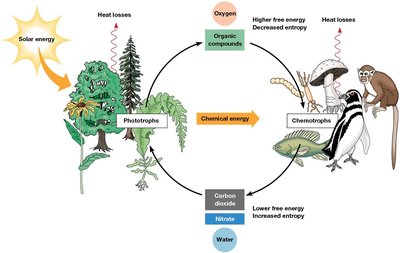
Organisms obtain energy from sunlight (phototrophs) or from the oxidation of organic/inorganic compounds (chemotrophs). Phototrophs include plants, algae, and cyanobacteria, while chemotrophs include animals, fungi, and many bacteria.
Energy Flow and Matter Cycling
Energy flows unidirectionally from the sun to the environment, beginning with photosynthesis and ending with oxidation reactions. Matter cycles between phototrophs and chemotrophs, with elements like carbon, oxygen, nitrogen, and water continuously recycled.
Efficiency and Heat Loss
No biological process is 100% efficient; some energy is lost as heat, which can be used for temperature regulation or other functions.

Principles of Thermodynamics in Bioenergetics
Systems: Open vs. Closed
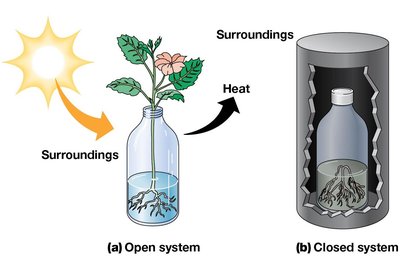
Biological systems are open, allowing energy exchange with the environment. The system is defined as the energy under consideration, while the surroundings are the rest of the universe.
Quantifying Energy Change
Energy changes are measured in calories (cal) or joules (J). One calorie is the energy required to raise 1 gram of water by 1°C.
The First Law of Thermodynamics
The first law states that energy is conserved; it can be converted from one form to another but cannot be created or destroyed. The change in internal energy (ΔE) is calculated as:
Enthalpy (H)
Enthalpy is the heat content of a system, related to internal energy, pressure, and volume:
In biological systems, due to minimal changes in pressure and volume.
Exothermic and Endothermic Reactions
Exothermic reactions ( negative) release energy; endothermic reactions ($\Delta H$ positive) absorb energy.
The Second Law of Thermodynamics
The second law states that the universe tends toward greater disorder (entropy). Reactions have directionality and can proceed spontaneously only in one direction.
Entropy (S) and Free Energy (G)
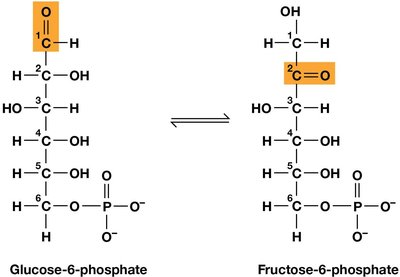
Entropy is a measure of randomness or disorder. Free energy (G) is a measure of spontaneity for a system:
(T = temperature in Kelvin)
Exergonic and Endergonic Reactions
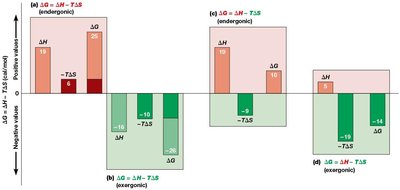
Exergonic reactions () are spontaneous and yield energy. Endergonic reactions () require energy input and are not spontaneous.
Biological Example: Glucose Oxidation
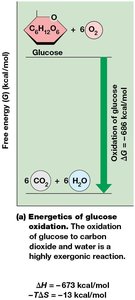
The oxidation of glucose is a highly exergonic process:
kcal/mol, kcal/mol, kcal/mol
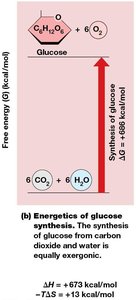
The reverse reaction (glucose synthesis) is endergonic:
kcal/mol
Equilibrium and Free Energy Calculations
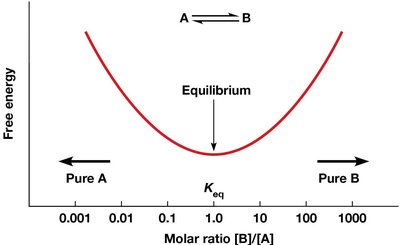
Equilibrium Constant (Keq)
The equilibrium constant () is the ratio of product to reactant concentrations at equilibrium:
Calculating ΔG
ΔG can be calculated using the following formulas:
For standard conditions:
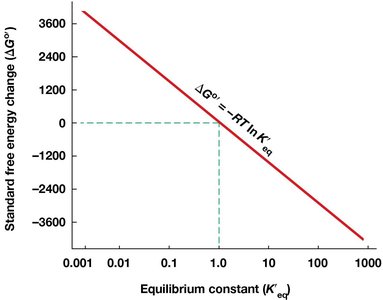
Relationship Between ΔGº′ and K′eq
There is a linear relationship between standard free energy change and the equilibrium constant:
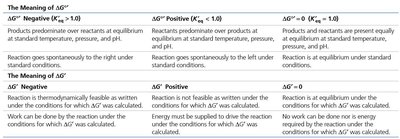
Interpretation of ΔGº′ and ΔG′
The values of ΔGº′ and ΔG′ indicate the direction and feasibility of reactions under standard and cellular conditions.
ΔGº′ Negative (K′eq > 1.0) | ΔGº′ Positive (K′eq < 1.0) | ΔGº′ = 0 (K′eq = 1.0) |
|---|---|---|
Products predominate at equilibrium; reaction proceeds rightward. | Reactants predominate; reaction proceeds leftward. | Products and reactants are equal; reaction is at equilibrium. |
ΔG′ Negative | ΔG′ Positive | ΔG′ = 0 |
Reaction is thermodynamically feasible; work can be done. | Reaction is not feasible; energy must be supplied. | Reaction is at equilibrium; no work can be done. |
Bioenergetics Analogy: Jumping Beans
Equilibrium and Enthalpy Change
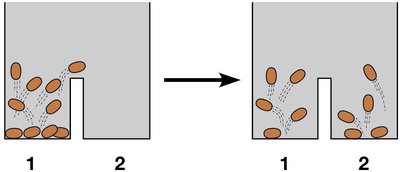
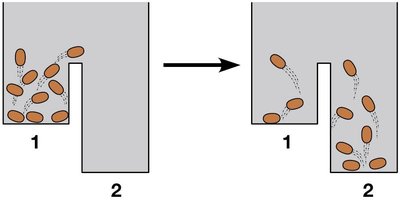
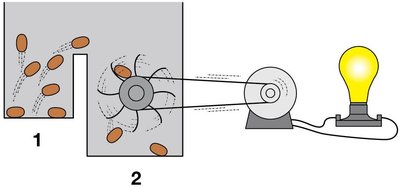
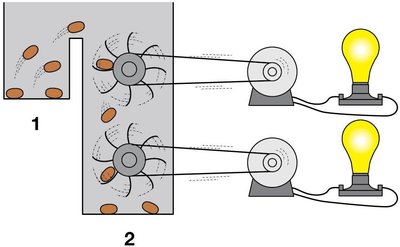
The jumping bean analogy illustrates equilibrium, enthalpy, and entropy changes. Beans move between chambers, reaching equilibrium when numbers are equal. If chamber heights differ, enthalpy changes affect distribution.
Entropy Change
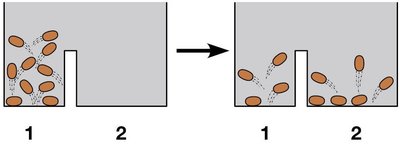
When floor space differs, entropy changes favor the chamber with more space, even if enthalpy is unchanged.
Free Energy and Capacity to Do Work
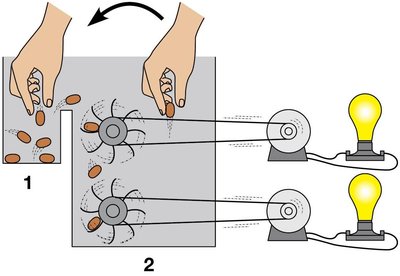
ΔG combines enthalpy and entropy to determine the direction and capacity for work. As long as ΔG is negative, work can be performed.
Steady State in Cells
Cells maintain a steady state, far from equilibrium, by continuously exchanging energy and matter with their environment. This is essential for life, as equilibrium would mean cell death.
Summary
Bioenergetics explains how cells acquire, transform, and utilize energy.
Energy flow is governed by thermodynamic principles, including conservation and directionality.
ΔG, ΔH, and ΔS are key parameters for understanding reaction spontaneity and capacity to do work.
Cells maintain steady states, enabling continuous life processes.
