 Indietro
Bioenergetics: The Flow of Energy in the Cell
Guida di studio - Note intelligenti
 Appunti personalizzati basati sui tuoi materiali, ampliati con definizioni chiave, esempi e contesto.
Bioenergetics: The Flow of Energy in the Cell
Introduction to Bioenergetics
Bioenergetics is the study of how cells acquire, transform, and utilize energy to perform work. The flow of energy in biological systems is governed by the principles of thermodynamics, which allow us to quantify energy changes and predict the direction of biochemical reactions.
Types of Cellular Work
Cells require energy to perform various types of work, each essential for maintaining life and cellular function.
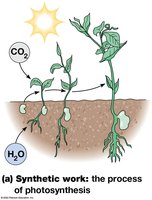
Synthetic Work: Formation of new chemical bonds, such as during biosynthesis and photosynthesis.
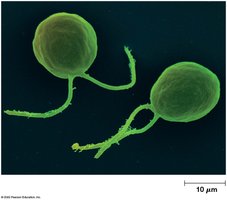
Mechanical Work: Movement or change in location/orientation of a cell or its parts, such as muscle contraction.

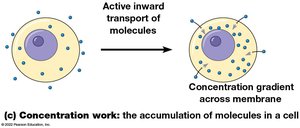
Concentration Work: Accumulation of substances within or outside a cell, often against a concentration gradient.
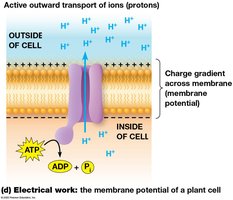
Electrical Work: Transport of ions across membranes to establish electrical potentials, crucial for nerve impulses and muscle function.
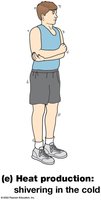
Generation of Heat: Production of heat, especially in homeotherms, to maintain body temperature.
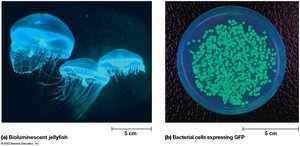
Generation of Light: Bioluminescence and fluorescence, such as in fireflies and jellyfish.

How Organisms Obtain Energy
Organisms are classified based on their energy and carbon sources:
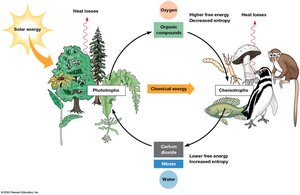
Phototrophs: Obtain energy from sunlight and convert it to chemical energy.
Photoautotrophs: Use light energy and CO2 as a carbon source.
Photoheterotrophs: Use light energy but require organic carbon.
Chemotrophs: Obtain energy by oxidizing chemical bonds.
Chemoautotrophs: Use inorganic molecules for energy and CO2 as a carbon source.
Chemoheterotrophs: Use organic molecules for both energy and carbon.
The Role of Redox Reactions
Redox reactions are fundamental to energy metabolism. Oxidation is the loss of electrons, while reduction is the gain of electrons. For example, glucose oxidation releases energy, and carbon dioxide reduction stores energy.

The Principles of Thermodynamics
Thermodynamics describes the laws governing energy transactions. Bioenergetics applies these laws to biological systems.
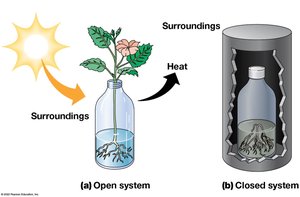
Open System: Exchanges energy and matter with surroundings.
Closed System: Does not exchange matter with surroundings.
First Law of Thermodynamics
The law of conservation of energy states that energy cannot be created or destroyed, only transformed. Enthalpy (H) is the heat content of a system.
Negative ΔH: Exothermic, energy released.
Positive ΔH: Endothermic, energy absorbed.
Second Law of Thermodynamics
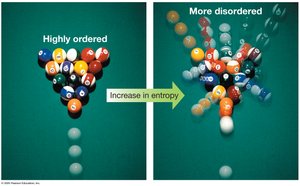
The universe tends toward greater disorder, or entropy (S).
Positive entropy (+ΔS): System becomes less ordered.
Negative entropy (-ΔS): System becomes more ordered.
Free Energy and Spontaneity of Reactions
Free energy (G) is the energy available to do work and determines whether a reaction is spontaneous.
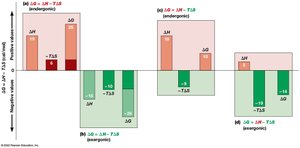
ΔG < 0: Reaction is spontaneous (exergonic).
ΔG > 0: Reaction is not spontaneous (endergonic) and requires energy input.
Spontaneity of Reactions
Negative ΔH and Positive ΔS: Spontaneous
Positive ΔH and Negative ΔS: Non-Spontaneous
Positive ΔH and Positive ΔS: Spontaneous at high temperatures
Negative ΔH and Negative ΔS: Spontaneous at low temperatures
Energetics of Glucose Oxidation and Reduction
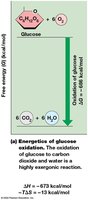
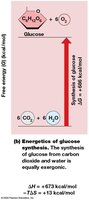
Glucose oxidation is highly exergonic, releasing energy, while the reduction of CO2 (glucose synthesis) is endergonic, requiring energy input.
Oxidation of glucose: ΔH = -673 kcal/mol, -TΔS = -13 kcal/mol, ΔG = -686 kcal/mol
Reduction of CO2: ΔH = 673 kcal/mol, -TΔS = 13 kcal/mol, ΔG = 686 kcal/mol
Calculating ΔG and Keq
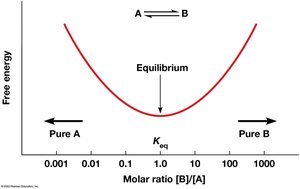
The equilibrium constant (Keq) is the ratio of product to reactant concentrations at equilibrium. ΔG can be calculated using Keq, temperature, and the gas constant.
Keq > 1: Reaction favors products
Keq < 1: Reaction favors reactants
Ratio < Keq: Reaction proceeds to the right
Ratio > Keq: Reaction proceeds to the left
The standard free energy change (ΔG°') is related to Keq by the equation:
Where:
ΔG°' = standard free energy change (cal/mol)
R = gas constant (1.987 cal/mol·K)
T = temperature in kelvins (usually 298 K)
Keq = equilibrium constant
Driving Endergonic Reactions
Cells can drive endergonic reactions (ΔG > 0) by coupling them to exergonic reactions (ΔG < 0), such as ATP hydrolysis, to make the overall process energetically favorable.
Exergonic reactions: Provide energy for cellular work.
Endergonic reactions: Require energy input, often driven by coupling to exergonic processes.
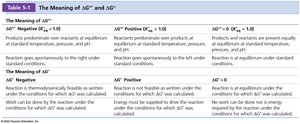
Summary Table: The Meaning of ΔG and ΔG°'
The following table summarizes the interpretation of ΔG and ΔG°' in relation to Keq and reaction spontaneity:
ΔG°' Negative (Keq > 1.0) | ΔG°' Positive (Keq < 1.0) | ΔG°' = 0 (Keq = 1.0) |
|---|---|---|
Products predominate at equilibrium under standard conditions; reaction proceeds spontaneously to the right. | Reactants predominate at equilibrium under standard conditions; reaction proceeds spontaneously to the left. | Products and reactants are present equally at equilibrium under standard conditions. |
ΔG Negative | ΔG Positive | ΔG = 0 |
Reaction is thermodynamically feasible as written under the conditions for which ΔG was calculated. | Reaction is not feasible as written under the conditions for which ΔG was calculated; energy must be supplied to drive the reaction. | Reaction is at equilibrium under the conditions for which ΔG was calculated. |
