 Indietro
Cells and Organelles: Structure, Function, and Evolution
Guida di studio - Note intelligenti
 Appunti personalizzati basati sui tuoi materiali, ampliati con definizioni chiave, esempi e contesto.
Cells and Organelles
Introduction
This chapter explores the origin, structure, and function of cells and their organelles, providing foundational knowledge for understanding cell biology. It covers the emergence of the first cells, the diversity of cell types, and the specialized structures that enable cellular life.
4.1 The Origins of the First Cells
Abiotic Synthesis of Organic Compounds
Abiotic synthesis refers to the formation of organic molecules from inorganic precursors without biological intervention.
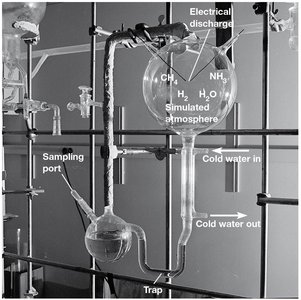
Stanley Miller's 1953 experiment demonstrated that amino acids could form under simulated early Earth conditions, supporting the hypothesis that life's building blocks could arise abiotically.
The early atmosphere likely contained H2, CH4, NH3, and H2O.
Other experiments have produced a variety of simple organic compounds under similar conditions.
Two main models for organic compound formation: atmospheric synthesis ("primordial soup") and deep-sea hydrothermal vents.
Emergence of Informational Molecules
RNA world hypothesis: RNA molecules (ribozymes) may have been the first to store genetic information and catalyze reactions before DNA and proteins evolved.
Deoxyribonucleic acids (DNA) are derived from ribonucleotides, suggesting RNA predates DNA.
Formation of Protocells
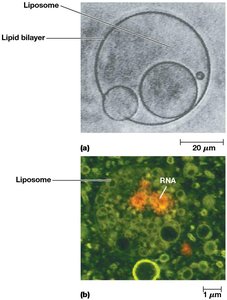
Liposomes are artificial, membrane-bound vesicles formed from lipids, capable of encapsulating molecules and carrying out simple metabolic reactions.
Primordial lipids may have formed vesicles that trapped RNA, leading to the first protocells.
4.2 Basic Properties of Cells
General Characteristics
Cells exhibit organizational complexity, contain diverse molecular components, vary in size and shape, and show specialization.
The Three Domains of Life
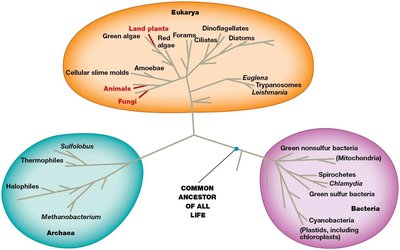
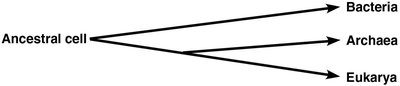
Life is classified into three domains: Bacteria, Archaea, and Eukarya.
Bacteria and Archaea are prokaryotic (no nucleus), while Eukarya are eukaryotic (with a nucleus).
rRNA sequence analysis reveals that Archaea and Bacteria are as divergent from each other as from Eukarya.
Comparison of Cell Properties
Property | Bacteria | Archaea | Eukaryotes |
|---|---|---|---|
Typical size | 1–5 μm | 1–5 μm | 10–100 μm |
Nucleus/organelles | No | No | Yes |
Cell wall | Peptidoglycan | Varies | Cellulose/pectin/chitin/none |
Mode of division | Binary fission | Binary fission | Mitosis/meiosis + cytokinesis |
Chromosomal DNA | Circular, few proteins | Circular, histone-like proteins | Linear, histone proteins |
Ribosome size | 70S | 70S | 80S |
Membrane phospholipids | Glycerol-3-phosphate + linear fatty acids | Glycerol-1-phosphate + branched polyisoprenoids | Glycerol-3-phosphate + linear fatty acids |
Cell Size and Its Limitations
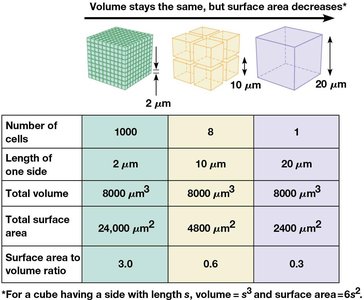
Cell size is limited by the surface area-to-volume ratio, diffusion rates, and the need for adequate concentrations of reactants and catalysts.
As cell size increases, volume grows faster than surface area, limiting exchange with the environment.
Specializations for Absorption
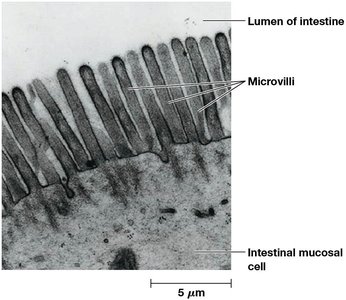
Cells such as those lining the small intestine have microvilli to increase surface area for absorption.
Compartmentalization and Internal Membranes
Eukaryotic cells use organelles to compartmentalize functions, increasing efficiency and specialization.
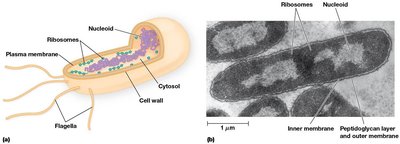
Bacteria and Archaea generally lack internal membranes, though some (e.g., cyanobacteria) have specialized membrane systems.
Structure of Prokaryotic and Eukaryotic Cells
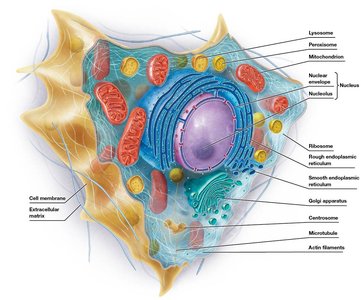
Bacterial and archaeal DNA is found in a nucleoid; eukaryotic DNA is enclosed in a nucleus.
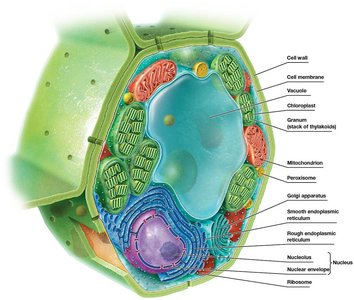
4.3 The Eukaryotic Cell in Overview: Structure and Function
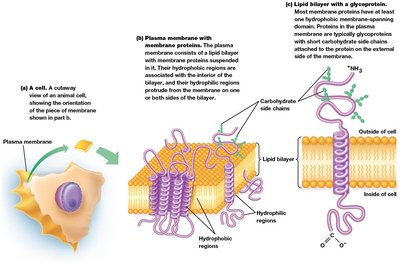
The Plasma Membrane
Defines cell boundaries and retains contents.
Composed of a lipid bilayer with embedded proteins; both are amphipathic (having hydrophilic and hydrophobic regions).
Proteins serve as enzymes, anchors, transporters, and receptors.
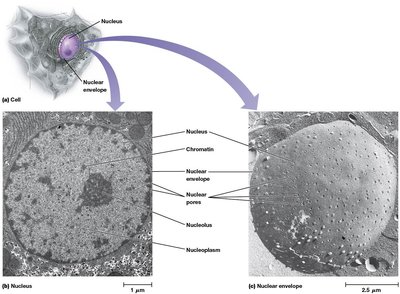
The Nucleus
The information center of the cell, containing DNA organized into chromosomes.
Surrounded by a double-membrane nuclear envelope with nuclear pores for transport.
Contains nucleoli, which synthesize ribosomal RNA and begin ribosome assembly.
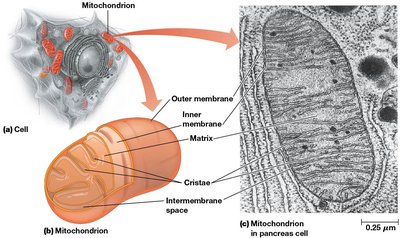
Mitochondria and Chloroplasts
Mitochondria are the site of aerobic respiration and ATP production; they have their own DNA and ribosomes.
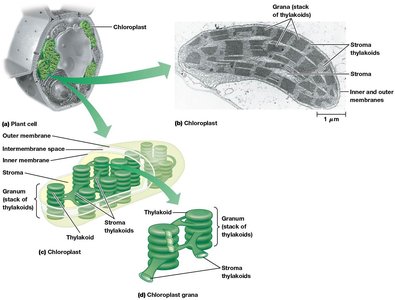
Chloroplasts are the site of photosynthesis in plants and algae, containing thylakoids and their own genetic material.
Endosymbiont Theory
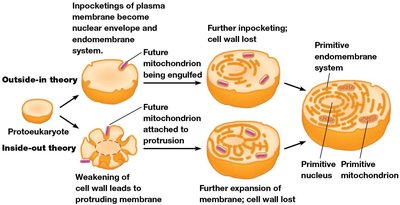
Proposes that mitochondria and chloroplasts originated from ancient bacteria engulfed by ancestral eukaryotic cells.
Supported by similarities in size, double membranes, circular DNA, and ribosomes.
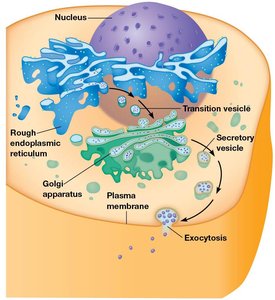
The Endomembrane System
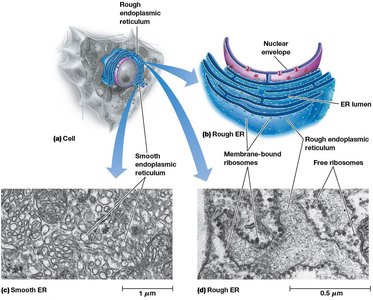
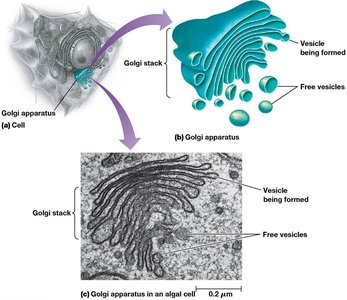
Includes the endoplasmic reticulum (ER), Golgi apparatus, lysosomes, and vesicles.
Responsible for synthesis, processing, and transport of proteins and lipids.
4.4 Viruses, Viroids, and Prions: Agents That Invade Cells
Viruses
Acellular particles consisting of DNA or RNA surrounded by a protein coat (capsid).
Incapable of metabolism or independent reproduction; require host cells for replication.
Some viruses are enveloped by a membrane derived from the host cell.
Viroids
Small, circular RNA molecules that infect plants and cause diseases.
Lack protein coats and are the smallest known infectious agents.
Prions
Infectious proteins that cause neurodegenerative diseases (e.g., mad cow disease, kuru, scrapie).
Abnormally folded versions of normal proteins; resistant to destruction by heat or chemicals.
Key Equations and Concepts
Surface Area of a Cube:
Volume of a Cube:
Surface Area to Volume Ratio:
Summary Table: Comparison of Cell Types
Feature | Bacteria | Archaea | Eukaryotes |
|---|---|---|---|
Nucleus | No | No | Yes |
Cell Wall | Peptidoglycan | Varies | Cellulose/chitin/none |
DNA Form | Circular | Circular | Linear |
Ribosome Size | 70S | 70S | 80S |
Division | Binary fission | Binary fission | Mitosis/meiosis |
Additional info: This summary integrates foundational concepts from cell biology, including the chemical origins of life, cell structure, and the evolutionary relationships among the three domains of life. It also highlights the importance of compartmentalization and the diversity of cellular organelles in eukaryotes.
