 Indietro
Cells and Organelles: Structure, Origin, and Diversity
Guida di studio - Note intelligenti
 Appunti personalizzati basati sui tuoi materiali, ampliati con definizioni chiave, esempi e contesto.
Basic Cell Concepts
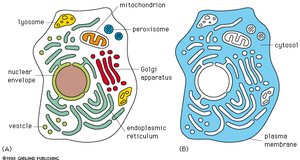
Common Design and Chemistry of Cells
All cells, despite their diversity, share a fundamental design and basic chemical processes. This unity underlies the vast diversity of cell types, sizes, shapes, and functions observed in nature.
Universal Features: All cells are bounded by a plasma membrane, contain genetic material, and utilize similar biochemical pathways.
Genetic Information: Genes, composed of DNA, carry instructions for cellular structure, function, and behavior.
Evolutionary Origin: All present-day cells are believed to have evolved from a common ancestral cell.
Central Dogma of Molecular Biology
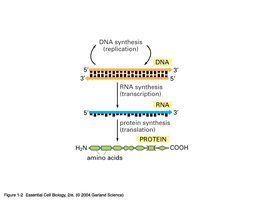
Cells share a common basic chemistry, particularly in the flow of genetic information. The central dogma describes the process by which genetic information is transferred from DNA to RNA to protein.
DNA Replication: DNA is copied to produce identical genetic material for cell division.
Transcription: DNA is transcribed into messenger RNA (mRNA).
Translation: mRNA is translated into proteins, which perform most cellular functions.
Classification of Cells
Three Domains of Life
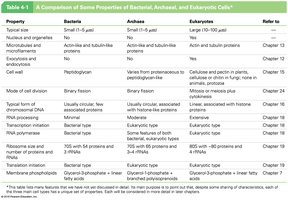
Biochemistry divides all cellular life into three domains: Bacteria, Archaea, and Eukaryotes. These groups differ in cellular structure, genetic organization, and biochemistry.
Bacteria: Prokaryotic cells lacking a nucleus and membrane-bound organelles.
Archaea: Prokaryotic cells with unique membrane lipids and genetic features, often found in extreme environments.
Eukaryotes: Cells with a nucleus and internal membrane-bound organelles.
Property | Bacteria | Archaea | Eukaryotes |
|---|---|---|---|
Typical size | Small (1–5 μm) | Small (1–5 μm) | Large (10–100 μm) |
Nucleus and organelles | Absent | Absent | Present |
Cell wall composition | Peptidoglycan | Varies (no peptidoglycan) | Cellulose, chitin, or absent |
Mode of division | Binary fission | Binary fission | Mitosis/meiosis |
Genetic material | Circular DNA | Circular DNA | Linear DNA (multiple chromosomes) |
Cell Size Limitations
Surface Area to Volume Ratio
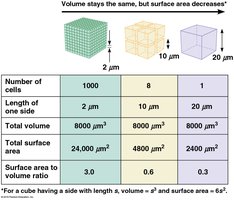
Cell size is constrained by the surface area to volume ratio, which affects the efficiency of material exchange and internal transport.
Diffusion Limitations: As cells grow larger, their volume increases faster than their surface area, limiting the rate of diffusion of substances in and out of the cell.
Biological Implications: Small cells have a higher surface area to volume ratio, facilitating efficient exchange of materials and rapid response to environmental changes.
Number of cells | Length of one side | Total volume | Total surface area | Surface area to volume ratio |
|---|---|---|---|---|
1000 | 2 μm | 8000 μm³ | 24,000 μm² | 3.0 |
8 | 10 μm | 8000 μm³ | 4800 μm² | 0.6 |
1 | 20 μm | 8000 μm³ | 2400 μm² | 0.3 |
Origin and Formation of Cells
Abiotic Synthesis of Organic Molecules
The origin of life likely began with the abiotic formation of simple organic molecules, followed by their polymerization into macromolecules capable of storing genetic information.
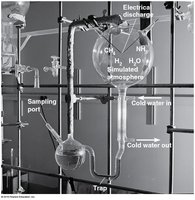
Miller-Urey Experiment (1953): Simulated early Earth conditions, producing amino acids from simple gases and electrical discharge.
Further Research: Other experiments produced sugars, nucleotides, and other biomolecules under varied conditions.
Sutherland (2014/2015): Demonstrated the formation of amino acids, ribonucleotides, and glycerol-1-phosphate using HCN, H2S, UV light, and mineral catalysts.
Self-Replicating Informational Molecules
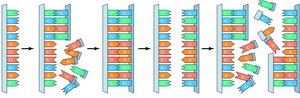
RNA is hypothesized to be the first self-replicating informational molecule due to its ability to store information and catalyze reactions (ribozymes).
Ribozymes: RNA molecules with catalytic activity, supporting the RNA world hypothesis.
Self-Replication: Laboratory experiments have shown RNA can self-replicate under certain conditions.
Formation of Protocells
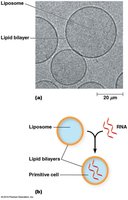
Lipids can spontaneously form vesicles in aqueous solutions, creating primitive cell-like structures (protocells) capable of encapsulating macromolecules and supporting basic metabolic functions.
Liposome Formation: Lipid bilayers self-assemble into vesicles, providing a compartment for biochemical reactions.
Protocell Division: Protocells can grow and divide, showing similarities to modern cellular metabolism.
Endosymbiotic Theory: Origin of Eukaryotic Cells
The endosymbiotic theory explains the origin of mitochondria and chloroplasts as formerly free-living prokaryotes that were engulfed by ancestral eukaryotic cells.
Mitochondria and Chloroplasts: These organelles contain their own DNA and replicate independently, supporting their prokaryotic origin.
Internal Membranes: The nucleus and endoplasmic reticulum likely evolved from infoldings of the plasma membrane.
Cellular Structures
Non-Membranous Structures: Ribosomes
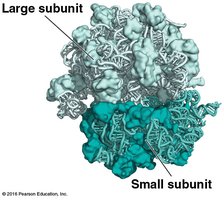
Ribosomes are universal, non-membranous organelles responsible for protein synthesis in all cells.
Structure: Composed of large and small subunits made of rRNA and proteins.
Function: Translate mRNA into polypeptide chains (proteins).
Distinctions Between Prokaryotic and Eukaryotic Cells
Prokaryotic and eukaryotic cells differ in their internal organization, genetic material, and mechanisms of cell division.
DNA Organization: Prokaryotes have a single circular DNA molecule; eukaryotes have multiple linear chromosomes.
Organelles: Eukaryotes possess membrane-bound organelles; prokaryotes do not.
Cell Division: Prokaryotes divide by binary fission; eukaryotes by mitosis and meiosis.
Eukaryotic Organelles and Their Functions
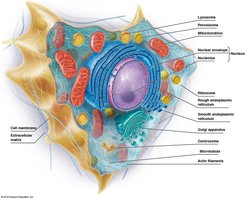
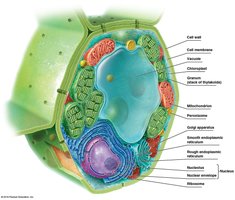
Eukaryotic cells contain specialized organelles that compartmentalize cellular functions, increasing efficiency and complexity.
Nucleus: Stores genetic material and coordinates gene expression.
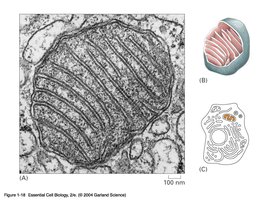
Mitochondria: Site of aerobic respiration and ATP production.
Endoplasmic Reticulum (ER): Synthesizes proteins (rough ER) and lipids (smooth ER).
Golgi Apparatus: Modifies, sorts, and packages proteins and lipids.
Lysosomes and Peroxisomes: Involved in degradation and detoxification.
External Features of Cells
Functions of External Structures
Cells possess external features that provide protection, facilitate attachment, enable communication, and support multicellularity.
Protection: Cell walls and capsules shield cells from environmental stress.
Attachment: Pili, flagella, and extracellular matrix (ECM) help cells adhere to surfaces and each other.
Communication: Junctional structures allow for signaling and material exchange between cells.
Prokaryotic External Structures
Cell Wall: Provides structural support and shape.
Capsule: Offers additional protection and aids in attachment.
Pili/Flagella: Enable movement and genetic exchange.
Eukaryotic External Structures
Cell Walls: Found in plants (cellulose) and fungi (chitin).
Extracellular Matrix (ECM): Network of proteins and polysaccharides outside animal cells.
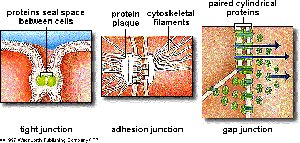
Junctional Structures: Tight junctions, adhesion junctions, and gap junctions facilitate cell-cell interactions.
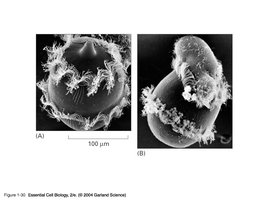
Flagella/Cilia: Motile structures for movement or fluid transport.
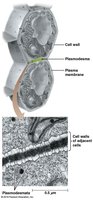
Specialized Eukaryotic Cell Wall and ECM Components
Cellulose: Main component of plant cell walls.
Chitin: Main component of fungal cell walls.
Glycocalyx: Carbohydrate-rich coating on animal cells.
Cell Junctions: Structures that connect cells and facilitate communication.
Non-Cellular Infectious Particles
Viruses, Viroids, and Prions
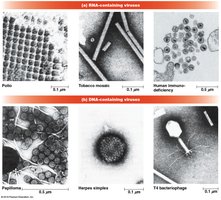
Some infectious agents are not composed of cells and are considered non-living. These include viruses, viroids, and prions.
Viruses: Composed of genetic material (DNA or RNA) surrounded by a protein coat; require host cells to replicate.
Viroids: Small, circular RNA molecules that infect plants.
Prions: Infectious proteins that cause neurodegenerative diseases.
Additional info: The study of non-cellular infectious particles highlights the distinction between living and non-living entities in biology.
