 Indietro
The Chemistry of the Cell: Foundations for Cell Biology
Guida di studio - Note intelligenti
 Appunti personalizzati basati sui tuoi materiali, ampliati con definizioni chiave, esempi e contesto.
The Chemistry of the Cell
Introduction
This chapter explores the chemical principles that underlie cell structure and function. It focuses on the unique properties of carbon, water, biological membranes, macromolecular synthesis, and self-assembly, all of which are foundational to understanding cell biology.
Five Principles Important to Cell Biology
Characteristics of carbon
Characteristics of water
Selectively permeable membranes
Synthesis by polymerization of small molecules
Self-assembly
The Importance of Carbon
Bonding Properties of the Carbon Atom
Carbon is the central atom in organic molecules due to its ability to form four covalent bonds, allowing for a diversity of stable and complex molecules essential for life.
Valence: Carbon has a valence of 4, forming bonds with H, O, N, S, and other carbons.
Covalent Bonds: Involve the sharing of electron pairs between atoms.
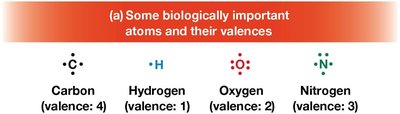
Covalent Bonding and Molecular Diversity
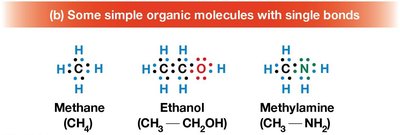
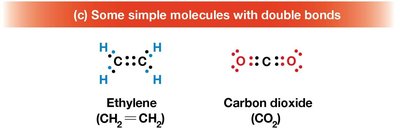
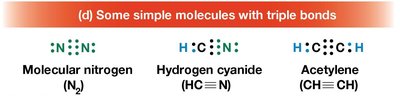
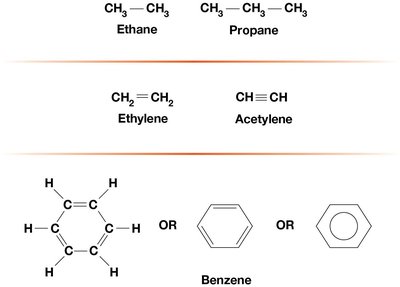
Carbon forms single, double, or triple bonds, always maintaining four bonds per atom. This versatility leads to a wide variety of organic molecules.
Single Bonds: Example molecules include methane, ethanol, and methylamine.
Double Bonds: Example molecules include ethylene and carbon dioxide.
Triple Bonds: Example molecules include molecular nitrogen, hydrogen cyanide, and acetylene.
Stability and Bond Energies
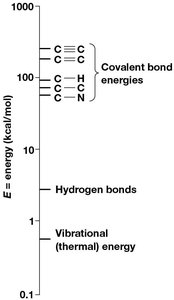
The stability of carbon-containing molecules is due to the high bond energies of covalent bonds, which are measured in kilocalories per mole (kcal/mol).
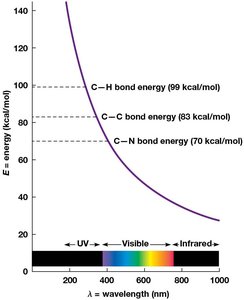
Bond Energies: C–C (83 kcal/mol), C–N (70 kcal/mol), C–O (84 kcal/mol), C–H (99 kcal/mol).
Double/Triple Bonds: Even higher bond energies, making them harder to break.
Solar Radiation and Molecular Stability
Visible light does not have enough energy to break the covalent bonds in organic molecules, protecting biological molecules from solar damage. Ultraviolet light, however, is more hazardous.
Diversity of Carbon-Containing Molecules
Carbon can form chains, rings, and branched structures, leading to a vast array of organic compounds. Hydrocarbons, composed only of carbon and hydrogen, are important in energy storage but are not water-soluble.
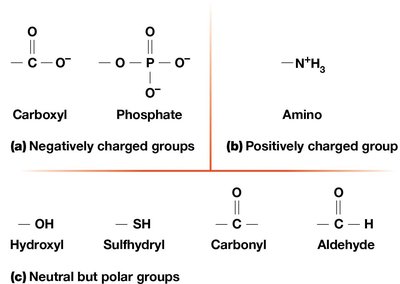
Functional Groups in Biological Molecules
Functional groups are specific groupings of atoms within molecules that confer particular chemical properties. They are critical for the reactivity and interactions of biological molecules.
Negatively charged: Carboxyl, phosphate
Positively charged: Amino
Polar (uncharged): Hydroxyl, sulfhydryl, carbonyl, aldehyde
Bond Polarity and Stereoisomerism
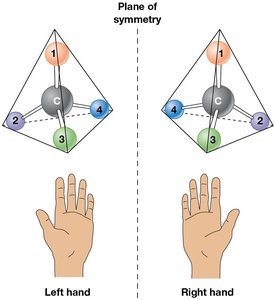
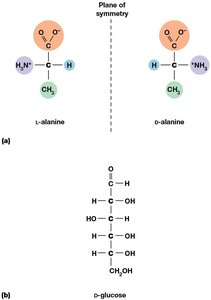
Polar bonds arise from differences in electronegativity, increasing water solubility. Carbon's tetrahedral geometry allows for stereoisomers—molecules that are mirror images but not superimposable.
Stereoisomers: Important in biological specificity (e.g., L- and D- forms of amino acids and sugars).
The Importance of Water
Properties of Water
Water is the most abundant molecule in cells, making up 75–85% of cell mass. Its polarity underlies its unique properties, including cohesiveness, temperature stabilization, and solvent capabilities.
Polarity and Hydrogen Bonding
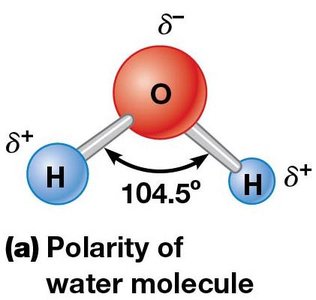
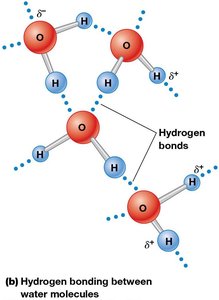
Water's bent shape and polar covalent bonds result in partial charges, enabling hydrogen bonding between molecules. This network of hydrogen bonds is responsible for water's high surface tension, boiling point, specific heat, and heat of vaporization.
Cohesiveness and Surface Tension
Hydrogen bonds make water cohesive, allowing phenomena such as surface tension, which enables insects to walk on water and water to move through plant tissues.

Temperature-Stabilizing Capacity
Water's high specific heat and heat of vaporization protect cells from rapid temperature changes and allow water to act as an effective coolant.
Solvent Properties
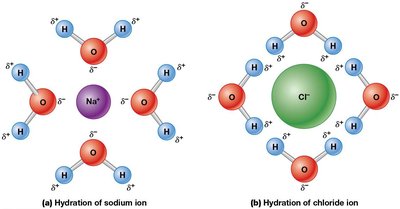
Water dissolves many substances due to its polarity. Hydrophilic molecules dissolve easily, while hydrophobic molecules do not. Water forms hydration shells around ions, facilitating their dissolution.
The Importance of Selectively Permeable Membranes
Structure and Function of Biological Membranes
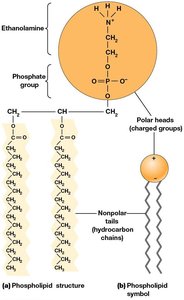
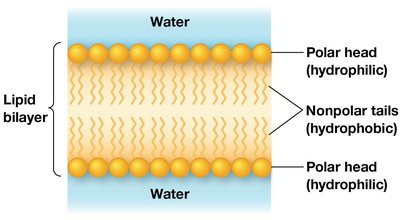
Cell membranes act as selective barriers, composed mainly of amphipathic phospholipids, glycolipids, proteins, and sterols. Membranes are impermeable to most polar and charged molecules but allow selective transport of substances.
Selective Permeability
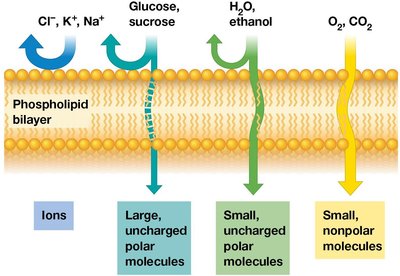
The hydrophobic core of the lipid bilayer allows passage of small nonpolar molecules but restricts ions and most polar molecules. Transport proteins facilitate the movement of specific substances across the membrane.
The Importance of Synthesis by Polymerization
Macromolecules and Cellular Hierarchy
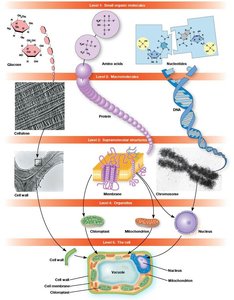
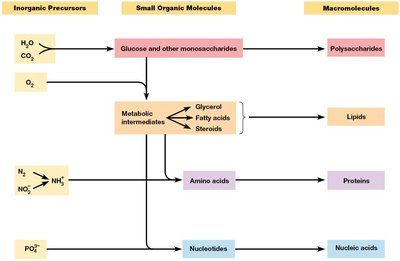
Cells are built from macromolecules—proteins, nucleic acids, and polysaccharides—assembled from small organic monomers. These macromolecules form the structural and functional basis of cellular components.
Principles of Polymerization
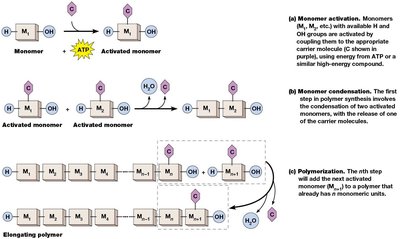
Macromolecules are synthesized by stepwise polymerization of monomers.
Monomer addition involves condensation reactions (removal of water).
Monomers are activated by coupling to carrier molecules (e.g., tRNA for amino acids, ADP/UDP for sugars).
ATP or similar high-energy compounds provide the energy for activation.
Polymers have directionality, with chemically distinct ends.
The Importance of Self-Assembly
Principle of Self-Assembly
Macromolecules spontaneously fold and assemble into functional structures based on their intrinsic chemical properties. Noncovalent interactions (hydrogen bonds, ionic bonds, van der Waals forces, hydrophobic interactions) are critical for proper folding and assembly.
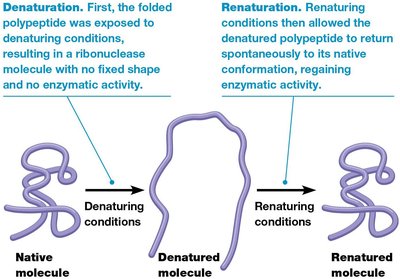
Protein Folding, Denaturation, and Renaturation
Proteins fold into specific three-dimensional shapes essential for function. Denaturation disrupts this structure, while renaturation can restore it under suitable conditions.
Molecular Chaperones
Some proteins require molecular chaperones to assist in proper folding and assembly, preventing incorrect interactions during the process.
Self-Assembly in Viruses: The Tobacco Mosaic Virus (TMV)
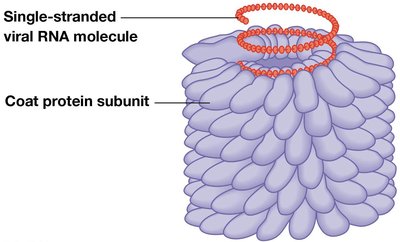
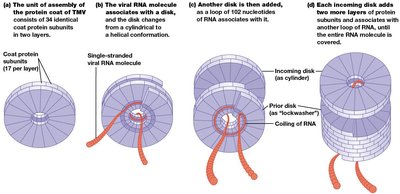
Viruses, such as TMV, are classic examples of self-assembly, where protein subunits and nucleic acids spontaneously form functional viral particles.
Limits and Advantages of Hierarchical Assembly
Some cellular structures require preexisting templates for assembly (e.g., membranes, cell walls). Hierarchical assembly offers chemical simplicity, efficiency, and quality control, ensuring proper cellular function.
