 Indietro
The Chemistry of the Cell: Structure, Bonds, Water, and Macromolecules
Guida di studio - Note intelligenti
 Appunti personalizzati basati sui tuoi materiali, ampliati con definizioni chiave, esempi e contesto.
The Chemistry of the Cell
Introduction
This chapter explores the chemical foundations of cell biology, focusing on the unique properties of carbon, water, biological membranes, and the synthesis of macromolecules. Understanding these principles is essential for grasping how cells function at the molecular level.
Characteristics of Carbon
Valence and Bonding Properties
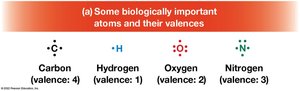
Carbon has a valence of 4, allowing it to form four covalent bonds with other atoms, including hydrogen, oxygen, nitrogen, and sulfur.
This versatility enables the formation of a wide variety of stable organic molecules essential for life.
Covalent Bonds
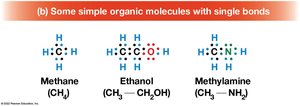
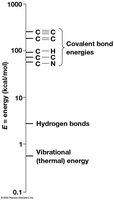
Single bonds: One pair of electrons shared (e.g., C–H, C–C).
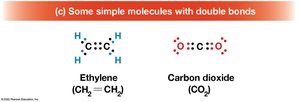
Double bonds: Two pairs of electrons shared (e.g., C═C, C═O).
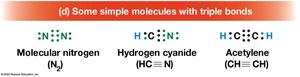
Triple bonds: Three pairs of electrons shared (e.g., C≡C, C≡N).
Bond Strength and Stability
Double and triple bonds are more stable and have higher bond energies than single bonds.
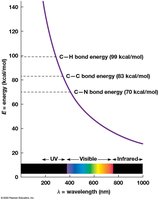
Typical bond energies (kcal/mol): C—C: 83, C—N: 70, C—O: 84, C—H: 99, C═C: 146, C≡C: 212
High bond energies make organic molecules stable under physiological conditions.
Effect of UV Light on Covalent Bonds
Ultraviolet (UV) light has enough energy to break covalent bonds, which can damage biological molecules such as DNA.
Visible and infrared light do not have sufficient energy to break these bonds.
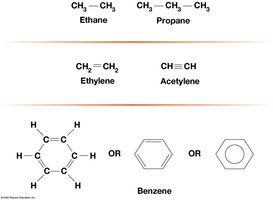
Hydrocarbons and Functional Groups
Hydrocarbons are chains or rings composed only of carbon and hydrogen.
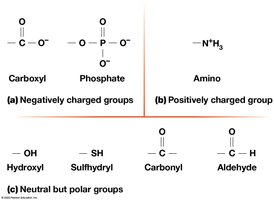
Biological molecules often contain functional groups (e.g., hydroxyl, carboxyl, amino, phosphate) that confer specific chemical properties.
Stereoisomers
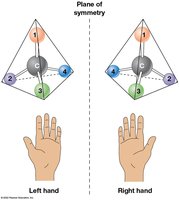
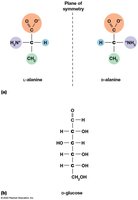
Stereoisomers are molecules with the same molecular formula but different spatial arrangements of atoms.
Asymmetric (chiral) carbons lead to nonsuperimposable mirror images (enantiomers).
The number of possible stereoisomers is 2n, where n is the number of asymmetric carbons.
Characteristics of Water
Polarity and Hydrogen Bonding
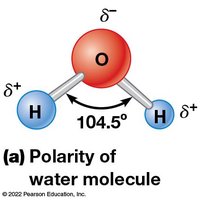
Water is a polar molecule with a bent shape and partial charges on oxygen (δ–) and hydrogen (δ+).
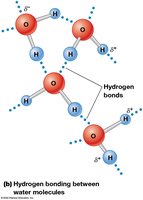
Hydrogen bonds form between water molecules, giving water unique properties.
Cohesion, Surface Tension, and Temperature Stabilization
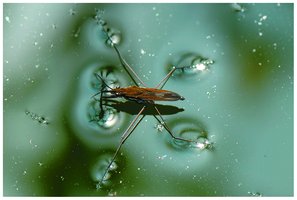
Water molecules are cohesive due to hydrogen bonding, resulting in high surface tension.
Water has a high heat of vaporization and boiling point, stabilizing temperature in cells and organisms.
Water as a Solvent
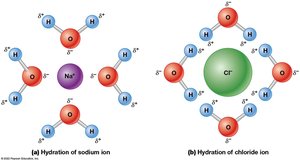
Water dissolves many substances due to its polarity, making it the universal solvent in biology.
Hydrophilic (water-loving) substances dissolve easily; hydrophobic (water-fearing) substances do not.
Ions and polar molecules are surrounded by spheres of hydration when dissolved in water.
Selectively Permeable Membranes
Membrane Structure and Composition
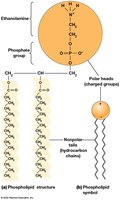
Biological membranes are composed of phospholipids, glycolipids, membrane proteins, and sterols (cholesterol in animals, ergosterols in fungi, phytosterols in plants).
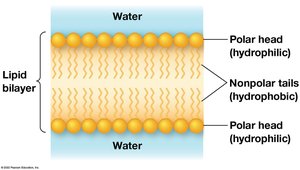
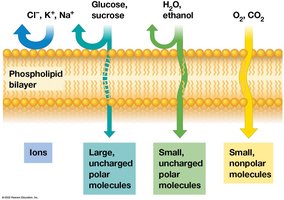
Phospholipids are amphipathic molecules with hydrophilic heads and hydrophobic tails, forming a lipid bilayer.
Membrane Permeability
Nonpolar molecules (e.g., O2, CO2) can cross membranes easily.
Most polar molecules and ions are impermeable and require transport proteins.
Small uncharged molecules (e.g., H2O, ethanol) can cross to some extent.
Transport Across Membranes
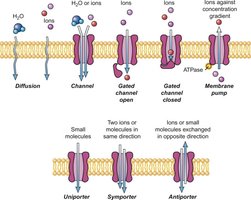
Ions and large polar molecules require transporters (channels or carriers) to cross the membrane.
Transport proteins provide hydrophilic pathways or actively move substances against gradients.
Synthesis by Polymerization of Small Molecules
Macromolecules and Polymerization
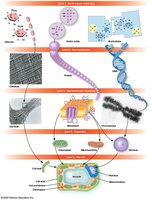
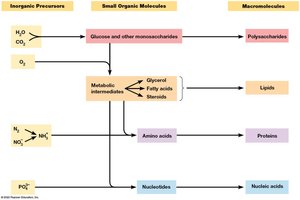
Cells synthesize macromolecules (proteins, nucleic acids, polysaccharides, lipids) by polymerizing small organic monomers.
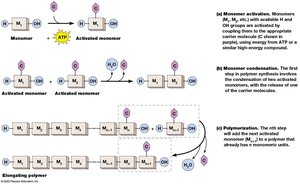
Polymerization involves condensation reactions (removal of water) and requires energy (often from ATP).
Monomers are often activated by coupling to carrier molecules (e.g., tRNA, ADP, UDP).
Macromolecules have directionality (distinct ends).
Types of Macromolecules
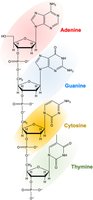
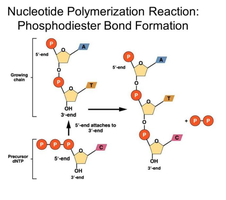
Nucleic acids: Polymers of nucleotides; store and transmit genetic information.
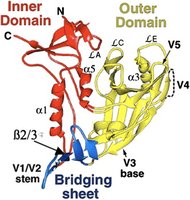
Proteins: Polymers of amino acids; perform a wide variety of cellular functions.
Polysaccharides: Polymers of monosaccharides; serve as energy storage and structural components.
Mechanism of Polymerization
Monomers are activated (often by ATP) and attached to carrier molecules.
Condensation reactions join monomers, releasing water.
Hydrolysis reactions break polymers into monomers by adding water.
Carrier Molecules
tRNA (for amino acids), ADP/UDP (for sugars), ATP/GTP (for nucleotides) act as carriers during biosynthesis.
Self-Assembly and Protein Folding
Forces in Protein Folding
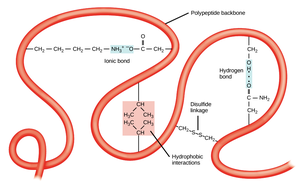
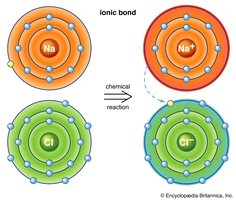
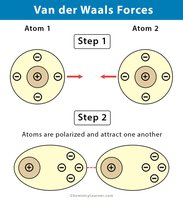
Protein folding is driven by hydrogen bonds, ionic bonds, van der Waals interactions, and hydrophobic interactions.
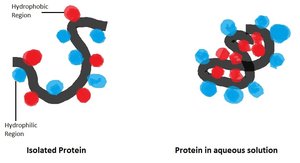
Hydrophobic groups cluster in the interior, while hydrophilic groups face the aqueous environment.
Protein Folding and Chaperones
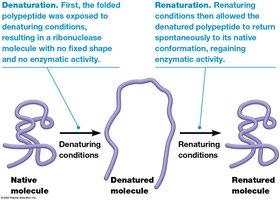
Proteins can fold spontaneously into their functional conformations.
Denaturation: Unfolding of proteins, leading to loss of function.
Renaturation: Refolding into the correct structure, restoring function.
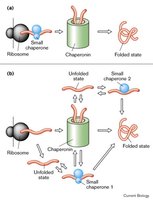
Chaperones: Specialized proteins that assist in the proper folding of other proteins.
Concept Checks and Applications
Key Questions
Amphipathic molecules are important for membrane structure because they have both hydrophilic and hydrophobic regions, allowing them to form bilayers.
Membranes are bilayers (not monolayers) to provide a stable barrier between aqueous environments inside and outside the cell.
Selectively permeable membranes allow some substances to cross while blocking others, maintaining cellular homeostasis.
To deliver a large, polar anti-cancer drug into cells, strategies such as encapsulation in liposomes, conjugation to cell-penetrating peptides, or use of transporter proteins can be considered.
Experimental Observations and Conclusions
Mixing RNA and coat protein from the same TMV strain forms infectious virions, indicating self-assembly and specificity.
Mixing RNA from strain A with coat protein from strain B yields strain A virus, showing that RNA determines viral identity.
Coat protein monomers can self-assemble into helical structures even without RNA, demonstrating the intrinsic self-assembly properties of proteins.
