 Indietro
The Endomembrane System and Intracellular Protein Transport
Guida di studio - Note intelligenti
 Appunti personalizzati basati sui tuoi materiali, ampliati con definizioni chiave, esempi e contesto.
The Endomembrane System
Overview of the Endomembrane System
The endomembrane system is a network of membranes within eukaryotic cells that work together to modify, package, and transport lipids and proteins. It includes the endoplasmic reticulum (ER), Golgi apparatus, endosomes, lysosomes, and associated vesicles. Mitochondria, chloroplasts, and peroxisomes are not considered part of this system because they do not fuse with the ER.
Key Components: Endoplasmic reticulum (rough and smooth), Golgi complex, endosomes, lysosomes, transport vesicles.
Function: Synthesis, modification, sorting, and transport of proteins and lipids.
Exclusion: Mitochondria, chloroplasts, and peroxisomes are independent organelles.
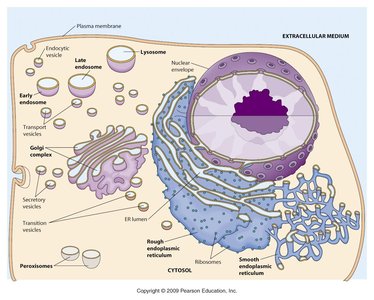
Endoplasmic Reticulum (ER)
Structure and Types of ER
The ER is a continuous membrane system that forms a series of flattened sacs within the cytoplasm. It exists in two forms: rough ER (RER) and smooth ER (SER).
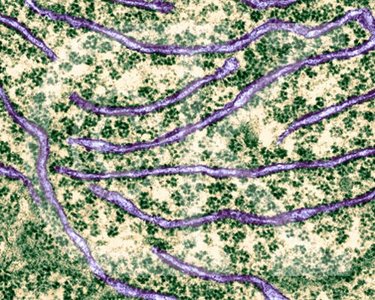
Rough ER: Studded with ribosomes; site of protein synthesis and co-translational insertion.
Smooth ER: Lacks ribosomes; involved in lipid metabolism, steroid biosynthesis, carbohydrate metabolism, calcium storage, and detoxification.
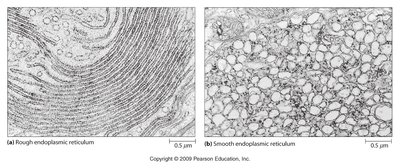
Functions of the Rough ER
Protein Synthesis: Ribosomes on the RER synthesize proteins destined for secretion, membranes, or lysosomes.
Protein Maturation: Includes glycosylation, disulfide bond formation, and assembly of multimeric proteins.
Quality Control: Misfolded proteins are targeted for degradation in proteasomes.
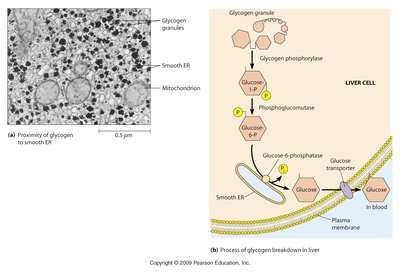
Functions of the Smooth ER
Lipid Metabolism: Synthesis of phospholipids and cholesterol for membrane biogenesis.
Steroid Biosynthesis: Conversion of cholesterol into steroid hormones.
Carbohydrate Metabolism: Involvement in glycogen breakdown and glucose release (especially in liver cells).
Calcium Storage: Regulation of intracellular calcium levels.
Detoxification: Hydroxylation reactions increase solubility of drugs for excretion.
- - identify Rough ER pic purple is ... green is ..,. -- what happens in the Smooth ER?
- in the cytoplasm Ca+ channels, Ca+ is synthesized in diff pathways , when
ca+ goes up a little
-The smooth endoplasmic reticulum (smooth ER) acts as the main storage and -release site for calcium ions (Ca²⁺) inside most eukaryotic cells.
-How Calcium Works in the Smooth ER
Storage: The smooth ER uses special binding proteins (like calreticulin) to keep -calcium levels high inside its lumen while keeping cytoplasmic levels low. [1, 2]
Release: Chemical or electrical signals open channels in the smooth ER membrane, letting calcium rush out into the cell's cytoplasm. [1, 2]
Signaling: Released calcium acts as a "second messenger" to trigger fast cellular responses
- solubility in the smooth er
The smooth endoplasmic reticulum (smooth ER) changes water-insoluble molecules into water-soluble molecules so the body can remove them
- listen to min 40
Techniques in Organelle Study
Subcellular Fractionation and Centrifugation
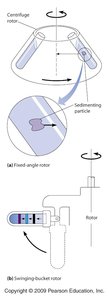
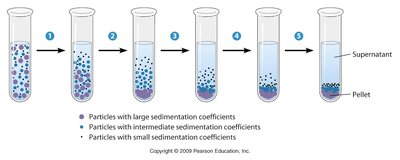
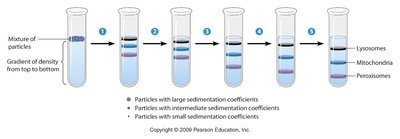
Subcellular fractionation is a technique used to isolate and study different organelles. It involves breaking cells open and separating components by size and density using centrifugation.
Differential Centrifugation: Separates particles based on size and sedimentation rate.
Density Gradient Centrifugation: Separates organelles based on their buoyant density in a gradient medium.
Svedberg Unit (S): A measure of sedimentation rate; larger particles have higher S values.
Golgi Apparatus
Structure and Function
The Golgi apparatus is a series of flattened, membrane-bound sacs responsible for modifying, sorting, and packaging proteins and lipids received from the ER.
density is the factor, very dense less dense.
Protein Glycosylation: Addition and modification of carbohydrate groups on proteins.
Protein Sorting: Directs proteins to their correct cellular destinations using targeting signals.
Trafficking: Involves anterograde (forward) and retrograde (backward) transport of vesicles.
- - identify Rough ER pic purple is ... green is ..,.
-- what happens in the Smooth E



Vesicular Transport and Secretion
Vesicular Trafficking
Vesicular transport is the process by which materials are moved between organelles and to/from the cell surface via membrane-bound vesicles.
Anterograde Transport: Movement from ER to Golgi to plasma membrane or lysosomes.
Retrograde Transport: Movement from Golgi back to ER or between Golgi compartments.
2 types of Secretion Types: Regulated secretion occurs in response to a stimulus; constitutive secretion is continuous.
vesicular trafficking antegrade and retrograde , secretion of proteins
Radioactively labeled amino acid experiments in guinea pig pancreatic exocrine cells reveal that secretory proteins move sequentially through the rough endoplasmic reticulum (ER), the Golgi complex, and finally into zymogen granule
The Secretory Pathway Timeline
Rough Endoplasmic Reticulum (0–5 minutes): Newly synthesized proteins incorporate radioactive amino acids (like leucine-
 3H) in the rough ER where protein synthesis occurs.
Golgi Complex (~20 minutes): Labeled proteins travel via small transport vesicles from the rough ER to the condensing vacuoles and peripheral elements of the Golgi complex.
Zymogen Granules (~60+ minutes): The concentrated proteins are packaged into mature zymogen granules for storage and eventual discharge from the cel
Lysosomes and Peroxisomes
Lysosomes
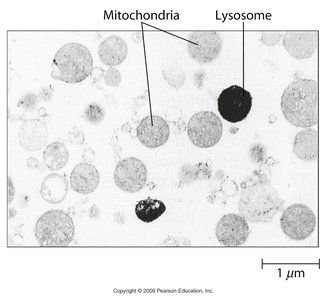
Lysosomes are membrane-bound organelles containing digestive enzymes (acid hydrolases) that break down macromolecules.
Internal pH: Maintained at 4-5 for optimal enzyme activity.
Functions: Defense, nutrition, autophagy (self-digestion), and
extracellular digestion.( you release them into the environment)
where do we need it: Functions: Defense, nutrition, autophagy (self-digestion), and extracellular digestion
Lysosomes act as the cell's primary digestive and recycling centers, utilizing hydrolytic enzymes to break down waste, defend against pathogens, and supply nutrients during starvation
Membrane: Heavily glycosylated on the inside to protect from self-digestion.
ex: steroids decrease fluidity so less lysosome
Autophagy
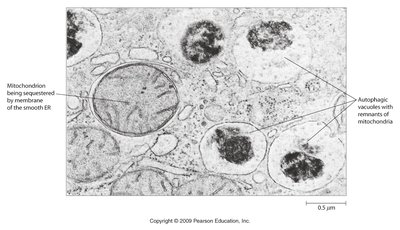
Autophagy is the process by which cells degrade and recycle their own components, often involving the sequestration of organelles like mitochondria within autophagic vacuoles.
Purpose: Cellular maintenance, response to starvation, and removal of damaged organelles.
Peroxisomes (what do they do)
Peroxisomes are small, membrane-bound organelles involved in the metabolism of hydrogen peroxide, nitrogen-containing compounds, and fatty acids.
Hydrogen Peroxide Metabolism: Breakdown of H2O2 by catalase. ( you need to oxidize)
Detoxification: Removal of toxic substances.
Fatty Acid Oxidation in membrane metabolism : Beta-oxidation of very long-chain fatty acids.
Endocytosis and Exocytosis
Exocytosis
Exocytosis is the process by which cells expel materials in vesicles that fuse with the plasma membrane.
Function: Secretion of proteins, neurotransmitters, and waste products.
Endocytosis
Endocytosis is the uptake of external materials by invagination of the plasma membrane to form vesicles.
Pinocytosis: Uptake of fluids and small molecules.
Phagocytosis: ( a bit Diff) Engulfment of large particles (>0.5 μm) by extension of pseudopodia.(grows)
Receptor-Mediated Endocytosis: Specific uptake of molecules via receptor binding and clathrin-coated vesicles. (start by triggering receptors on the plasma membrane) trigger endocytosis (where the name come from )
protein is clathrin The clathrin coat acts as a mechanical scaffold that bends the plasma membrane to form vesicles during receptor-mediated endocytosis
then dynamin- uncoating ( Cathrin breaks) - left with carbon (could start within the cell or be secreted outside to be take by other cells) -> transcytosis is when this happens( try drawing this to recall) .
_ vascular transport
Clathrin-Coated Vesicles is made of
Clathrin is a protein that forms a lattice structure on the cytoplasmic side of vesicles, aiding in their formation and budding from membranes.
Structure: Clathrin triskelions assemble into a polyhedral lattice.
Function: Facilitates vesicle formation during endocytosis and transport between Golgi and endosomes.
hexagon, pentagon
Neuronal communication and vesicle release:
example: make vesicles- load them with transmitters- get into synaptic Clift- activates receptors - electrical event
how do we know that vesicles release is what gives signals from wha neuron to another ?
Summary Table: Major Organelles of the Endomembrane System
Organelle | Main Function | Key Features |
|---|---|---|
Rough ER | Protein synthesis, folding, and modification | Ribosomes attached, glycosylation, S-S bond formation |
Smooth ER | Lipid and steroid synthesis, detoxification | No ribosomes, calcium storage |
Golgi Apparatus | Protein and lipid modification, sorting, packaging | Cisternae, glycosylation, trafficking |
Lysosome | Macromolecule degradation | Acidic pH, digestive enzymes |
Peroxisome | Fatty acid oxidation, detoxification | Contains catalase, H2O2 metabolism |
Additional info:
Diseases such as Lambert-Eaton myasthenic syndrome and toxins like latrotoxin and tetanus toxin can affect vesicular trafficking and neurotransmitter release at synapses.
SNARE proteins are essential for vesicle fusion during exocytosis, especially in neuronal communication.
