 Indietro
College Algebra Quadratic Equations and Graphs Study Guide
Guida di studio - Note intelligenti
 Appunti personalizzati basati sui tuoi materiali, ampliati con definizioni chiave, esempi e contesto.
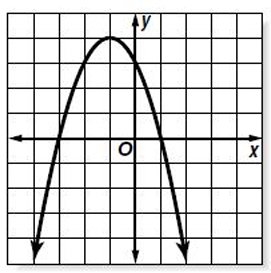
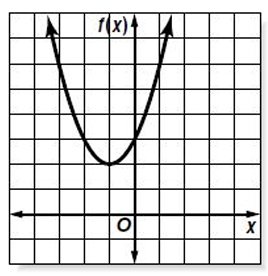
Q1. Each graph represents a quadratic function. Write each function in factored form.
Background
Topic: Quadratic Functions and Factoring
This question tests your ability to interpret the graph of a quadratic function and express it in factored form. Factored form reveals the roots (x-intercepts) of the function, which are important for solving equations and understanding the behavior of the graph.
Key Terms and Formulas
Quadratic Function:
Factored Form: , where and are the roots (x-intercepts)
Roots: Values of where
Step-by-Step Guidance
Examine the graph to identify the x-intercepts (where the curve crosses the x-axis). These are the roots of the quadratic function.
Write the function in the form , where and are the x-intercepts you found.
Determine the direction of the parabola (upward or downward). If the parabola opens upward, ; if downward, .
Use the graph to estimate the value of if possible (for example, check the y-intercept or another point).
Set up the factored form using the roots and the value of . Stop here and try to write the function yourself based on the graph.
Try solving on your own before revealing the answer!
Final Answer:
For the first graph (image_1), the parabola opens downward and crosses the x-axis at and . The factored form is:
(where ; the negative sign indicates downward opening)
For the second graph (image_2), the parabola opens upward and crosses the x-axis at and . The factored form is:
(where )
Factored form makes it easy to see the roots and the direction of the parabola.
