
Domanda del libro di testo
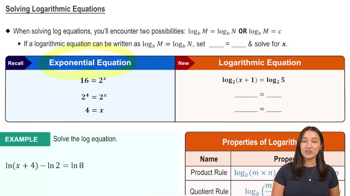
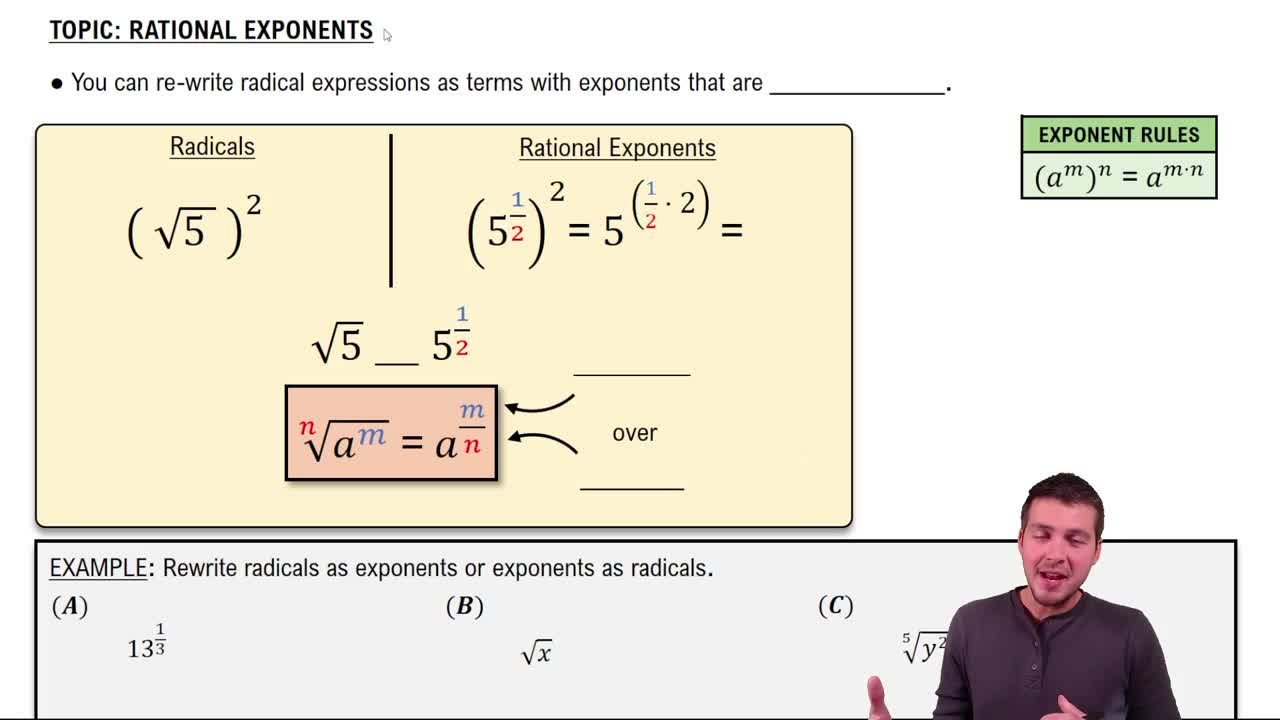
Solve each exponential equation in Exercises 1–22 by expressing each side as a power of the same base and then equating exponents. 9x=27
666
views

 Guida verificata passo dopo passo
 5:02
5:02
 04:06
04:06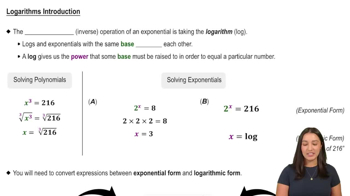 7:30
7:30Solve each exponential equation in Exercises 1–22 by expressing each side as a power of the same base and then equating exponents. 9x=27
Write each equation in its equivalent logarithmic form. ∛8 = 2
In Exercises 11–18, graph each function by making a table of coordinates. If applicable, use a graphing utility to confirm your hand-drawn graph. f(x) = 4x
Use properties of logarithms to expand each logarithmic expression as much as possible. Where possible, evaluate logarithmic expressions without using a calculator. ln(e2/5)
Solve each exponential equation in Exercises 1–22 by expressing each side as a power of the same base and then equating exponents. 31-x=1/27
Use properties of logarithms to expand each logarithmic expression as much as possible. Where possible, evaluate logarithmic expressions without using a calculator. log4 (64/y)