 Indietro
Accrual Accounting and Income: Comprehensive Study Notes (Chapter 3)
Guida di studio - Note intelligenti
 Appunti personalizzati basati sui tuoi materiali, ampliati con definizioni chiave, esempi e contesto.
Accrual Accounting and Income
Introduction
This chapter explores the principles and applications of accrual accounting, focusing on the recognition of revenues and expenses, the adjusting process, preparation of financial statements, closing the books, and analysis of a company's debt-paying ability. These concepts are foundational for understanding how financial information is measured and reported in accordance with Generally Accepted Accounting Principles (GAAP).
Accrual Accounting vs. Cash-Basis Accounting
Key Differences
Accrual Accounting records revenues and expenses when they are earned or incurred, regardless of when cash is exchanged.
Cash-Basis Accounting records revenues and expenses only when cash is received or paid.
Accrual accounting provides a more accurate picture of a company's financial position by matching income and expenses to the period in which they occur.
Examples of Accrual Transactions:
Sales on account
Purchases of inventory on account
Accrual of expenses incurred but not yet paid
Depreciation expense
Usage of prepaid rent, insurance, and supplies
Earning revenue for cash collected in advance
The Time-Period Concept: Ensures that accounting information is reported at regular intervals, typically annually or for interim periods.
Revenue and Expense Recognition Principles
The Revenue Principle
Revenue is recognized when goods or services are delivered to a customer and collection is reasonably assured.
The amount recorded is the cash or equivalent expected to be received.
The Expense Recognition (Matching) Principle
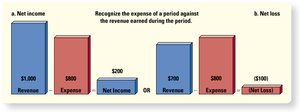
Expenses are recognized in the same period as the related revenues they help generate.
This matching allows for accurate calculation of net income or net loss:
Adjusting the Accounts
Purpose of Adjusting Entries
Ensure that revenues and expenses are recognized in the correct accounting period.
Adjusting entries are made at the end of the period and always affect one income statement account and one balance sheet account (never cash).
Categories of Adjusting Entries
Deferrals: Cash is exchanged before revenue is earned or expense is incurred (e.g., prepaid expenses, unearned revenues).
Accruals: Cash is exchanged after revenue is earned or expense is incurred (e.g., accrued expenses, accrued revenues).
Depreciation: Allocation of the cost of a plant asset over its useful life.
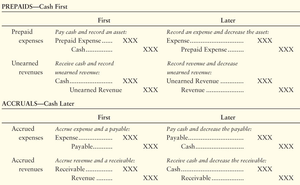
Summary Table: Deferral & Accrual Adjusting Entries
This table summarizes the main types of adjusting entries and their timing.
Examples of Adjusting Entries
Prepaid Expenses: Rent or supplies paid in advance are initially recorded as assets and expensed as used.
Depreciation: Plant assets are depreciated over their useful lives, except for land.
Accrued Expenses: Expenses incurred but not yet paid (e.g., salaries, utilities).
Accrued Revenues: Revenues earned but not yet received in cash.
Unearned Revenues: Cash received before services are performed; recognized as a liability until earned.
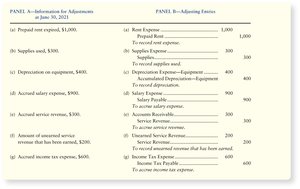
Illustrative Adjusting Entries
Adjusted Trial Balance
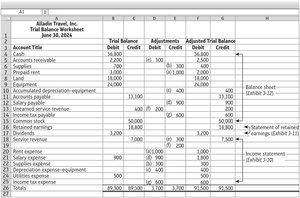
The adjusted trial balance lists all accounts and their final balances after adjustments, ensuring total debits equal total credits.
Constructing the Financial Statements
Preparation Sequence
Income Statement: Summarizes revenues and expenses for the period.
Statement of Retained Earnings: Shows changes in retained earnings, including net income and dividends.
Balance Sheet: Reports assets, liabilities, and stockholders’ equity at a point in time.
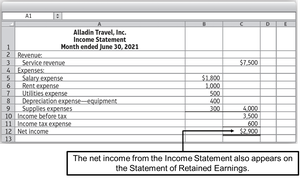
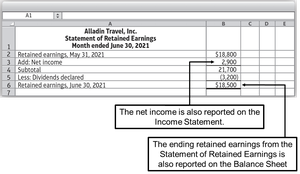
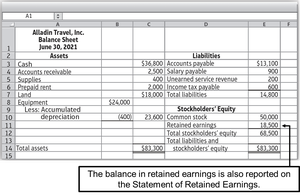
Closing the Books
Purpose and Process
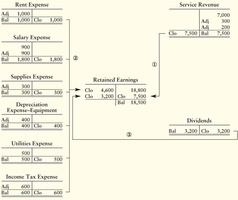
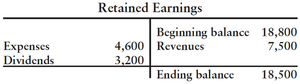
Closing entries transfer balances from temporary accounts (revenues, expenses, dividends) to Retained Earnings.
Prepares accounts for the next period by resetting temporary accounts to zero.
Permanent accounts (assets, liabilities, equity) are not closed.
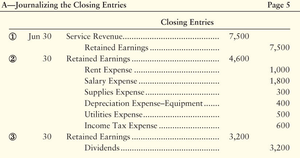
Classifying Assets and Liabilities
Liquidity and Classification
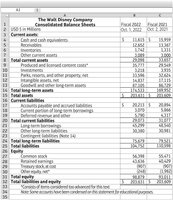
Current Assets: Expected to be converted to cash or used within one year (e.g., cash, accounts receivable, inventory).
Long-Term Assets: Not expected to be converted to cash within one year (e.g., property, plant, equipment).
Current Liabilities: Obligations due within one year (e.g., accounts payable, salaries payable).
Long-Term Liabilities: Obligations due beyond one year (e.g., long-term notes payable).
Formats for Financial Statements
Balance Sheet Formats
Report Format: Lists assets at the top, followed by liabilities and equity.
Account Format: Assets on the left, liabilities and equity on the right.
Income Statement Formats
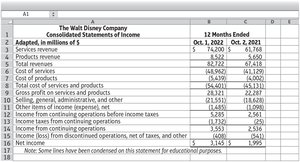
Single-Step: All revenues and gains are grouped together, all expenses and losses are grouped together.
Multi-Step: Separates operating from non-operating items, providing more detail (preferred for analysis).
Analyzing a Company's Debt-Paying Ability
Key Ratios
Net Working Capital:
Current Ratio:
Debt Ratio:
Higher current ratios indicate better liquidity; lower debt ratios indicate lower financial risk.
Data Visualization in Financial Accounting
Purpose and Types
Data Visualization: Helps identify patterns and trends in financial data using charts and graphs.
Bar/Column Charts: Display categorical data for comparison.
Line Charts: Show changes in data over time.
Summary Table: Key Adjusting Entries
Type | Initial Entry | Adjusting Entry |
|---|---|---|
Prepaid Expense | Debit Prepaid Expense, Credit Cash | Debit Expense, Credit Prepaid Expense |
Unearned Revenue | Debit Cash, Credit Unearned Revenue | Debit Unearned Revenue, Credit Revenue |
Accrued Expense | None | Debit Expense, Credit Payable |
Accrued Revenue | None | Debit Receivable, Credit Revenue |
Conclusion
Understanding accrual accounting, the adjusting process, and the preparation and analysis of financial statements is essential for accurate financial reporting and decision-making. Mastery of these concepts enables students to evaluate a company's financial health and communicate financial information effectively.
