 Indietro
Chapter 2: Transaction Analysis – Financial Accounting Study Notes
Guida di studio - Note intelligenti
 Appunti personalizzati basati sui tuoi materiali, ampliati con definizioni chiave, esempi e contesto.
Transaction Analysis in Financial Accounting
Introduction
Transaction analysis is a foundational process in financial accounting, enabling businesses to systematically record, classify, and summarize financial events. This chapter explores the identification of business transactions, the types of accounts affected, the impact on the accounting equation, and the procedures for journalizing and posting transactions.
Recognizing Business Transactions and Types of Accounts
Definition of a Transaction
Transaction: Any event with a financial impact on the business that can be measured reliably.
Accounting records both sides of a transaction: something is given, and something is received in return.
The Accounting Equation
The basic relationship in accounting is expressed as:
Account: A record of all changes in a particular asset, liability, or stockholders’ equity item during a period.
Types of Accounts
Assets: Economic resources providing future benefit (e.g., Cash, Accounts Receivable, Notes Receivable, Inventory, Prepaid Expenses, Investments, Property, Plant & Equipment).
Liabilities: Debts or obligations (e.g., Accounts Payable, Notes Payable, Accrued Liabilities).
Stockholders’ Equity: Owners’ claims to assets (e.g., Common Stock, Retained Earnings, Dividends, Revenues, Expenses).
Analyzing the Impact of Transactions on the Accounting Equation
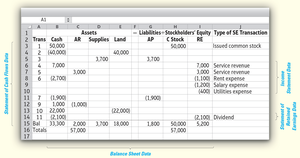
Transaction Examples
Each transaction affects at least two accounts and maintains the balance of the accounting equation.
Examples include investments by owners, purchases of assets, earning revenue, incurring expenses, and paying dividends.
Financial Statements Preparation
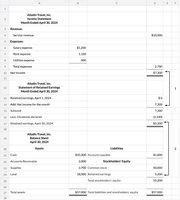
Transaction analysis provides the data for preparing financial statements such as the income statement, statement of retained earnings, and balance sheet.
Double-Entry System and T-Accounts
Double-Entry System
Every transaction is recorded with equal debits and credits in at least two accounts.
This system ensures the accounting equation remains balanced.
T-Accounts
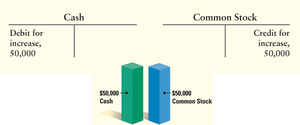
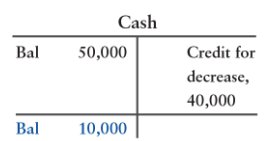
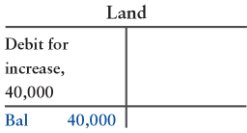
A T-account is a visual representation of an account, showing increases (debits or credits) on one side and decreases on the other, depending on the account type.
Examples of T-Accounts
Cash and Common Stock accounts after the first transaction:
Cash account after the second transaction (purchase of land):
Land account after the second transaction:
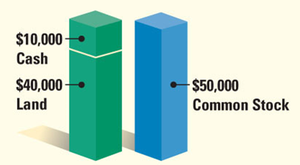
Visual summary of assets and equity after two transactions:
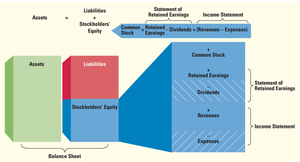
The Expanded Accounting Equation
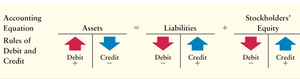
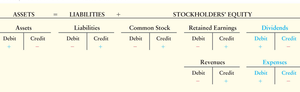
The expanded accounting equation incorporates the effects of revenues, expenses, and dividends on stockholders’ equity:
Rules of Debit and Credit
Assets: Debit increases, Credit decreases
Liabilities and Stockholders’ Equity: Credit increases, Debit decreases
Revenues: Credit increases, Debit decreases
Expenses and Dividends: Debit increases, Credit decreases
Journalizing and Posting Transactions
Journalizing Transactions
Journal: The chronological record of all transactions.
Steps to journalize:
Identify accounts affected and classify by type.
Determine if each account increases or decreases (debit or credit).
Record the transaction in the journal.
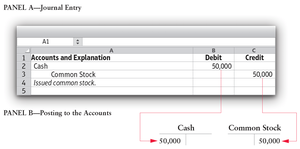
Posting to the Ledger
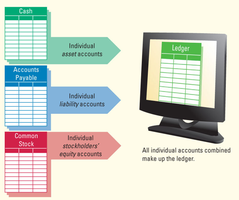
Ledger: The collection of all accounts, showing their balances after posting journal entries.
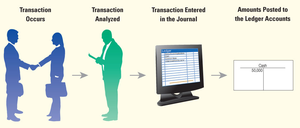
Flow of Accounting Data
The process flows from transaction occurrence, analysis, journal entry, to posting in the ledger.
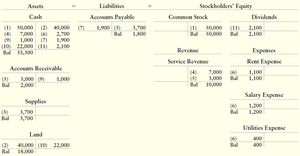
Ledger Example
After posting all transactions, the ledger shows the balances for each account.
Constructing a Trial Balance
Purpose and Structure
A trial balance lists all accounts and their balances at a specific date.
It ensures that total debits equal total credits, facilitating the preparation of financial statements.
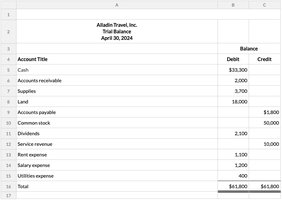
Chart of Accounts
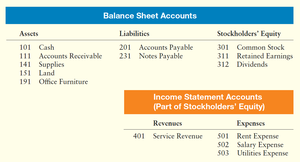
Definition and Example
A chart of accounts is an organized listing of all account titles and numbers used by a company.
Accounts are grouped by type: assets, liabilities, stockholders’ equity, revenues, and expenses.
Summary Table: Account Types and Normal Balances
Account Type | Normal Balance | Increased by | Decreased by |
|---|---|---|---|
Assets | Debit | Debit | Credit |
Liabilities | Credit | Credit | Debit |
Common Stock | Credit | Credit | Debit |
Retained Earnings | Credit | Credit | Debit |
Dividends | Debit | Debit | Credit |
Revenues | Credit | Credit | Debit |
Expenses | Debit | Debit | Credit |
Key Takeaways
Transaction analysis is essential for accurate financial reporting.
The double-entry system ensures the accounting equation remains balanced.
Journalizing and posting transactions provide the foundation for preparing trial balances and financial statements.
Understanding account types, normal balances, and the chart of accounts is critical for effective bookkeeping and analysis.
