 Indietro
Chapter 3: The Adjusting Process – Financial Accounting Study Notes
Guida di studio - Note intelligenti
 Appunti personalizzati basati sui tuoi materiali, ampliati con definizioni chiave, esempi e contesto.
Accrual Accounting Concepts
Cash Basis vs. Accrual Basis Accounting
Understanding the difference between cash basis and accrual basis accounting is fundamental for accurate financial reporting. These methods determine when revenues and expenses are recognized in the accounting records.
Cash Basis Accounting: Revenues are recorded when cash is received, and expenses are recorded when cash is paid. This method is not permitted under GAAP and is generally used by small businesses due to its simplicity.
Accrual Basis Accounting: Revenues are recorded when earned, and expenses are recorded when incurred, regardless of when cash is exchanged. This method is required by GAAP and provides a more accurate picture of a business’s financial performance.
Example: If a company pays $1,200 for six months of insurance on May 1, under cash basis, the entire amount is expensed in May. Under accrual basis, $200 is expensed each month as the insurance is used.
The Time Period Concept, Revenue Recognition, and Matching Principles
These principles ensure that financial statements reflect the correct revenues and expenses for a specific period.
Time Period Concept: Assumes business activities can be divided into specific periods (month, quarter, year) for reporting purposes. A fiscal year is any 12 consecutive months used for accounting purposes.
Revenue Recognition Principle: Revenue is recognized when earned, not necessarily when cash is received. The five-step process includes identifying the contract, performance obligations, transaction price, allocation, and recognizing revenue as obligations are satisfied.
Matching Principle: Expenses are recorded in the same period as the revenues they help generate, ensuring accurate net income or loss calculation.
The Adjusting Process
Purpose and Types of Adjusting Entries
Adjusting entries are made at the end of the accounting period to ensure that revenues and expenses are recognized in the correct period. They also update asset and liability accounts to reflect accurate balances.
Deferrals: Recognition of revenue or expense is deferred to a future date after cash is received or paid. Types include:
Deferred Expenses (Prepaid Expenses): Advance payments for future expenses, treated as assets until used (e.g., prepaid rent, supplies, depreciation).
Deferred Revenues (Unearned Revenues): Cash received before services are performed or goods delivered; recorded as liabilities until earned.
Accruals: Recognition of revenue or expense occurs before cash is received or paid. Types include:
Accrued Expenses: Expenses incurred but not yet paid (e.g., salaries, interest).
Accrued Revenues: Revenues earned but not yet received in cash (e.g., services performed but not yet billed).
Journalizing and Posting Adjusting Entries for Deferrals
Deferrals require adjusting entries to transfer amounts from asset or liability accounts to expense or revenue accounts as they are used or earned.
Prepaid Rent Example: If $3,000 is prepaid for three months, $1,000 is expensed each month as rent is used.
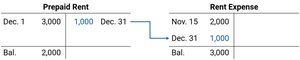
Supplies Example: If $500 of supplies are purchased and $100 remain at period end, $400 is expensed.


Depreciation: The allocation of a plant asset’s cost over its useful life. The straight-line method is commonly used:
Contra Account: Accumulated Depreciation is a contra asset account, paired with the related asset account and has a normal credit balance.

Journalizing and Posting Adjusting Entries for Deferred Revenues
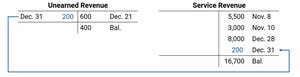
When cash is received in advance, it is recorded as a liability (Unearned Revenue). As the service is performed, revenue is recognized.
Example: $600 received for services to be performed over 30 days; $200 earned by period end is recognized as revenue.
Journalizing and Posting Adjusting Entries for Accruals
Accruals recognize expenses and revenues before cash is exchanged.
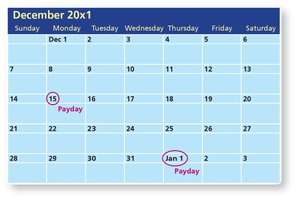
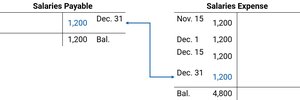
Accrued Salaries Expense: Salaries earned by employees but not yet paid are recorded as a liability (Salaries Payable).
Accrued Interest Expense: Interest incurred but not yet paid is calculated and recorded as an expense and a liability.
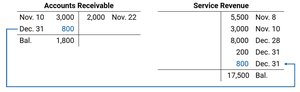
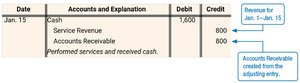
Accrued Revenues: Services performed but not yet billed are recorded as a receivable and revenue.
Adjusted Trial Balance
Purpose and Preparation
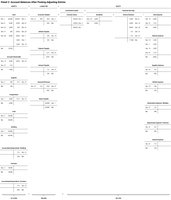
An adjusted trial balance lists all accounts with their adjusted balances after posting adjusting entries. It ensures total debits equal total credits and is used to prepare financial statements.
Steps: Journalize adjusting entries, post to ledger accounts, and prepare the adjusted trial balance.
Impact of Adjusting Entries on Financial Statements
Importance of Adjusting Entries
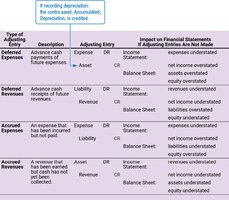
Adjusting entries ensure that financial statements reflect the true financial position and performance of the business. Failure to record them results in misstated income, assets, liabilities, and equity.
Type of Adjusting Entry | Description | Adjusting Entry | Impact if Not Made |
|---|---|---|---|
Deferred Expenses | Advance cash payments for future expenses | Expense DR, Asset CR | Expenses understated, net income overstated, assets overstated, equity overstated |
Deferred Revenues | Advance cash receipts for future revenues | Liability DR, Revenue CR | Revenues understated, net income understated, liabilities overstated, equity understated |
Accrued Expenses | Expenses incurred but not yet paid | Expense DR, Liability CR | Expenses understated, net income overstated, liabilities understated, equity overstated |
Accrued Revenues | Revenues earned but not yet received | Asset DR, Revenue CR | Revenues understated, net income understated, assets understated, equity understated |

The Accounting Cycle
Steps in the Accounting Cycle
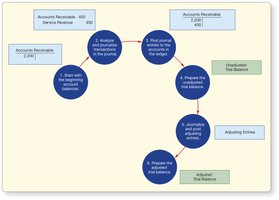
The accounting cycle is the process businesses use to record and process all financial transactions during an accounting period.
Analyze and journalize transactions
Post journal entries to the ledger
Prepare an unadjusted trial balance
Journalize and post adjusting entries
Prepare an adjusted trial balance
Prepare financial statements
Worksheets in the Adjusting Process
Purpose and Structure of a Worksheet
A worksheet is an internal tool used to organize and summarize data for preparing adjusting entries and the adjusted trial balance. It typically includes columns for account names, unadjusted trial balance, adjustments, and adjusted trial balance.
