 Indietro
Debit and Credit, T-Accounts, and Double Entry in Financial Accounting
Guida di studio - Note intelligenti
 Appunti personalizzati basati sui tuoi materiali, ampliati con definizioni chiave, esempi e contesto.
Debit and Credit Fundamentals
Definitions and Basic Principles
In financial accounting, the concepts of debit (Dr.) and credit (Cr.) are foundational to recording business transactions. Every transaction affects at least two accounts, ensuring the accounting equation remains balanced. Debits are entries on the left side of an account, while credits are entries on the right side.
Debit (Dr.): Left-side entry in an account.
Credit (Cr.): Right-side entry in an account.
Double-entry system: Every transaction must have at least one debit and one credit, and the total debits must always equal total credits.
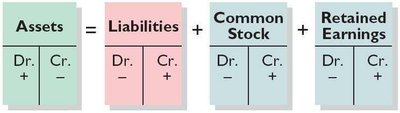
The balance sheet equation is preserved through the use of debits and credits:


Three Fundamental Bookkeeping Equations
Balance Sheet and Account Balances
The three core bookkeeping equations ensure that the financial records remain accurate and balanced:
Balance Sheet Equation:
Account Balance Equation:
Debits and Credits:
These equations must always be in balance, and no negative numbers are allowed in the accounts.
Rules of Debits and Credits
Normal Balances and Effects on Accounts
Each account type has a normal balance, which is the side (debit or credit) that increases the account. The rules are as follows:
Assets: Increase with debits, decrease with credits (normal balance is debit).
Liabilities: Increase with credits, decrease with debits (normal balance is credit).
Stockholders' Equity: Increase with credits, decrease with debits (normal balance is credit).
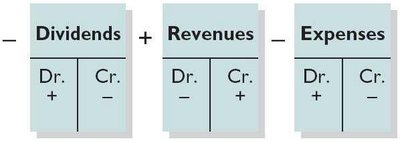
Revenues: Increase with credits, decrease with debits (normal balance is credit).
Expenses and Dividends: Increase with debits, decrease with credits (normal balance is debit).
T-Accounts and Account Balances
Structure and Usage
A T-account is a visual representation of an account, showing debits on the left and credits on the right. The difference between the sum of debits and credits gives the account balance. T-accounts are used to track changes in each account due to transactions.
Assets, Expenses: Normal balance is debit (left side of T-account).
Liabilities, Stockholders' Equity, Revenues: Normal balance is credit (right side of T-account).
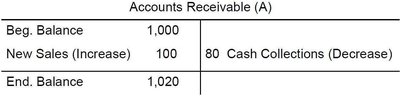
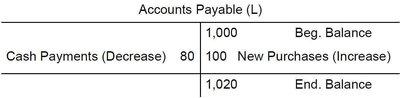
Example of T-accounts for Accounts Receivable and Accounts Payable:
Accounts Receivable (A) |
|---|
Beg. Balance: 1,000 |
New Sales (Increase): 100 |
Cash Collections (Decrease): 80 |
End. Balance: 1,020 |
Accounts Payable (L) |
|---|
Beg. Balance: 1,000 |
Cash Payments (Decrease): 80 |
New Purchases (Increase): 100 |
End. Balance: 1,020 |
Normal Balances: Revenues and Expenses
Effects of Debits and Credits
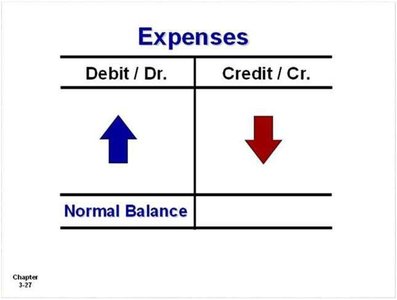
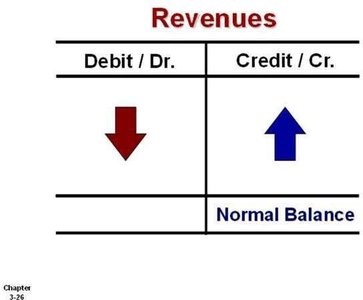
The normal balance for revenues is credit, while for expenses it is debit. This means that:
Debiting an expense increases it; crediting an expense decreases it.
Debiting a revenue decreases it; crediting a revenue increases it.
Double-Entry System and Transaction Analysis
Principles and Steps
The double-entry system requires that each transaction affects at least two accounts, maintaining the balance of the accounting equation. The steps for analyzing and recording transactions are:
Identify the accounts affected and the reason for the transaction.
Determine whether each account increases or decreases and by how much.
Prepare the journal entry, listing debits first and credits indented below.
Post the entry to the T-accounts.
Assess the impact on the financial statements.
Journal entry format:
Dr. <Name of account debited> €XXX Cr. <Name of account credited> €XXX
Relationship Among Financial Statements
Linkages and Flow of Information
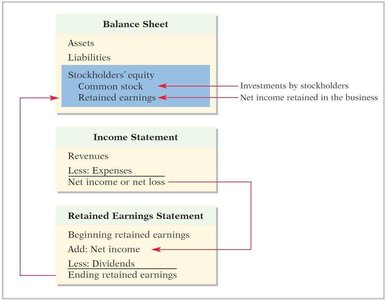
The balance sheet, income statement, and retained earnings statement are interconnected. Investments by stockholders and net income retained in the business affect stockholders' equity, which is reflected in the balance sheet. Net income or loss from the income statement is added to retained earnings, and dividends are subtracted to determine the ending retained earnings.
Business Transactions and Their Effects
Definition and Criteria
A business transaction is an economic event that changes the financial position of a company and is recorded in the accounting records. Not all events are transactions; only those that affect assets, liabilities, or stockholders' equity are recorded. Transactions have a dual effect on the accounting equation.
Examples of recordable transactions: purchasing a computer, paying rent.
Non-recordable events: discussing product design with a customer (no financial impact).



Summary of Transaction Analysis
Key Points
Each transaction must be analyzed for its effect on the three components of the accounting equation.
The equation must always remain balanced after each transaction.
Changes in common stock and retained earnings reflect the causes of changes in stockholders' claims on assets.
