 Indietro
Financial Accounting: The Recording Process and Accrual-Basis Accounting
Guida di studio - Note intelligenti
 Appunti personalizzati basati sui tuoi materiali, ampliati con definizioni chiave, esempi e contesto.
The Recording Process
Overview of the Recording Process
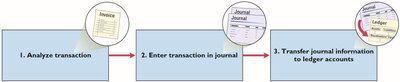
The recording process is fundamental to financial accounting, ensuring that all business transactions are systematically documented and classified. This process involves analyzing transactions, recording them in journals, and posting them to ledger accounts.
Step 1: Analyze Transaction – Identify the nature and impact of each transaction on the company's accounts.
Step 2: Enter Transaction in Journal – Record the transaction in the journal, the book of original entry, in chronological order.
Step 3: Transfer Journal Information to Ledger Accounts – Post the journal entries to the appropriate ledger accounts for classification and summarization.
The Accounting Cycle
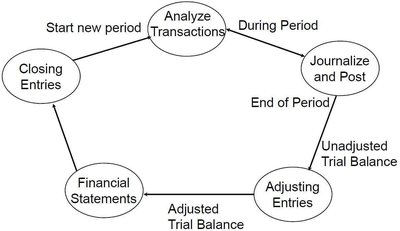
The accounting cycle is a series of steps performed during each accounting period to process financial transactions and prepare financial statements. It ensures accuracy and completeness in financial reporting.
Analyze Transactions – Evaluate business events and determine their financial impact.
Journalize and Post – Record transactions in the journal and post to the ledger.
Unadjusted Trial Balance – Summarize account balances to check for errors.
Adjusting Entries – Update accounts for accruals and deferrals.
Adjusted Trial Balance – Verify balances after adjustments.
Financial Statements – Prepare reports for stakeholders.
Closing Entries – Reset temporary accounts for the next period.
Journal and Ledger
The Journal
The journal is the book of original entry where transactions are recorded in chronological order. Journalizing involves entering transaction data in the journal, which discloses the complete effects of a transaction and helps prevent errors.
Simple Entry – Involves only two accounts (one debit, one credit).
Compound Entry – Involves more than two accounts.
The Ledger
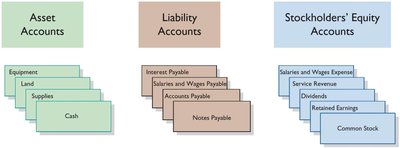
The ledger is a collection of all accounts used by a company. Each account records the increases and decreases resulting from transactions.
Posting to the Ledger
Posting is the process of transferring journal entries to the ledger accounts. This step organizes transactions by account and allows for the preparation of trial balances and financial statements.

Standard Form of Account
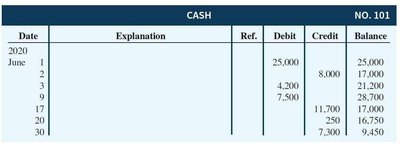
Accounts are typically presented in a standard format, showing the date, explanation, reference, debit, credit, and balance. This format helps track the flow of transactions and the current balance of each account.
Journal to Ledger Example
When a transaction is recorded in the journal, it is subsequently posted to the relevant ledger accounts. This ensures that each account reflects the correct balance after each transaction.
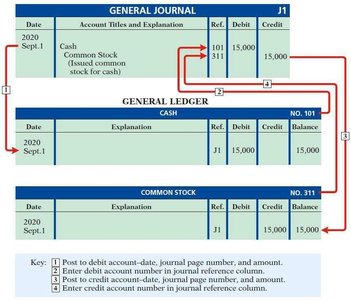
Chart of Accounts
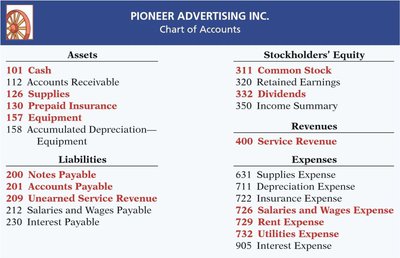
The chart of accounts is a listing of all accounts used by a company, organized by category (assets, liabilities, equity, revenues, expenses). It provides a framework for recording and reporting financial transactions.
Transaction Analysis and Journalizing
Steps for Transaction Analysis
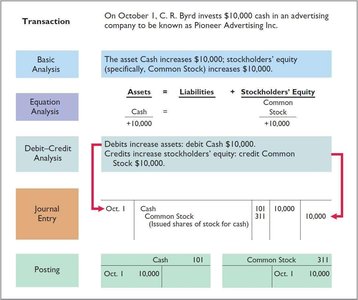
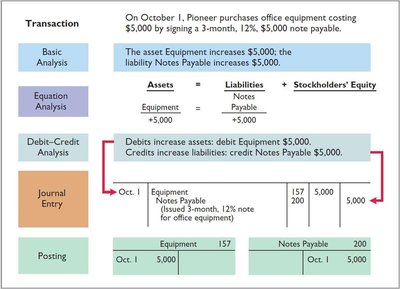
Transaction analysis is the process of determining the accounts affected, the direction of change (increase or decrease), and the appropriate debit or credit entries.
Determine the type of account involved (asset, liability, equity).
Identify what items increased or decreased and by how much.
Translate the increases and decreases into debits and credits.
Journal Entry Examples
Journal entries are used to record the financial effects of transactions. Each entry includes the date, account titles, debit and credit amounts, and a brief explanation.
Accrual-Basis Accounting Concepts
Time Period Assumption
Accountants divide the economic life of a business into artificial time periods, such as months, quarters, or years. This allows for periodic reporting and analysis of financial performance.
Accrual vs. Cash-Basis Accounting
Cash-Basis Accounting – Revenues and expenses are recorded when cash is received or paid. Not in accordance with GAAP.
Accrual-Basis Accounting – Transactions are recorded in the periods in which the events occur, regardless of when cash is exchanged. Required by GAAP.
Revenue Recognition Principle
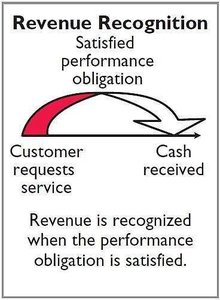
Revenue is recognized in the accounting period when the performance obligation is satisfied, not necessarily when cash is received.
Expense Recognition Principle
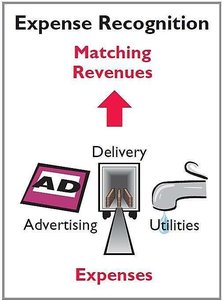
Expenses are matched with revenues in the period when the company makes efforts to generate those revenues. This is known as the matching principle.
Deferrals and Accruals
Deferrals
Deferrals involve postponing the recognition of revenue or expense to a future period. Common examples include prepaid expenses and unearned revenues.
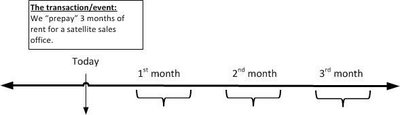
Deferring an Expense creates an asset (e.g., prepaid rent).
Deferring Revenue creates a liability (e.g., unearned revenue).
Accruals
Accruals involve recognizing revenue or expense in the current period, even though cash has not yet been received or paid.
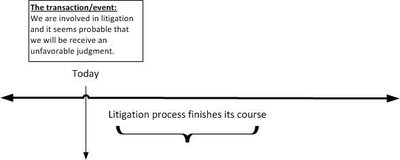
Accruing an Expense creates a liability (e.g., accrued litigation loss).
Accruing Revenue creates an asset (e.g., accounts receivable).
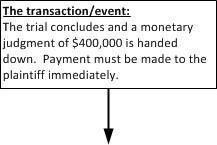
Examples of Deferrals and Accruals
Examples include prepaid rent, accrued litigation losses, and unearned revenue for services paid in advance.
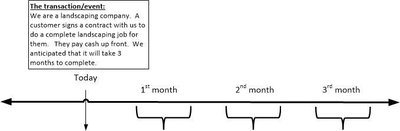
Adjusting Entries
Purpose of Adjusting Entries
Adjusting entries are made at the end of an accounting period to ensure that the revenue and expense recognition principles are followed. They update account balances for accruals and deferrals.
Required every time financial statements are prepared.
Each entry affects one income statement account and one balance sheet account.
Depreciation and Amortization
Depreciation allocates the cost of tangible assets over their useful lives, while amortization does the same for intangible assets. Depreciation is recorded in a contra asset account called Accumulated Depreciation.
Straight-Line Depreciation Formula:
Categories of Adjusting Entries
Accrued Revenues – Revenues for services performed but not yet received in cash or recorded.
Accrued Expenses – Expenses incurred but not yet paid in cash or recorded.
Prepaid Expenses – Expenses paid in cash before they are used or consumed.
Unearned Revenues – Cash received before services are performed.
Summary Table: Deferrals and Accruals
Type | Creates | Example |
|---|---|---|
Deferring Expense | Asset | Prepaid Rent |
Accruing Expense | Liability | Accrued Litigation Loss |
Deferring Revenue | Liability | Unearned Revenue |
Accruing Revenue | Asset | Accounts Receivable |
Additional info: Academic context and examples were expanded for clarity and completeness.
