 Indietro
Internal Control and Cash: Financial Accounting Study Notes
Guida di studio - Note intelligenti
 Appunti personalizzati basati sui tuoi materiali, ampliati con definizioni chiave, esempi e contesto.
Internal Control and Cash
Fraud and Its Impact
Fraud is a deliberate misrepresentation of facts intended to persuade another party to act in a certain way, resulting in injury or damage. It is a growing issue globally, especially with the rise of e-commerce. Common examples include insurance fraud, check forgery, Medicare fraud, credit card fraud, and identity theft.
Misappropriation of assets: Typically committed by employees, involving theft of money or inventory, bribery, kickbacks, and overstated expense reimbursements.
Fraudulent financial reporting: Usually committed by managers, involving false or misleading journal entries to deceive investors and creditors, often due to pressure to meet financial targets.
Fraud has economic, legal, and ethical consequences. Perpetrators gain short-term benefits, but others suffer losses. Fraud is illegal and unethical, violating the rights of many for the temporary gain of a few.
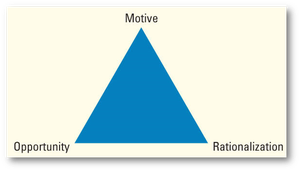
The Fraud Triangle
The Fraud Triangle illustrates the three elements necessary for fraud to occur: Motive, Opportunity, and Rationalization. Weak internal controls often create opportunities for fraud.
Objectives and Components of Internal Control
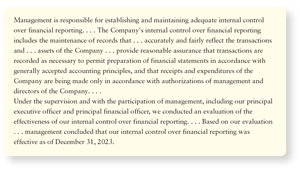
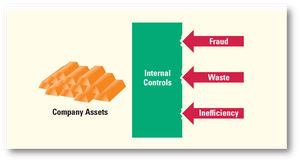
Internal control is a system of organization and procedures designed to prevent, detect, and correct fraud. It serves five main objectives:
Safeguard assets
Encourage adherence to company policy
Ensure accurate and reliable accounting records
Comply with legal requirements
Promote operational efficiency (secondary)
Components of Internal Control
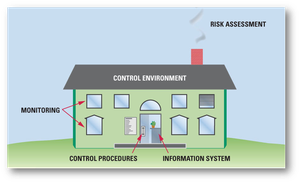
The internal control system consists of several components:
Control Environment: The tone at the top, including the code of ethics.
Risk Assessment: Identifying and managing business risks.
Information System: The means by which accounting information is processed and tracked.
Control Procedures: Methods to achieve internal control objectives.
Monitoring of Controls: Ongoing review, often automated, by internal and external auditors.
Internal Control Procedures
Internal control procedures are classified as preventative or monitoring controls:
Preventative Controls: Stop fraud or errors before they occur (e.g., smart hiring practices, separation of duties, limited access, proper approvals).
Monitoring Controls: Detect fraud or errors after they occur (e.g., comparison and compliance monitoring, audits, reconciliations).
Examples include:
Smart Hiring Practices: Background checks, training, supervision, competitive salaries, clear responsibilities.
Separation of Duties: No single employee should handle asset management, record keeping, and transaction approval.
Comparison and Compliance Monitoring: Budgets, exception reporting, audits, reconciliations.
Adequate Records: Detailed transaction records, prenumbered documents, electronic and hard copies.
Limited Access: Physical and digital access controls, passwords, encryption.
Proper Approvals: Management approval for transactions, purchasing from approved vendors.
Information Technology and Safeguard Controls
Modern accounting systems rely on information technology for improved accuracy and speed. Safeguard controls include fireproof vaults, security cameras, loss prevention specialists, fidelity bonds, mandatory vacations, and job rotation.
Internal Controls for E-Commerce
E-commerce introduces risks such as stolen credit card numbers, malware, and phishing. Security measures include encryption and firewalls.
Encryption
Encryption rearranges messages mathematically, making them unreadable without the code. For example, check-sum digits in account numbers help detect errors.
Firewalls
Firewalls restrict unauthorized access to networks, requiring passwords and PINs. Multiple firewalls provide layered protection.
Internal Controls Over Cash Receipts and Payments
Cash Receipts Over the Counter
Point-of-sale terminals record sales, costs, and inventory reductions. Cash drawers are reconciled at shift end, and cash is deposited. The accounting department reconciles sales per terminal to cash in the drawer.
Cash Receipts by Mail
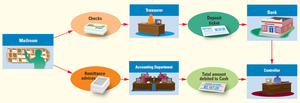
Mailroom staff process checks and remittance advice, which are then handled by the treasurer, deposited at the bank, and recorded by the accounting department.
Controls Over Payment by Check
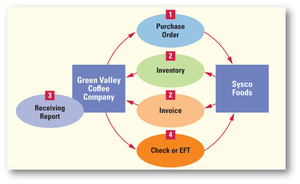
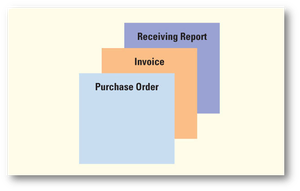
Payments by check or EFT provide a record, require authorized signatures, and are supported by evidence. Duties are separated among purchasing, receiving, preparing payment, and approving payment.
Petty Cash
Petty cash is used for minor expenses, managed by a custodian using an imprest system. Debit cards have reduced the need for petty cash.
Limitations of Internal Control
Internal controls can be circumvented by collusion, management override, or human error. The cost of controls should not exceed their benefits.
Bank Reconciliation
Bank Reconciliation Process
Bank reconciliation explains differences between the company’s cash records (books) and the bank balance, often due to timing or errors. The process involves:
Identifying items missing or incorrect on either side
Adjusting balances accordingly
Recording journal entries for book-side adjustments
Documents Used
Signature Card: Protects against forgery
Deposit Ticket: Proof of deposit
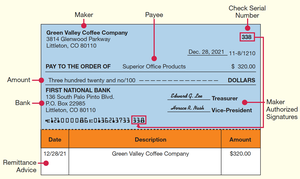
Check: Involves maker, payee, and bank
Bank Statement: Monthly report of cash activity
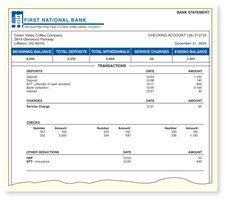
Bank Reconciliation Steps
Adjustments are made to both bank and book balances:
Bank Side: Add deposits in transit, subtract outstanding checks, correct bank errors
Book Side: Add bank collections, interest, EFT receipts; subtract service charges, NSF checks, EFT payments; correct book errors
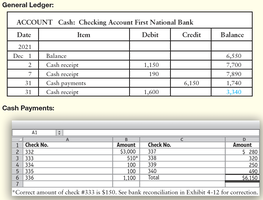
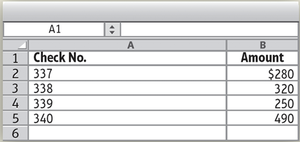
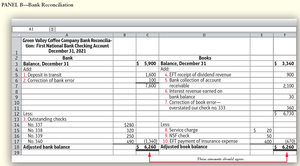
The adjusted bank and book balances should match, representing the ideal balance without timing differences or errors.
Journalizing Transactions from Bank Reconciliation
All book-side reconciling items require journal entries, as they have not yet been recorded.
Reporting Cash on the Balance Sheet
Cash and Cash Equivalents
Cash includes currency, checking and savings accounts, and money market accounts. Cash equivalents are highly liquid, low-risk investments with maturities of three months or less, such as time deposits, certificates of deposit, and high-grade government securities. Stocks like Apple are not cash equivalents due to risk and lack of maturity date.
Balance Sheet Footnote
Public companies often include a footnote stating that all highly liquid investments with maturities of three months or less are classified as cash equivalents.
Unsupervised Machine Learning in Expense Reimbursement Fraud Detection
Expense Reimbursement Fraud Schemes
Expense reimbursement fraud involves employees claiming reimbursement for illegitimate expenses. The Association of Certified Fraud Examiners (ACFE) classifies these schemes as:
Mischaracterized expenses
Fictitious expenses
Overstated expenses
Multiple reimbursements
Machine Learning for Fraud Detection
Unsupervised machine learning models flag unusual receipts for investigation. Human review of flagged cases helps the model learn to identify fraud in future receipts. Machine learning can examine every transaction, combine structured and unstructured data, and detect sophisticated fraudsters more effectively than humans.
Key Formulas and Concepts
Bank Reconciliation Formula
The basic formula for bank reconciliation is:
$\text{Adjusted Bank Balance} = \text{Bank Balance} + \text{Deposits in Transit} - \text{Outstanding Checks} \pm \text{Bank Errors}$
$\text{Adjusted Book Balance} = \text{Book Balance} + \text{Bank Collections} + \text{Interest Revenue} + \text{EFT Receipts} - \text{Service Charges} - \text{NSF Checks} - \text{EFT Payments} \pm \text{Book Errors}$
Both adjusted balances should be equal after reconciliation.
Summary Table: Bank Reconciliation Adjustments
Bank Side | Book Side |
|---|---|
Add deposits in transit | Add bank collections, interest, EFT receipts |
Subtract outstanding checks | Subtract service charges, NSF checks, EFT payments |
Add/Subtract bank errors | Add/Subtract book errors |
