 Indietro
Introduction to Financial Accounting and the Balance Sheet Equation
Guida di studio - Note intelligenti
 Appunti personalizzati basati sui tuoi materiali, ampliati con definizioni chiave, esempi e contesto.
Introduction to Accounting
What is Accounting?
Accounting is a systematic process for recording, summarizing, and reporting information about business transactions. It provides essential financial statements that inform users about a company's financial position and performance. The discipline is foundational for decision-making by various stakeholders, including managers, investors, and regulators.
Definition: Accounting is a system for recording information about business transactions to provide summary statements of a company's financial position and performance to users who require such information.
Types of Accounting:
Financial Accounting
Tax Accounting
Managerial Accounting
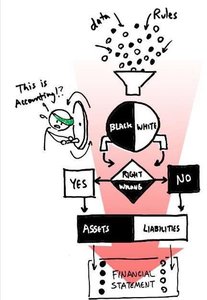
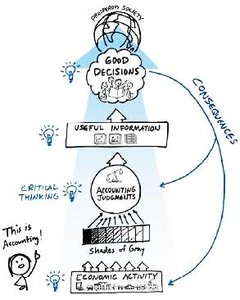
Additional info: The public often perceives accounting as a purely mechanical process, but in reality, it involves significant judgment and critical thinking to provide useful information for decision-making.
Users of Financial Information
External Users
External users rely on financial statements to make decisions about the company. These users include creditors, investors, and regulators.
Creditors: Assess a company's ability to pay its debts as they come due.
Investors: Evaluate company performance, profitability, and compare with competitors.
Regulators: Ensure compliance with financial reporting standards.



Internal Users
Internal users are individuals within the organization who use financial information to make operational decisions. These include managers, finance, marketing, human resources, and management teams.
Finance: Determines if cash is sufficient to pay dividends to stockholders.
Marketing: Sets product pricing to maximize net income.
Human Resources: Assesses the ability to afford employee pay raises.
Management: Evaluates profitability of product lines and makes strategic decisions.




Financial Reporting Requirements
National and International Standards
Financial reporting is governed by various standards, which ensure consistency and comparability of financial statements across companies and countries.
France: French Generally Accepted Accounting Principles (PCG), regulated by the Autorité des Normes Comptables (ANC).
International: International Financial Reporting Standards (IFRS), established by the IASB, required in over 150 countries for public companies.
United States: US GAAP is required for US firms.
Periodic financial statement filings are required, including annual, semi-annual, quarterly, and ad-hoc reports for material events.
Example: The timing of revenue and expense recognition can create tension in financial accounting, such as when goods are shipped in one quarter and cash is collected in another.
Required Financial Statements
Financial statements provide a comprehensive overview of a company's financial health and performance.
Balance Sheet: Shows financial position (resources and obligations) at a specific date.
Income Statement: Reports results of operations over a period using accrual accounting.
Statement of Cash Flows: Details sources and uses of cash over a period.
Statement of Stockholders’ Equity: Shows changes in equity over a period.
Notes: Provide additional information about operations and financial position.
Balance Sheet Equation
Fundamental Equation
The balance sheet equation is the foundation of double-entry bookkeeping and provides the framework for recording and summarizing economic events.
Equation:
Assets must always equal the sum of liabilities and stockholders’ equity.
Changes between two balance sheets are summarized in the income statement, statement of stockholders’ equity, and statement of cash flows.
In liquidation, creditors’ claims (liabilities) are settled before ownership claims (stockholders’ equity).
Assets
Assets are resources controlled by the company that are expected to provide future economic benefits.
Recognized when acquired in a past transaction and measurable with reasonable precision.
Examples: Cash, supplies, equipment.
Liabilities
Liabilities are obligations to creditors, representing claims on assets that require future payment of cash, goods, or services.
Recognized when the obligation is based on current or past benefits/services and the payment amount/timing is reasonably certain.
Examples: Accounts payable, notes payable, salaries and wages payable.
Stockholders’ Equity
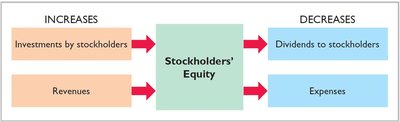
Stockholders’ equity is the residual interest in assets after deducting liabilities. It is also referred to as net worth, net assets, or net book value.
Sources of Stockholders’ Equity:
Contributed Capital: Common stock, additional paid-in capital, treasury stock.
Retained Earnings: Accumulated net income (revenues minus expenses), less dividends, since inception.
Dividends
Dividends are distributions of retained earnings to shareholders. They are not considered expenses and are recorded as a reduction of retained earnings on the declaration date, creating a liability until payment.
Summary Table: Components of the Balance Sheet Equation
Component | Definition | Examples |
|---|---|---|
Assets | Resources expected to provide future economic benefits | Cash, Supplies, Equipment |
Liabilities | Obligations to creditors requiring future payment | Accounts Payable, Notes Payable |
Stockholders’ Equity | Residual claim on assets after liabilities | Common Stock, Retained Earnings |
