 Indietro
Job Costing: Concepts, Procedures, and Applications in Managerial Accounting
Guida di studio - Note intelligenti
 Appunti personalizzati basati sui tuoi materiali, ampliati con definizioni chiave, esempi e contesto.
Job Costing and Process Costing
Distinguishing Job Costing from Process Costing
Job costing and process costing are two fundamental methods used to assign costs to products in manufacturing and service industries. Understanding their differences is essential for selecting the appropriate costing system.
Job Costing: Used for unique, custom-ordered products or small batches. Each job is tracked separately, and costs are assigned to individual jobs. Examples include custom-home builders, high-end jewelers, and commercial plumbing contractors.
Process Costing: Used for mass production of identical units through uniform processes. Costs are averaged across all units produced. Examples include oil refineries and cereal manufacturers.
Comparison Table: 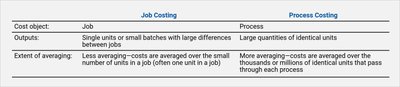
Cost Object: Job (Job Costing) vs. Process (Process Costing)
Outputs: Single units or small batches vs. large quantities of identical units
Extent of Averaging: Less averaging in job costing; more averaging in process costing
Example Exercise: 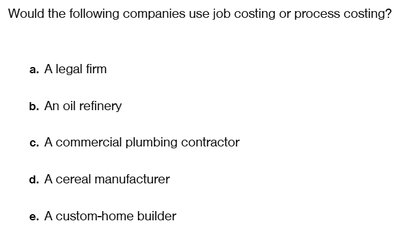
Flow of Production and Tracing Costs
Inventory Flow in Manufacturing
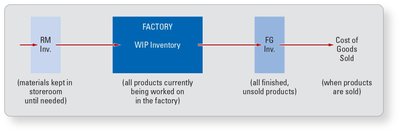
The flow of inventory through a manufacturing system involves three main stages: raw materials, work in process, and finished goods.
Raw Materials Inventory (RM): Materials kept in storeroom until needed
Work in Process Inventory (WIP): Products currently being worked on in the factory
Finished Goods Inventory (FG): Completed products awaiting sale
Cost of Goods Sold (COGS): Recognized when products are sold
Production Scheduling
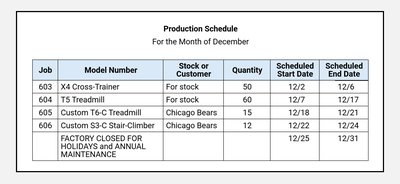
Production schedules indicate the quantity and types of inventory to be manufactured during a period.
Custom orders and stock inventory are both scheduled
Schedules help coordinate production and ensure timely completion
Bill of Materials and Raw Materials Record
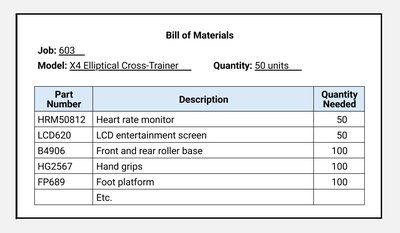
Bill of Materials: Lists all raw materials needed for a job, similar to a recipe
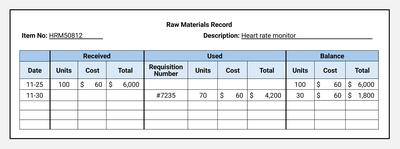
Raw Materials Record: Tracks each item in stock, including quantities received, used, and remaining
Job Cost Record
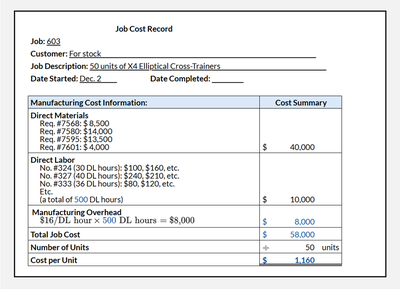
The job cost record tracks all direct materials, direct labor, and manufacturing overhead allocated to a job. It provides supporting detail for WIP and Finished Goods Inventory accounts. 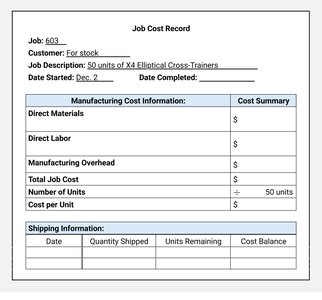
Tracing Direct Materials and Labor Costs
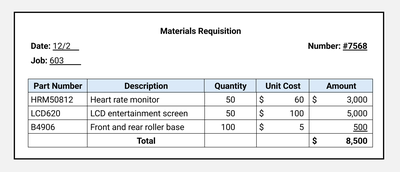
Materials Requisition: Document used to request materials for production
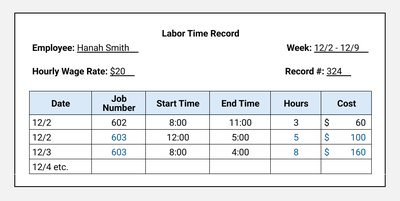
Labor Time Record: Tracks employee hours spent on jobs
Calculating and Allocating Manufacturing Overhead
Predetermined Manufacturing Overhead Rate
Manufacturing overhead (MOH) includes indirect costs such as depreciation, utilities, and supervisor salaries. These costs are allocated to jobs using a predetermined rate.
Step 1: Estimate total MOH costs for the coming year
Step 2: Select an allocation base (e.g., direct labor hours, machine hours)
Step 3: Calculate the predetermined MOH rate:
Step 4: Allocate MOH to jobs:
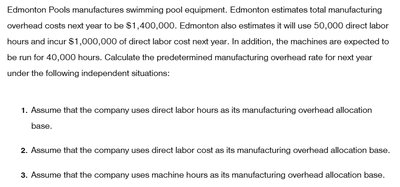
Example: Calculating MOH Rates
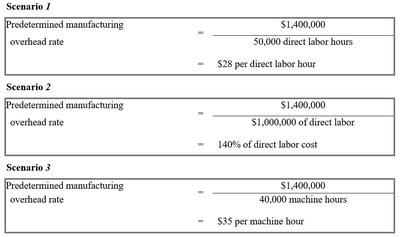
Direct labor hours: per DL hour
Direct labor cost: of direct labor cost
Machine hours: per machine hour
Determining Job Cost and Business Decisions
Using Job Cost Records
Job cost records are used by management to:
Reduce future job costs
Assess profitability
Bid for custom orders
Prepare financial statements

Overallocated and Underallocated Manufacturing Overhead
Identifying Overhead Allocation Issues
At the end of the period, actual MOH is compared to allocated MOH.
Underallocated: Actual MOH > Allocated MOH
Overallocated: Actual MOH < Allocated MOH
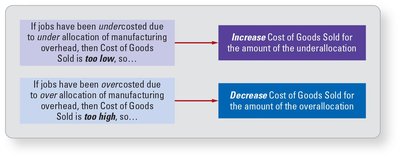
Correcting Cost of Goods Sold
If jobs are undercosted, increase COGS by the underallocated amount
If jobs are overcosted, decrease COGS by the overallocated amount
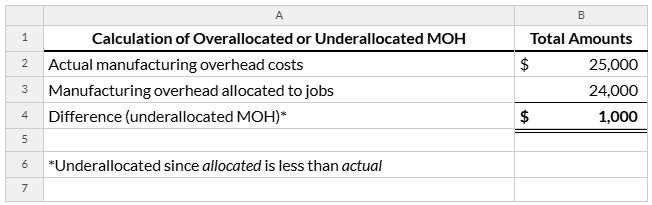
Example Calculation
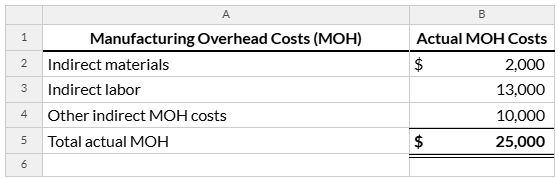
Actual MOH: $25,000
Allocated MOH: $24,000
Difference: $1,000 underallocated

Journal Entries in Job Costing
Recording Manufacturing Transactions
Journal entries are used to record the flow of costs through the manufacturing process, including purchases, usage, allocation, and completion of jobs.
Purchase of raw materials
Use of direct and indirect materials
Use of direct and indirect labor
Incurring other MOH costs
Allocating MOH to jobs
Completion and sale of jobs
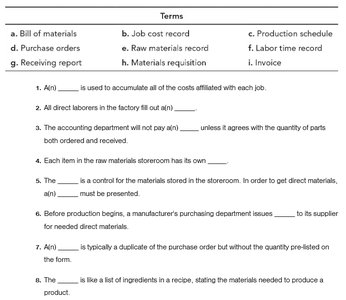
Key Terms in Job Costing
Definitions and Applications
Bill of Materials: List of ingredients/materials needed for a job
Job Cost Record: Accumulates all costs for each job
Production Schedule: Indicates inventory to be manufactured
Purchase Orders: Issued to suppliers for needed materials
Raw Materials Record: Tracks materials in storeroom
Materials Requisition: Requests materials for production
Labor Time Record: Tracks employee hours on jobs
Invoice: Bill from supplier
Receiving Report: Documents incoming materials
Summary Table: Job Cost Record Example
Additional info:
Job costing is essential for custom manufacturing and service firms, allowing accurate cost tracking and informed pricing decisions.
Process costing is more suitable for industries with homogeneous products and continuous production.
Predetermined overhead rates help allocate indirect costs efficiently, but regular review is necessary to avoid significant over- or underallocation.
