 Indietro
Merchandising Operations: Financial Accounting Study Notes (Chapter 5)
Guida di studio - Note intelligenti
 Appunti personalizzati basati sui tuoi materiali, ampliati con definizioni chiave, esempi e contesto.
Merchandising Operations
Introduction to Merchandising Operations
Merchandising operations involve businesses that purchase goods for resale to customers. These businesses differ from service companies in that they deal with physical products and inventory management. - Merchandiser: A business that sells merchandise (goods) to customers. - Merchandise Inventory: The goods a merchandiser owns and intends to sell. - Wholesaler: Buys goods from manufacturers and sells them to retailers. - Retailer: Buys merchandise from manufacturers or wholesalers and sells to consumers.
The Operating Cycle of a Merchandising Business
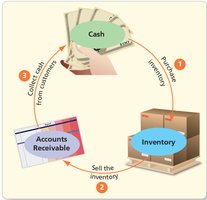
The operating cycle describes the flow of transactions in a merchandising business, from purchasing inventory to collecting cash from customers. - Steps: 1. Purchase inventory from a supplier. 2. Sell inventory to customers. 3. Collect cash from customers. - Accounts Receivable: Represents amounts owed by customers for sales made on credit
. 
Financial Statements: Service vs. Merchandising Companies
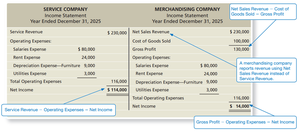
Merchandising companies report Sales Revenue and Cost of Goods Sold (COGS) on their income statements, unlike service companies.
- Gross Profit: Net Sales Revenue minus COGS.
- Operating Expenses: Expenses other than COGS
. 
Merchandise Inventory Systems
Perpetual vs. Periodic Inventory Systems
Businesses use inventory systems to track merchandise inventory. - Periodic Inventory System: Requires a physical count to determine inventory on hand. - Perpetual Inventory System: Maintains a running computerized record of inventory.
Purchasing Merchandise Inventory (Perpetual System)
Recording Purchases
Purchases are recorded in the Merchandise Inventory account.
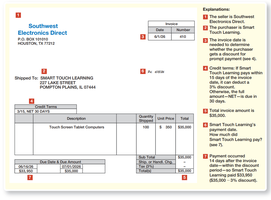
- Invoice: Seller’s request for payment; also called a bill.
- Purchase Invoice: Used by purchasers to record inventory bought
. 
Purchase Returns and Allowances
- Purchase Return: When purchasers return defective or unsuitable merchandise.
- Purchase Allowance: Reduction in price for merchandise not as ordered, without returning goods.

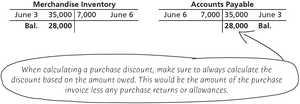
Purchase Discounts
- Purchase Discount: Incentive for early payment offered by sellers. - Credit Terms: Specify discount, discount period, and final due date (e.g., 3/15, Net 30 Days).


Transportation Costs
Shipping terms determine when ownership transfers and who pays freight. - FOB Shipping Point: Buyer owns goods after they leave seller; buyer pays freight.
- FOB Destination: Buyer owns goods at delivery; seller pays freight.
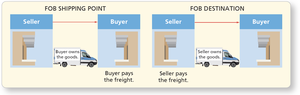
- Freight In: Cost to bring goods into purchaser’s warehouse (added to inventory).
- Freight Out: Cost to ship goods to customers (delivery expense).
Net Cost of Inventory Purchased
The net cost of inventory is calculated as:
Sales of Merchandise Inventory (Perpetual System)
Recording Sales
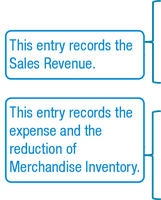
Sales transactions require two entries: 1. Record sales revenue and cash/accounts receivable. 2. Record cost of goods sold and reduce merchandise inventory.


Sales on Account
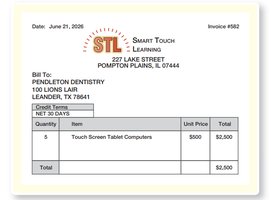
Sales made on account are recorded similarly, with invoices issued to customers
. 
Sales Discounts
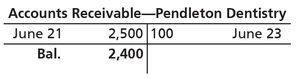
- Sales Discount: Reduction in revenue for early payment by customers. - Sales are recorded at the net amount (after discount). 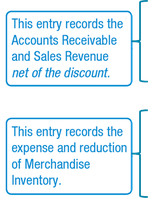
Sales Returns and Allowances
- Sales Return: Customer returns goods; reduces accounts receivable or requires refund.
- Sales Allowance: Reduction in amount owed without return of goods. - Credit Memo: Issued for sales allowance; increases Sales Returns and Allowances account
. 
Freight Out
- Freight Out: Delivery expense for shipping goods to customers.
Adjusting and Closing Accounts for Merchandisers
Adjusting Entries
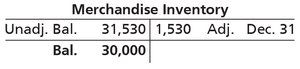
Merchandisers adjust for inventory shrinkage and estimated sales returns.
- Inventory Shrinkage: Loss of inventory from theft, damage, or errors. - Physical count of inventory is performed at least annually.
Closing Entries
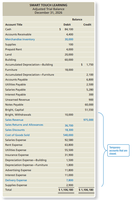
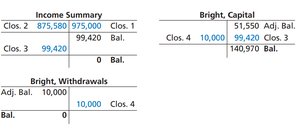
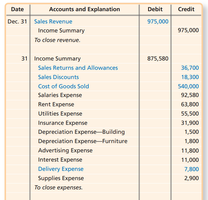
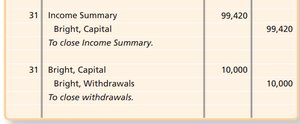
Merchandisers close accounts in four steps: 1. Close revenue accounts via Income Summary. 2. Close expense accounts via Income Summary. 3. Close Income Summary to Owner, Capital. 4. Close Owner, Withdrawals to Owner, Capital.
Preparing Financial Statements for Merchandisers
Income Statement Formats
- Single-Step Income Statement: Groups all revenues and expenses together; no subtotals.
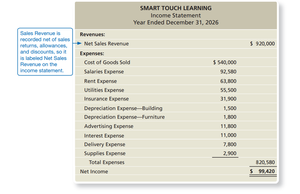
- Multi-Step Income Statement: Contains subtotals for gross profit, operating income, and net income.
Multi-Step Income Statement Details
- Subtotals include: Gross Profit, Operating Income, Other Income/Expenses, Net Income. - Operating expenses are divided into: 1. Selling Expenses: Related to marketing and selling goods/services. 2. General and Administrative Expenses: Not related to marketing. - Other income/expenses include items outside normal operations (e.g., interest, gains/losses).
Statement of Owner’s Equity and Balance Sheet
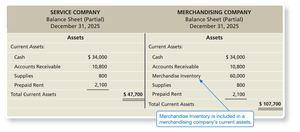
- Merchandisers’ statements of owner’s equity are similar to service businesses. - Balance sheet includes: 1. Merchandise Inventory (current asset) 2. Accounts Payable (current liability)
Evaluating Business Performance: Gross Profit Percentage
Gross Profit Percentage
The gross profit percentage measures profitability above the cost of goods sold. - Formula: - A higher gross profit percentage indicates better profitability.
Example: Pepsico Corporation
- Gross profit percentage is calculated for different years to evaluate performance. Additional info: The notes above expand on brief points and fill in missing context from the original slides, providing definitions, examples, and formulas for key concepts in merchandising operations.
