 Indietro
chapter 2 (gen chem, n) Atomic Theory and Structure: Foundations of Modern Chemistry
Guida di studio - Note intelligenti
 Appunti personalizzati basati sui tuoi materiali, ampliati con definizioni chiave, esempi e contesto.
Atoms & Elements
Dalton’s Atomic Theory
Dalton’s Atomic Theory laid the groundwork for our understanding of matter by proposing that all elements are composed of tiny, indivisible particles called atoms. This theory explains the nature of elements and compounds, and the conservation of mass in chemical reactions.
Postulate 1: Each element is composed of extremely small particles called atoms.

Postulate 2: All atoms of a given element are identical in mass and properties, but atoms of different elements differ from one another.

Postulate 3: Atoms of one element cannot be changed into atoms of another element by chemical reactions; atoms are neither created nor destroyed in chemical reactions.

Postulate 4: Compounds are formed when atoms of more than one element combine; a given compound always has the same relative number and kind of atoms.
Example: Water (H2O) always contains two hydrogen atoms and one oxygen atom.
Law of Conservation of Mass
The Law of Conservation of Mass, established by Antoine Lavoisier, states that mass is neither created nor destroyed in ordinary chemical and physical changes. This means the total mass of reactants equals the total mass of products in a chemical reaction.
Key Point: The number and type of atoms remain constant during a chemical reaction.
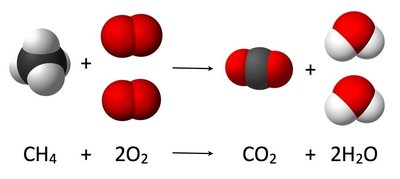
Example: In the combustion of methane: , the number of each type of atom is conserved.
Law of Definite and Multiple Proportions
The Law of Definite Proportions states that a chemical compound always contains the same proportion of elements by mass. The Law of Multiple Proportions states that when two elements form more than one compound, the ratios of the masses of the second element that combine with a fixed mass of the first element are simple whole numbers.
Example: Carbon monoxide (CO) and carbon dioxide (CO2) both contain carbon and oxygen, but in different ratios.
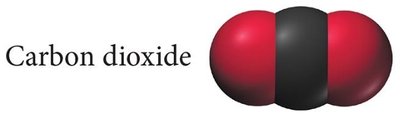
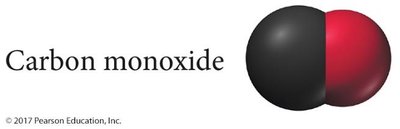
Calculation Example: For CO, the mass ratio of O:C is . For CO2, the mass ratio is .
Atomic Structure
Early Models of the Atom
Early atomic models attempted to describe the structure of the atom. Dalton’s model pictured atoms as solid, indivisible spheres, similar to billiard balls.

Later, the discovery of subatomic particles led to more complex models.
Cathode Ray Tube Experiments
The Cathode Ray Tube (CRT) experiments conducted by J.J. Thomson revealed the existence of electrons, negatively charged particles within the atom. These experiments showed that cathode rays were deflected by electric and magnetic fields, indicating they were composed of negatively charged particles.
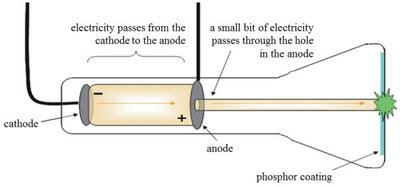
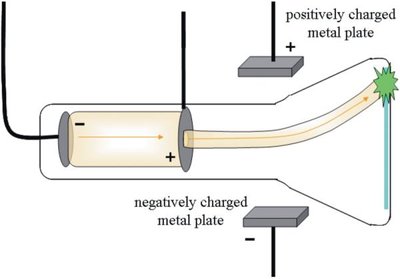
Conclusion: Atoms contain negatively charged electrons, which are much smaller than atoms themselves.
Millikan’s Oil Drop Experiment
Robert Millikan’s oil drop experiment measured the charge of the electron. By balancing the gravitational and electrical forces on tiny charged oil droplets, Millikan determined the fundamental unit of electric charge ( C).
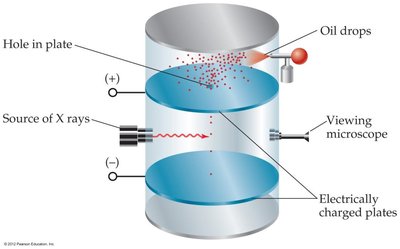
Result: The charge and mass of the electron were established, confirming that electrons are universal components of atoms.
Radioactivity
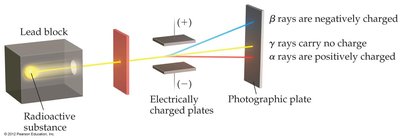
Radioactivity is the spontaneous emission of radiation by certain unstable atomic nuclei. Henri Becquerel discovered radioactivity, and Marie and Pierre Curie studied it extensively. Three types of radiation were identified:
Alpha (α) particles: Positively charged
Beta (β) particles: Negatively charged
Gamma (γ) rays: Neutral (no charge)
Rutherford’s Gold Foil Experiment
Ernest Rutherford’s gold foil experiment demonstrated that atoms have a small, dense, positively charged nucleus. Most alpha particles passed through the foil, but some were deflected at large angles, indicating a concentrated center of positive charge.
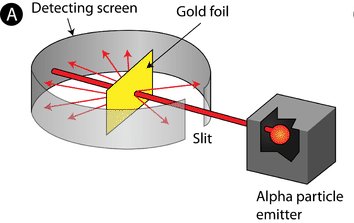
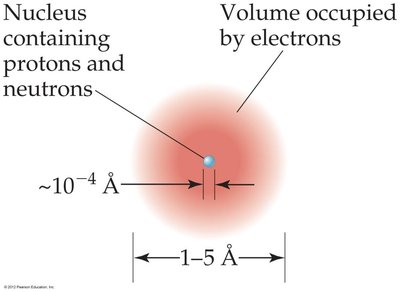
Conclusion: The atom consists of a tiny nucleus containing protons and neutrons, surrounded by electrons.
Subatomic Particles
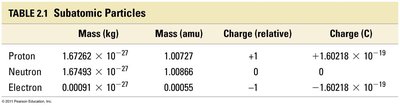
Atoms are composed of three main subatomic particles:
Particle | Mass (kg) | Mass (amu) | Charge (relative) | Charge (C) |
|---|---|---|---|---|
Proton | 1.67262 × 10⁻²⁷ | 1.00727 | +1 | +1.60218 × 10⁻¹⁹ |
Neutron | 1.67493 × 10⁻²⁷ | 1.00866 | 0 | 0 |
Electron | 0.00091 × 10⁻²⁷ | 0.00055 | −1 | −1.60218 × 10⁻¹⁹ |
Key Point: Protons and neutrons are found in the nucleus; electrons occupy the surrounding space.
Isotopes and Atomic Mass
Atomic Symbols and Isotopes
Atoms of the same element with different numbers of neutrons are called isotopes. The atomic symbol indicates the element, atomic number (Z), and mass number (A):
Atomic number (Z): Number of protons
Mass number (A): Number of protons + neutrons
Example: has 53 protons, 72 neutrons, and (for a neutral atom) 53 electrons.
Calculating Average Atomic Mass
The average atomic mass of an element is the weighted average of the masses of its naturally occurring isotopes. The formula is:
where is the fractional abundance and is the mass of each isotope.
Isotope | Mass (amu) | % Abundance |
|---|---|---|
54Fe | 53.94 | 5.845 |
56Fe | 55.93 | 91.75 |
57Fe | 56.94 | 2.119 |
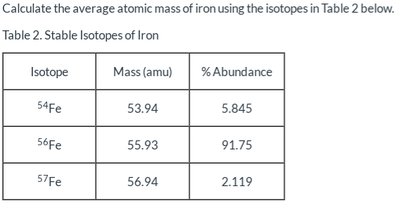
Example Calculation:
Applications and Practice Problems
Understanding isotopes and atomic mass is essential for identifying elements and interpreting mass spectrometry data. Practice problems often involve calculating average atomic mass or determining the abundance of isotopes given the average atomic mass.
Example: If an element X has two isotopes, 151X (150.99 amu) and 153X (153.03 amu), and the average atomic mass is 151.69 amu, the abundance of 153X can be found using:
Solve for to find the percent abundance.
