 Indietro
chapter 4, gen chem, n) Chemical Formulas: Empirical, Molecular, and Combustion Analysis
Guida di studio - Note intelligenti
 Appunti personalizzati basati sui tuoi materiali, ampliati con definizioni chiave, esempi e contesto.
Chemical Quantities & Aqueous Reactions
Relating Moles, Mass, and Number of Particles
Understanding the quantitative relationships between moles, mass, and the number of particles is fundamental in chemistry. The chemical formula of a compound allows us to convert between these quantities using Avogadro's number and molar mass.
Mole: The amount of substance containing as many entities (atoms, molecules, ions) as there are atoms in 12 g of carbon-12 (6.022 × 10²³).
Molar Mass: The mass of one mole of a substance, expressed in grams per mole (g/mol).
Formula Units: The simplest ratio of ions represented in an ionic compound.
Example: To find the number of formula units in 12.0 g of CoCl2:
Calculate moles:
Convert to formula units: formula units
To find the number of chloride ions, multiply by 2 (since each CoCl2 has 2 Cl–).
Chemical Formulas and Percent Composition
Mass Percent Composition
The mass percent composition of an element in a compound expresses the mass of the element as a percentage of the total mass of the compound.
Formula:
Example: Mass percent of oxygen in CO2:
O by mass
Applications of Percent Composition
Percent composition data can be used to deduce empirical and molecular formulas, and to compare different compounds.
Molecule | Percent C | Percent H |
|---|---|---|
C3H6 | 85.6% | 14.4% |
C3H8 | 81.7% | 18.3% |
C3H3 | 92.2% | 7.8% |
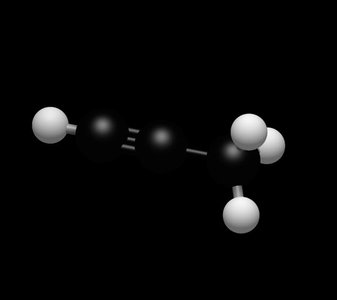
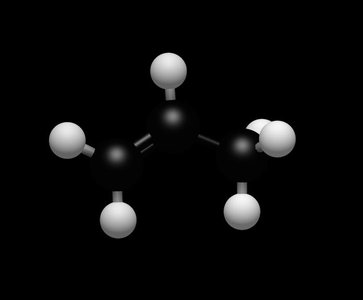
Types of Chemical Formulas
Empirical and Molecular Formulas
Chemical compounds can be represented by empirical or molecular formulas:
Empirical Formula: The simplest whole-number ratio of atoms of each element in a compound.
Molecular Formula: The actual number of atoms of each element in a molecule; always a whole-number multiple of the empirical formula.
Example: The empirical formula of C6H12 is C3H6.
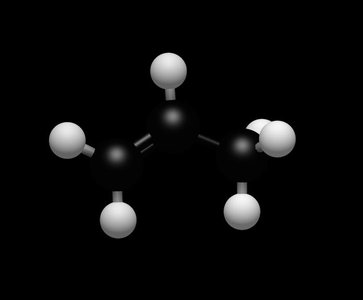
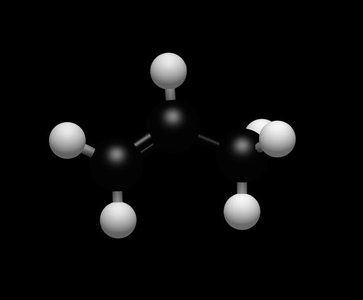
Determining Empirical Formulas
To find the empirical formula from percent composition or mass data:
Convert percentages to grams (assume 100 g sample if only percentages are given).
Convert grams to moles using molar mass.
Divide all mole values by the smallest number of moles to get the simplest ratio.
If necessary, multiply all ratios by the same integer to obtain whole numbers.
Example: A compound with 88.16% C and 11.84% H yields an empirical formula of C5H8.
Determining Molecular Formulas
The molecular formula is determined by multiplying the empirical formula by an integer n, where n is the ratio of the compound's molar mass to the empirical formula mass.
Formula:
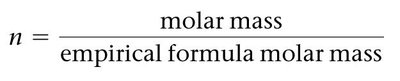
Example: If the empirical formula is CH2 and the molar mass is 84 g/mol, then n = 6 and the molecular formula is C6H12.
Combustion Analysis
Principle and Procedure
Combustion analysis is a laboratory technique used to determine the empirical formula of organic compounds. The sample is burned in oxygen, and the masses of CO2 and H2O produced are measured to calculate the amounts of C and H in the original sample. Any remaining mass is attributed to other elements, such as O or N.
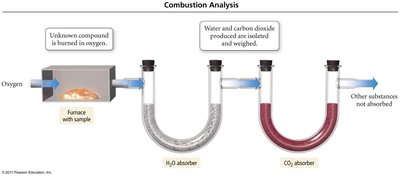
Find moles of CO2 and H2O produced.
Calculate moles of C from CO2 and H from H2O.
Subtract the masses of C and H from the original sample mass to find the mass of O (if present).
Convert all masses to moles and determine the empirical formula as usual.
Example: A 1.00 g sample produces 2.44 g CO2 and 0.999 g H2O. The empirical formula is found to be C4H8O.
Special Cases in Combustion Analysis
Combustion analysis can also be used for compounds containing elements other than C, H, and O, such as N. The mass of N is determined by subtracting the masses of C and H from the total sample mass.
Example: A compound containing C, H, and N yields an empirical formula of C5H14N2 after combustion analysis.
Hydrates and Waters of Hydration
Hydrated ionic compounds contain water molecules within their crystal structure. The number of waters of hydration can be determined by heating the sample to remove water and comparing the mass before and after heating.
Example: MgSO4·xH2O is found to have x = 7, so the formula is MgSO4·7H2O.
