 Indietro
General Chemistry Essentials: Matter, Measurement, and Atomic Structure
Guida di studio - Note intelligenti
 Appunti personalizzati basati sui tuoi materiali, ampliati con definizioni chiave, esempi e contesto.
Introduction to Chemistry
The Scope and Method of Chemistry
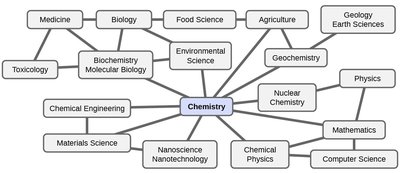
Chemistry is the study of the composition, properties, and interactions of matter. It is considered the central science because it connects and overlaps with many other scientific disciplines, including biology, physics, environmental science, and materials science.
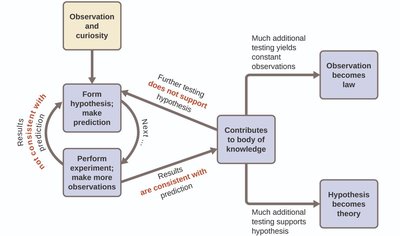
Scientific Method: Chemists use the scientific method to interpret the natural world. This involves making observations, forming hypotheses, conducting experiments, and developing theories or laws based on repeated evidence.
Law vs. Theory: A law summarizes consistent experimental observations, while a theory is a well-substantiated explanation that predicts phenomena.
Matter and Its Classification
Phases and Properties of Matter
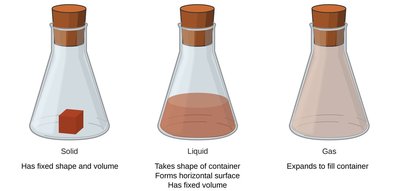
Matter is anything that occupies space and has mass. It exists in three common phases: solid, liquid, and gas, each with distinct properties.
Solid: Fixed shape and volume.
Liquid: Variable shape, fixed volume.
Gas: Variable shape and volume, expands to fill its container.
Classification of Matter
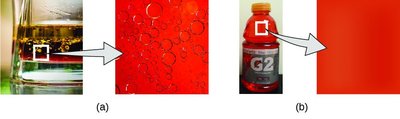
Matter can be classified as pure substances or mixtures:
Pure Substance: Has a constant composition. Includes elements (single type of atom) and compounds (two or more elements chemically bonded).
Mixture: Contains two or more substances physically combined. Can be homogeneous (uniform composition) or heterogeneous (non-uniform composition).

Physical and Chemical Properties and Changes
Properties of matter are characteristics that help distinguish substances:
Physical Properties: Observed without changing the substance's chemical identity (e.g., color, density, melting point).
Chemical Properties: Describe how a substance reacts or does not react (e.g., flammability, reactivity).
Physical Change: Alters form but not composition (e.g., melting, boiling).
Chemical Change: Alters chemical structure, forming new substances (e.g., rusting, burning).
The Periodic Table and Elements
Organization of the Periodic Table
The periodic table organizes elements by increasing atomic number (number of protons) and groups elements with similar chemical properties into columns called groups or families. Rows are called periods.
Main Group Elements: Groups 1, 2, and 13–18.
Transition Metals: Groups 3–12.
Inner Transition Metals: Lanthanides and actinides.
Metals, Nonmetals, Metalloids: Metals are shiny, conductive, and malleable; nonmetals are poor conductors and can be gases, liquids, or brittle solids; metalloids have intermediate properties.

Special Groups and Diatomic Elements
Alkali Metals: Group 1
Alkaline Earth Metals: Group 2
Halogens: Group 17
Noble Gases: Group 18
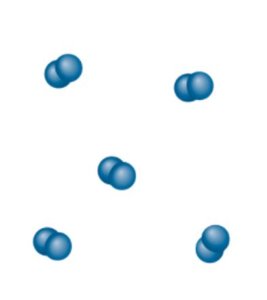
Diatomic Elements: H2, N2, O2, F2, Cl2, Br2, I2
Measurement in Chemistry
SI Units and Prefixes
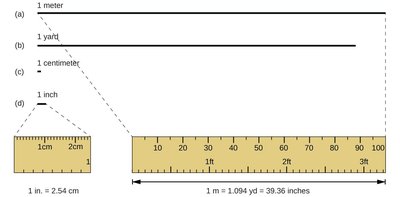
Chemists use the International System of Units (SI) for measurements. The seven base units include meter (m), kilogram (kg), second (s), kelvin (K), mole (mol), ampere (A), and candela (cd). Prefixes indicate multiples or fractions of units (e.g., kilo-, milli-, micro-).
Accuracy, Precision, and Significant Figures
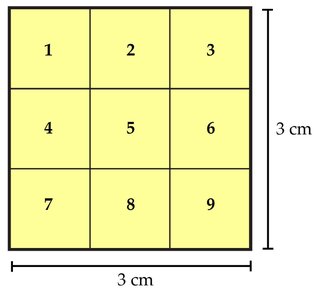
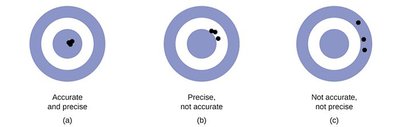
Measurements in chemistry must be both accurate (close to the true value) and precise (repeatable and consistent). Significant figures reflect the precision of a measurement, including all certain digits plus one estimated digit.
Accuracy: Closeness to the true value.
Precision: Closeness of repeated measurements to each other.
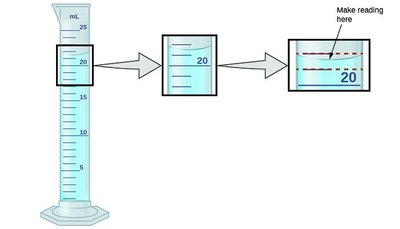
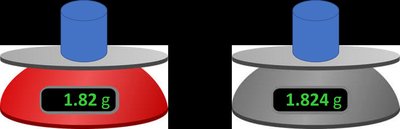
Rules for Significant Figures
All nonzero digits are significant.
Captive zeros (between nonzero digits) are significant.
Leading zeros are not significant.
Trailing zeros are significant only if there is a decimal point.
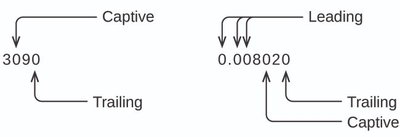

Calculations with Significant Figures
Addition/Subtraction: Round to the least number of decimal places.
Multiplication/Division: Round to the least number of significant figures.
Dimensional Analysis and Unit Conversions
Dimensional Analysis
Dimensional analysis is a systematic approach to problem-solving that uses conversion factors to move from one unit to another. Units are treated algebraically, and conversion factors are set up so that unwanted units cancel, leaving the desired unit.
Example: To convert 0.125 kg to ounces, use the conversion factors 1 kg = 1000 g and 1 oz = 28.349 g.
Density and Temperature Scales
Density
Density is defined as mass per unit volume and is commonly expressed in g/cm3 or g/mL for solids and liquids, and g/L for gases.
Temperature Scales
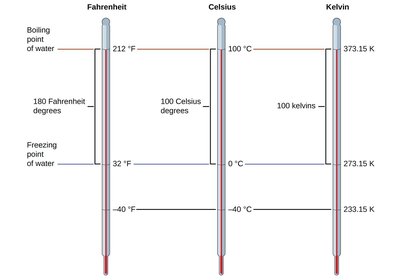
There are three main temperature scales in chemistry:
Celsius (°C): Based on water's freezing (0°C) and boiling (100°C) points.
Kelvin (K): Absolute scale, 0 K is absolute zero.
Fahrenheit (°F): Used mainly in the USA.
Atomic Structure
Subatomic Particles
Atoms are composed of three main subatomic particles:
Proton (p+): Positive charge, mass ≈ 1 amu
Neutron (n): Neutral, mass ≈ 1 amu
Electron (e–): Negative charge, mass ≈ 0.00055 amu
The nucleus contains protons and neutrons, while electrons occupy the surrounding electron cloud.
Atomic Number, Mass Number, and Isotopes
Atomic Number (Z): Number of protons; defines the element.
Mass Number (A): Total number of protons and neutrons.
Isotopes: Atoms of the same element with different numbers of neutrons (different mass numbers).
Isotopic notation: , where X is the element symbol.
Ions
Cation: Positively charged ion (loss of electrons).
Anion: Negatively charged ion (gain of electrons).
Atomic Mass and the Mole
Atomic Mass Unit (amu): 1/12 the mass of a carbon-12 atom.
Average Atomic Mass: Weighted average of all naturally occurring isotopes.
The Mole and Molar Mass
The Mole
The mole (mol) is the SI unit for amount of substance. One mole contains Avogadro's number () of entities (atoms, molecules, ions, etc.).
Molar Mass
Molar mass is the mass of one mole of a substance, expressed in g/mol. For compounds, it is the sum of the molar masses of all atoms in the formula.
Example Calculation
How many oxygen atoms are in 1 mole of NO3–?
Additional info: These foundational concepts are essential for success in all areas of general chemistry, including chemical reactions, stoichiometry, and solution chemistry.
