 Indietro
General Chemistry Study Notes: Matter, Measurement, Atoms, Molecules, and Ions
Guida di studio - Note intelligenti
 Appunti personalizzati basati sui tuoi materiali, ampliati con definizioni chiave, esempi e contesto.
Introduction to Chemistry
Definition and Scope
Chemistry is the scientific study of matter, its properties, and the changes it undergoes. Matter is defined as anything that has mass and occupies space. Understanding chemistry is fundamental to comprehending the physical world and the processes that govern it.
Matter: Anything with mass and volume.
States of Matter: Solid, liquid, and gas. For example, ice (solid), liquid water, and water vapor (gas).
Composition of Matter: Matter can be classified based on its composition and properties.
Classification of Matter
Types of Matter
Matter can be classified as a substance or a mixture. Substances have distinct properties and a fixed composition, while mixtures can vary in composition.
Substance: Has distinct properties and a composition that does not vary from sample to sample.
Element: A substance that cannot be decomposed into simpler substances.
Compound: A substance composed of two or more elements, which can be decomposed into simpler substances.
Mixture: Combination of two or more substances. Can be homogeneous (uniform composition, also called a solution) or heterogeneous (non-uniform composition).
Properties of Matter
Properties are used to identify and classify substances. They are divided into physical and chemical properties, as well as intensive and extensive properties.
Physical Properties: Can be observed without changing the substance (e.g., color, odor, density, melting point).
Chemical Properties: Can only be observed when a substance changes into another (e.g., flammability).
Intensive Properties: Independent of the amount of substance (e.g., density, boiling point).
Extensive Properties: Depend on the amount of substance (e.g., mass, volume).
Separation of Mixtures
Mixtures can be separated based on physical properties using methods such as filtration, distillation, and chromatography.
Filtration: Separates solids from liquids.
Distillation: Separates substances based on differences in boiling points.
Chromatography: Separates substances based on their movement through a medium.
Measurement and Units
Quantitative Concepts in Chemistry
Chemistry relies heavily on quantitative measurements. The metric system and SI units are used for consistency.
Mass: Measured in grams (g) or kilograms (kg).
Length: Measured in meters (m).
Time: Measured in seconds (s).
Temperature: Measured in degrees Celsius (°C) or Kelvin (K).
Amount of Substance: Measured in moles (mol).
Volume: Measured in liters (L) or cubic centimeters (cm3).
Energy and Related Concepts
Energy is the capacity to do work or transfer heat. The unit of energy is the Joule (J).
Kinetic Energy: Energy of motion.
Potential Energy: Depends on position relative to other objects.
Calorie: Historically used unit; 1 cal = 4.184 J. Nutritional Calorie (Cal) = 1000 cal.
Density
Density is a physical property defined as mass per unit volume.
Formula:
Common units: g/mL or g/cm3
Measurement Accuracy and Precision
Measurements in chemistry are subject to uncertainty. Accuracy and precision are important concepts.
Accuracy: How close a measurement is to the true value.
Precision: How close repeated measurements are to each other.
Significant Figures: All digits in a measured quantity, including uncertain ones.
Dimensional Analysis
Dimensional analysis is used to convert units using conversion factors.
Set up ratios to cancel units and convert between systems (e.g., 1 in = 2.54 cm).
Atoms, Molecules, and Ions
Atomic Theory and Laws
The concept of the atom originated with Greek philosophers and was formalized by John Dalton. Key laws include:
Law of Constant Composition: Compounds have a definite composition.
Law of Conservation of Mass: Total mass remains constant during a chemical process.
Law of Multiple Proportions: When two elements form more than one compound, the ratios of the masses are small whole numbers.
Structure of the Atom
Atoms are composed of subatomic particles: electrons, protons, and neutrons.
Electrons: Negatively charged, discovered by J. J. Thomson.
Protons: Positively charged, found in the nucleus.
Neutrons: Neutral, found in the nucleus.
Nucleus: Dense center of the atom, contains protons and neutrons.
Atomic Number (Z): Number of protons in the nucleus.
Mass Number (A): Total number of protons and neutrons.
Isotopes: Atoms of the same element with different numbers of neutrons.
Periodic Table and Classification
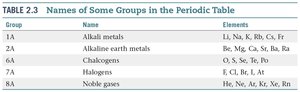
The periodic table organizes elements by atomic number. Elements in the same group have similar properties.
Periods: Rows in the periodic table.
Groups: Columns in the periodic table.
Metals: Left side; shiny, conduct heat/electricity, mostly solids.
Nonmetals: Right side; can be solid, liquid, or gas.
Metalloids: Border between metals and nonmetals; properties intermediate.
Formulas and Molecules
Chemical formulas represent the composition of compounds.
Empirical Formula: Lowest whole-number ratio of atoms.
Molecular Formula: Exact number of atoms of each element.
Structural Formula: Shows the order of atom attachment.
Ions and Ionic Compounds
Atoms or groups of atoms can gain or lose electrons to form ions.
Cation: Positively charged ion (loss of electrons).
Anion: Negatively charged ion (gain of electrons).
Polyatomic Ions: Groups of atoms with a charge (e.g., NH4+, SO42–).
Ionic Compounds: Formed between metals and nonmetals; electrons are transferred.
Chemical Nomenclature
Chemical nomenclature is the system for naming compounds.
Ionic Compounds: Name cation first, then anion. Use Roman numerals for variable charges.
Binary Molecular Compounds: Name element farther left/lower first; use prefixes for number of atoms.
Organic Compounds: Hydrocarbons (alkanes) and functional groups (alcohols, etc.).
Isomers: Compounds with same formula but different structures.
Example: Naming Ionic Compounds
NaCl: Sodium chloride
FeCl2: Iron(II) chloride
NH4NO3: Ammonium nitrate
Example: Naming Binary Molecular Compounds
CO: Carbon monoxide
CO2: Carbon dioxide
P2O5: Diphosphorus pentoxide
Example: Organic Nomenclature
Methane: CH4
Ethanol: C2H5OH
Additional info: Students should keep a copy of the periodic table handy for reference during exams and homework. Understanding the classification and properties of elements is essential for mastering chemical reactions and nomenclature.
