 Indietro
Periodic Table, Nomenclature, and Chemical Composition: Study Guide
Guida di studio - Note intelligenti
 Appunti personalizzati basati sui tuoi materiali, ampliati con definizioni chiave, esempi e contesto.
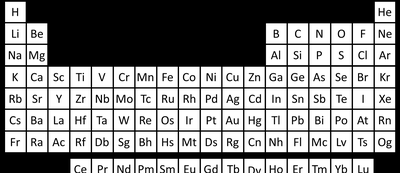
Periodic Table and Classification of Elements
Major Classifications of Elements
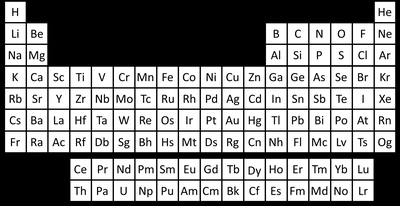
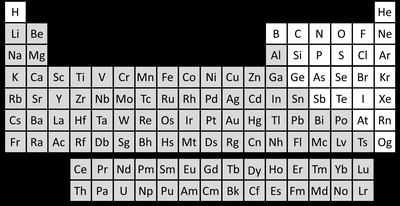
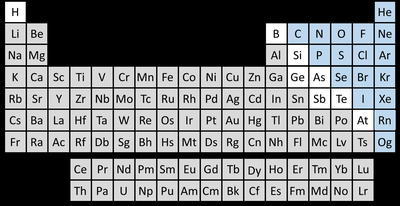
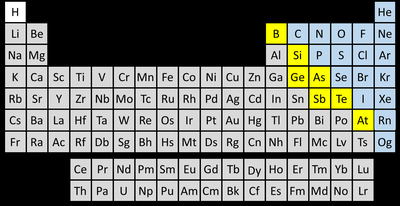
The periodic table organizes elements based on their atomic structure and properties. Elements are classified as metals, nonmetals, or metalloids, each with distinct physical and chemical characteristics.
Metals: Good conductors of heat and electricity, malleable, ductile, shiny, and tend to lose electrons easily.
Nonmetals: Variable phase, poor conductors, and tend to gain electrons during chemical changes.
Metalloids: Exhibit intermediate properties and are often used as semiconductors.
Groups and Periods
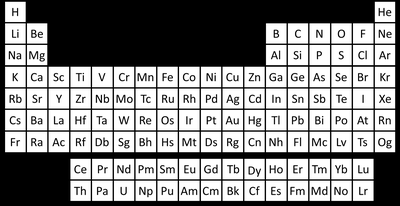
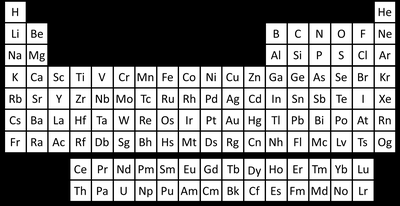
Elements are arranged in columns called groups or families and rows called periods. Main groups are labeled with "A" and Roman numerals I–VIII, while transition groups are labeled with "B" and Roman numerals I–X.
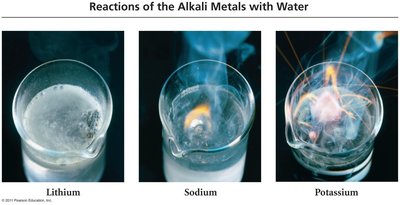
Alkali Metals: Group 1A, highly reactive.
Alkaline-earth Metals: Group 2A, reactive.
Noble Gases: Group 8A, nonreactive.
Halogens: Group 7A, very reactive.
Chalcogens: Group 6A.
Lanthanides and Actinides: Inner transition metals.
Periodicity
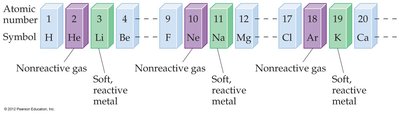
The properties of elements repeat periodically across the table, reflecting similar chemical and physical behaviors within groups.
Predictable Ions and Diatomic Elements
Formation of Ions
Atoms can lose or gain electrons to form ions. Cations are positively charged (lost electrons), while anions are negatively charged (gained electrons). The charge of common ions is predictable based on their group location.
Group 1A: 1+ charge
Group 2A: 2+ charge
Group 3A: 3+ charge
Group 6A: 2– charge
Group 7A: 1– charge
Seven Diatomic Elements
Some elements naturally occur as diatomic molecules, meaning they consist of two atoms bonded together. These are:
Hydrogen (H2)
Nitrogen (N2)
Oxygen (O2)
Fluorine (F2)
Chlorine (Cl2)
Bromine (Br2)
Iodine (I2)
Mnemonic: Have No Fear Of Ice Cold Beer
Chemical Bonding and Compound Types
Ionic and Covalent Compounds
Compounds are formed by chemical bonds between elements. There are two main types:
Ionic Compounds: Formed by a metal cation and a nonmetal anion (or polyatomic ion). The bond is an electrostatic attraction. Ionic compounds are neutral overall.
Covalent (Molecular) Compounds: Formed by two nonmetals sharing valence electrons. The bond involves electron sharing between atomic orbitals.
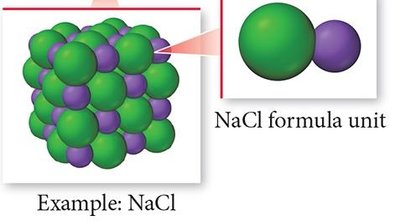
Bond Formation
Ionic bonds are pure charge attractions, while covalent bonds involve a balance of attraction and repulsion between nuclei and electrons.
Formula Mass, Molar Mass, and Mole Calculations
Formula and Molar Mass
The formula mass (or molecular mass/weight) is the sum of the atomic masses of all atoms in a molecule or formula unit. The molar mass is the mass in grams of one mole of a substance, numerically equivalent to the formula mass in g/mol.
Example: Mass of 1 molecule of H2O = 2 × 1.01 amu (H) + 1 × 16.00 amu (O) = 18.02 amu
Molar mass of H2O = 18.02 g/mol
Moles and Molar Mass
Moles are used to relate mass to the number of particles. One mole contains 6.022 × 10²³ particles (Avogadro's number).
1 mole = 6.022 × 10²³ atoms or molecules
Molar mass is the average atomic mass from the periodic table in g/mol


Example Calculations
To find the number of atoms in a sample: $\text{Number of atoms} = \frac{\text{mass (g)}}{\text{molar mass (g/mol)}} \times 6.022 \times 10^{23}$
To convert atoms to mass: $\text{Mass (g)} = \text{number of atoms} \times \frac{\text{molar mass (g/mol)}}{6.022 \times 10^{23}}$
Chemical Nomenclature
Types of Compounds and Naming Rules
Chemical nomenclature is the system for naming compounds. The rules depend on the type of compound:
Type I: Metal + Nonmetal or polyatomic ion (no transition metals except Zn, Ag, Cd)
Type II: Transition metal + nonmetal or polyatomic ion
Type III: Nonmetal + nonmetal (covalent compounds)
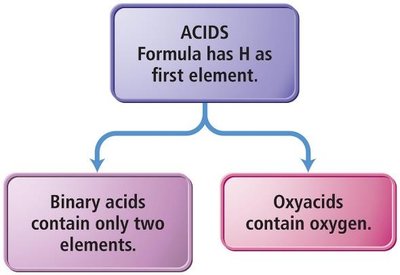
Acids: Binary acids (H + nonmetal in aqueous solution), Oxyacids (H + polyatomic ion)
Hydrated ionic compounds: Ionic compounds with water molecules
Naming Ionic Compounds (Type I and II)
Type I: Name the metal, then the nonmetal with -ide ending. Example: Na3N is sodium nitride.
Type II: Name the transition metal with its charge in Roman numerals, then the nonmetal with -ide ending. Example: Ti(SO4)2 is titanium(IV) sulfate.
Naming Molecular Compounds (Type III)
Use prefixes to indicate the number of atoms:
mono = 1 (usually omitted for the first element)
di = 2, tri = 3, tetra = 4, penta = 5, hexa = 6, hepta = 7, octa = 8, nona = 9, deca = 10
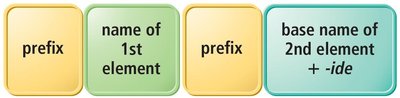
Example: P2O5 is diphosphorus pentoxide
Example: CO is carbon monoxide
Naming Acids
Acids are molecular compounds that release H+ ions in water. There are two main types:
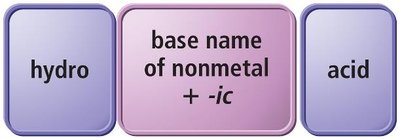
Binary acids: H + nonmetal (aq). Name as "hydro" + base name of nonmetal + "ic acid". Example: HBr (aq) is hydrobromic acid.
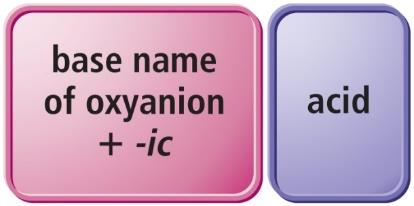
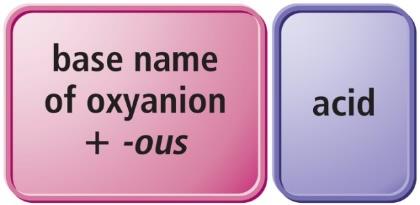
Oxyacids: H + polyatomic ion. If the ion ends in -ate, use "ic acid"; if it ends in -ite, use "ous acid". Example: H2SO4 is sulfuric acid, H2SO3 is sulfurous acid.
Naming Hydrated Ionic Compounds
Hydrates are ionic compounds with a specific number of water molecules. Use prefixes to indicate the number of water molecules.
MgSO4 • 7H2O: magnesium sulfate heptahydrate
CoCl2 • 6H2O: cobalt(II) chloride hexahydrate
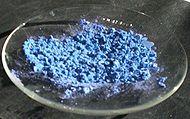
CuSO4 • 5H2O: copper(II) sulfate pentahydrate
Sample Calculations and Practice Problems
Atoms, Mass, and Mole Calculations
To find the number of atoms in a sample: $\text{Number of atoms} = \frac{\text{mass (g)}}{\text{molar mass (g/mol)}} \times \text{number of atoms per mole}$
To find the mass from the number of molecules: $\text{Mass (g)} = \text{number of molecules} \times \frac{\text{molar mass (g/mol)}}{6.022 \times 10^{23}}$
To convert between mass, moles, and number of atoms: $\text{mass (g)} \rightarrow \text{moles} \rightarrow \text{number of atoms}$
Example Table: Prefixes for Molecular Compounds
Prefix | Number |
|---|---|
mono- | 1 |
di- | 2 |
tri- | 3 |
tetra- | 4 |
penta- | 5 |
hexa- | 6 |
hepta- | 7 |
octa- | 8 |
nona- | 9 |
deca- | 10 |
Example Table: Common Ion Charges
Group | Common Charge |
|---|---|
1A | +1 |
2A | +2 |
3A | +3 |
6A | -2 |
7A | -1 |
Practice Problems
How many total atoms are present in two molecules of mercury(II) iodate?
What is the mass of 1.45 × 1030 molecules of COF2?
How many formula units are present in 65.0 g of FeS?
How many moles are in 25.0 mL of acetone (CH3COCH3)? Density = 784 kg/m3.
A sample contains 8.371 × 10²¹ molecules and has a mass of 0.888 g. What is the molar mass?
What is the molar mass of oxalic acid dihydrate?
What is the density of acetic acid if 0.250 moles of CH3COOH has a volume of 14.3 mL?
How many moles of oxygen are present in 0.089 g of sulfuric acid?
What is the volume occupied by 0.145 moles of alumina if the alumina has a density of 3.97 g/mL?
Summary Table: Types of Compounds and Naming Rules
Type | Composition | Naming Rule |
|---|---|---|
Type I | Metal + Nonmetal | Metal name + Nonmetal(-ide) |
Type II | Transition Metal + Nonmetal | Metal name (charge) + Nonmetal(-ide) |
Type III | Nonmetal + Nonmetal | Prefix + Element + Prefix + Element(-ide) |
Binary Acid | H + Nonmetal | hydro + Nonmetal(-ic) + acid |
Oxyacid | H + Polyatomic Ion | Ion(-ate): -ic acid; Ion(-ite): -ous acid |
Hydrate | Ionic Compound + Water | Compound name + prefix-hydrate |
Additional info: Academic context was added to clarify naming conventions, periodic table structure, and calculation methods for mass, moles, and atoms.
